Miskina
Painting
Можно ли лицезреть?
Неизвестно

Музей Виктории и Альберта
Лондон, Великобритания
Владелец известен, а выставлена ли она сейчас — неизвестно.
- В этом положении с
- Источник
- Музей
О картине
Словами музея — на английском
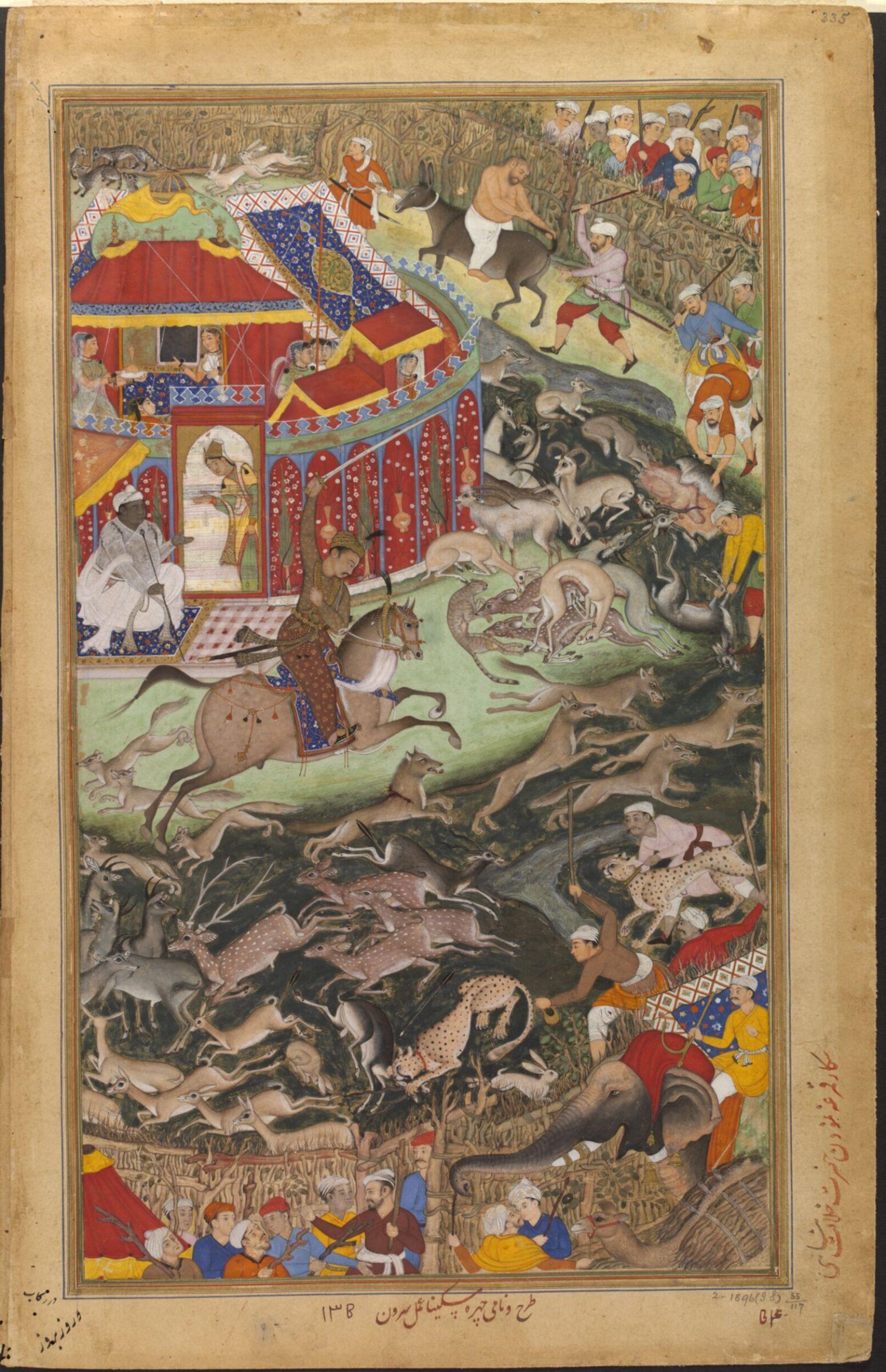
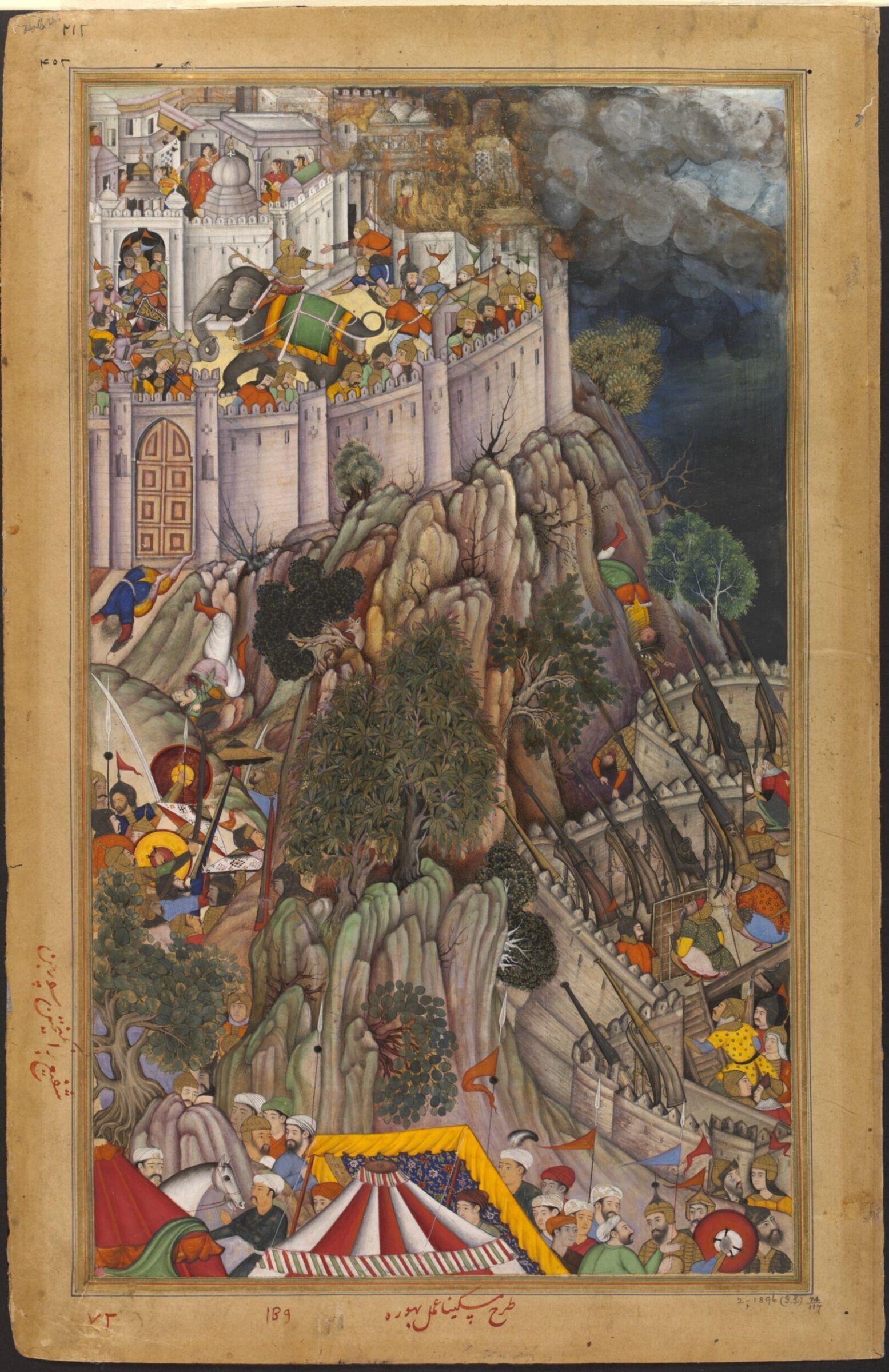
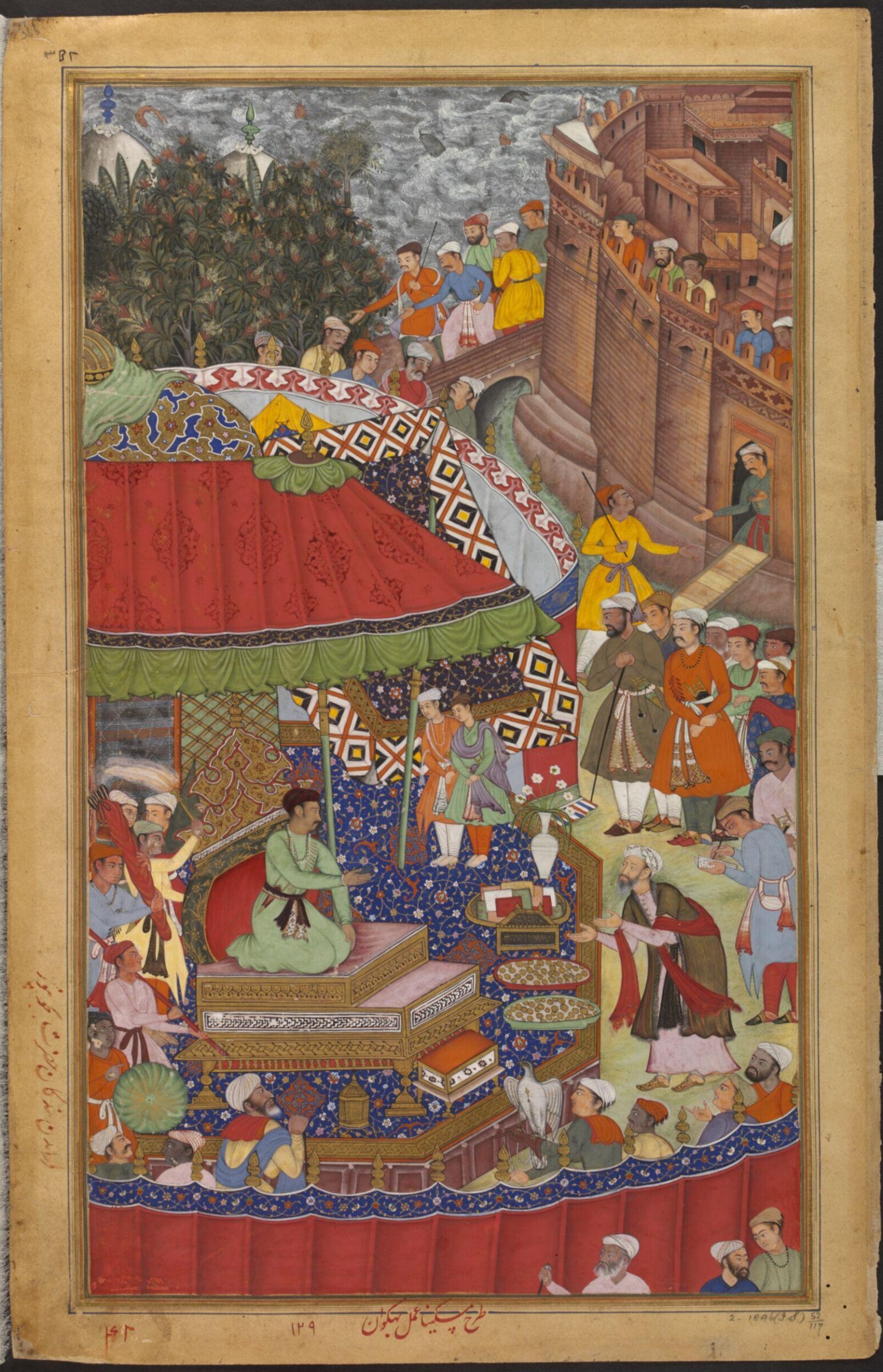
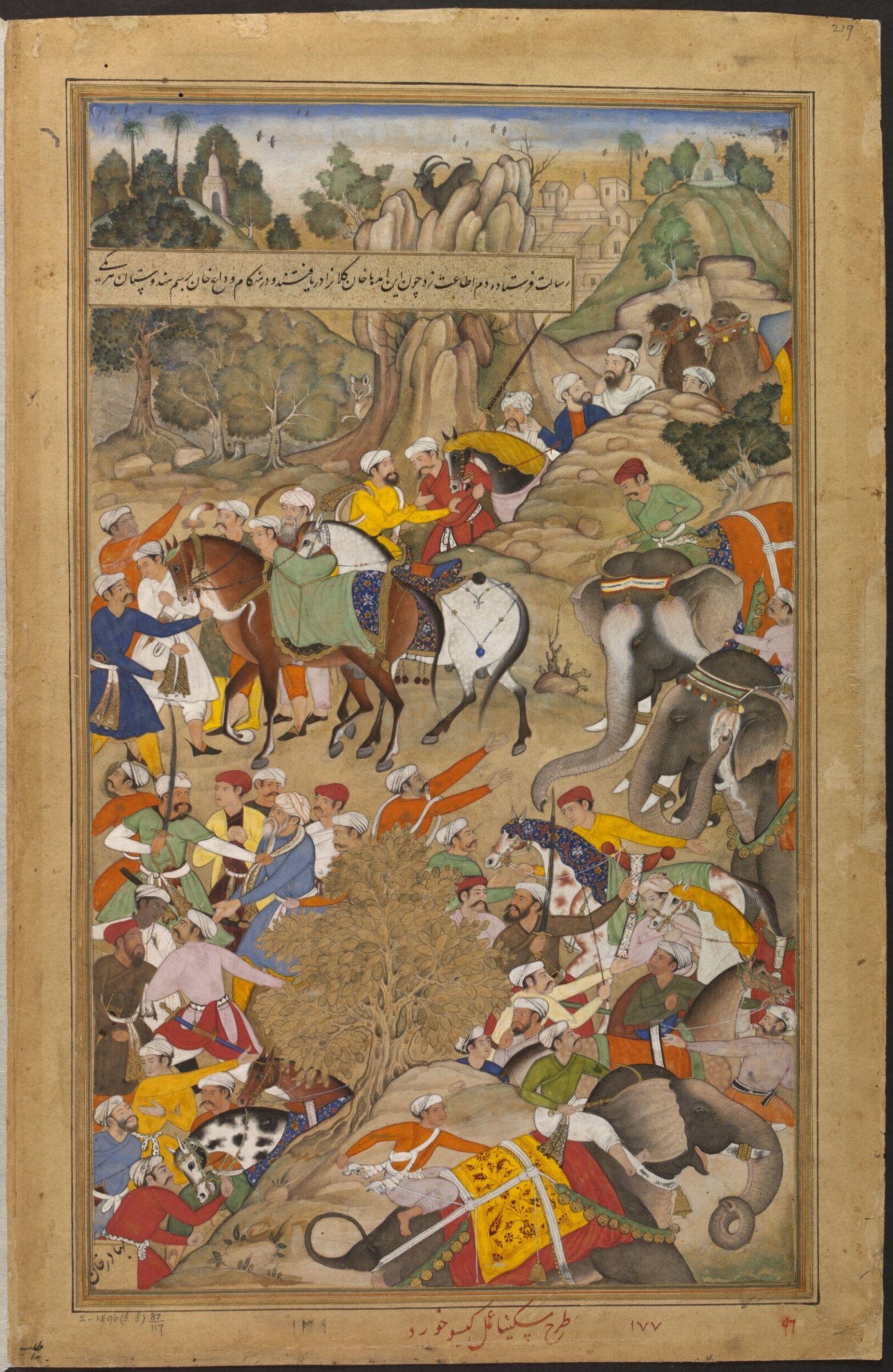
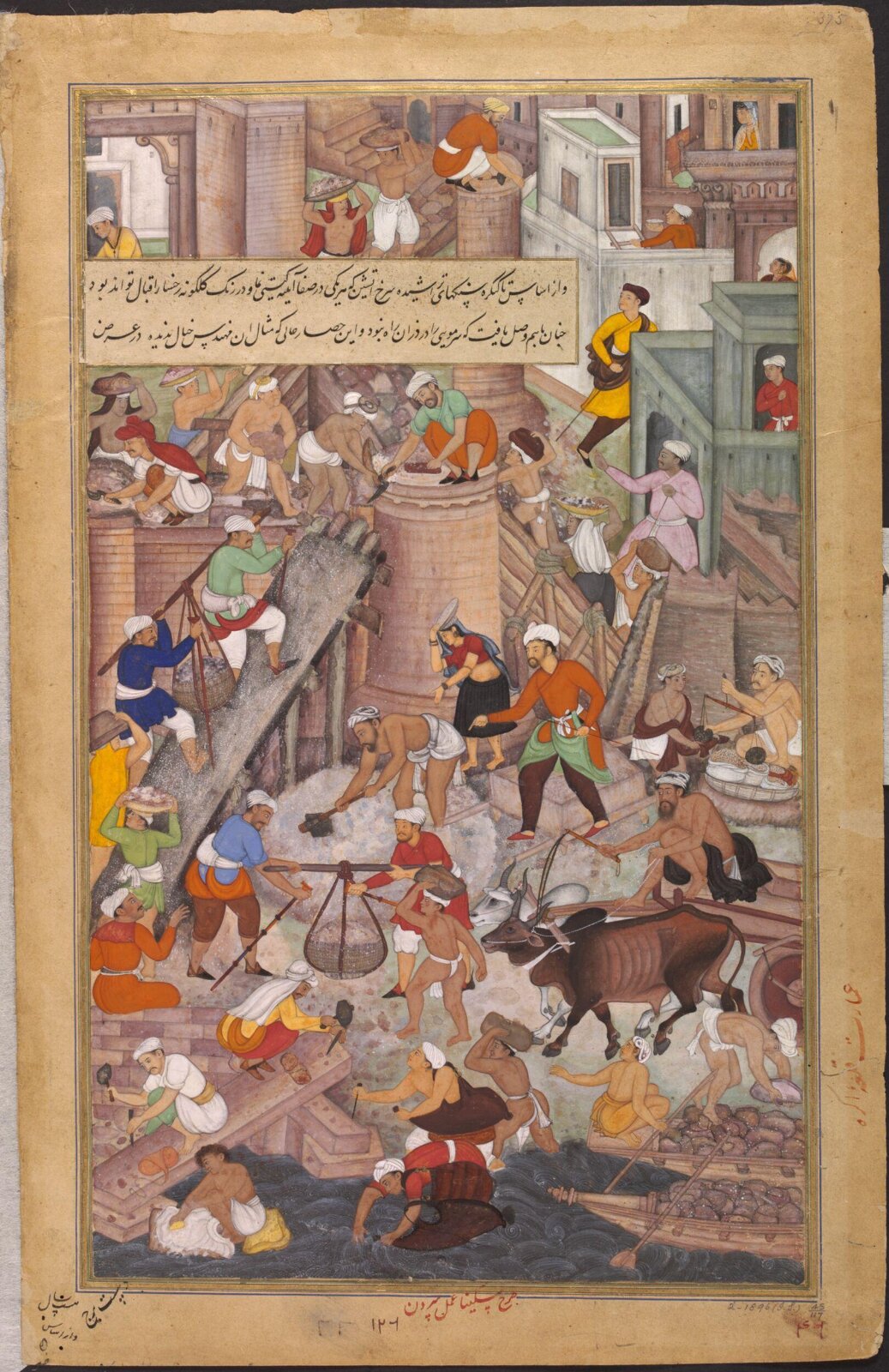
This painting, the right half of a double-page composition (with IS.2:46-1896) illustrating the Akbarnama (Book of Akbar), depicts the construction of the fort at Agra, which was completed for the Mughal emperor Akbar (r.1556–1605) in 1566. The overall composition was by the court artist Miskina, with Sarwan responsible for painting the details.
Читать дальше
Akbar had ordered the existing fort at the strategic site of Agra to be demolished and a new one to be built, in order to provide enhanced protection, but also to be worthy of the dignity of the emperor and his dominions. Work began in 1565 at a carefully determined auspicious moment and lasted for eight years. The author of the Akbarnama, Abu'l Fazl, recorded that three to four thousand labourers worked every day on the construction of the red sandstone walls and structures that were decorated with carved ornament, tiles and white marble inlays. The masons hewed stone so skilfully that when the finished blocks were laid together ‘the end of a hair could not find a place between them’. Another contemporary source specifies that 2000 of the workers were stonecutters, 2000 prepared mortar and lime, and an additional 8000 labourers transported raw materials.
Red sandstone from Sikri was transported on bullock-drawn carts of the kind seen here, and boats brought broken stone by river to be further broken up to make mortar. The artist who designed the composition, Miskina (whose name is also given on other paintings as Miskin) has included lively details that he must have seen at first hand, including a hawker selling food to a labourer, a man washing the dust from his clothes in the river, and a builder perched precariously on a dome. [Akbarnama, English translation: Beveridge, vol. II, pp. 372-3]
The Akbarnama was commissioned by Akbar as the official chronicle of his reign. It was written in Persian by his court historian and biographer, Abu’l Fazl, between 1590 and 1596, and the V&A’s partial copy of the manuscript is thought to have been illustrated between about 1592 and 1595. This is thought to be the earliest illustrated version of the text, and drew upon the expertise of some of the best royal artists of the time. Many of these are listed by Abu’l Fazl in the third volume of the text, the A’in-i Akbari, and some of these names appear in the V&A illustrations, written in red ink beneath the pictures, showing that this was a royal copy made for Akbar himself. After his death, the manuscript remained in the library of his son Jahangir, from whom it was inherited by Shah Jahan.
The V&A purchased the manuscript in 1896 from Frances Clarke, the widow of Major General John Clarke, who bought it in India while serving as Commissioner of Oudh between 1858 and 1862.
Музей Виктории и Альберта
Сведения
- Инвентарный номер
- IS.2:45-1896
В каталоге
Источники
- Музей Виктории и Альберта
- Изображение: Музей Виктории и Альберта — © Музей Виктории и Альберта