 Уильям СимпсонВеликобритания, 1823–1899
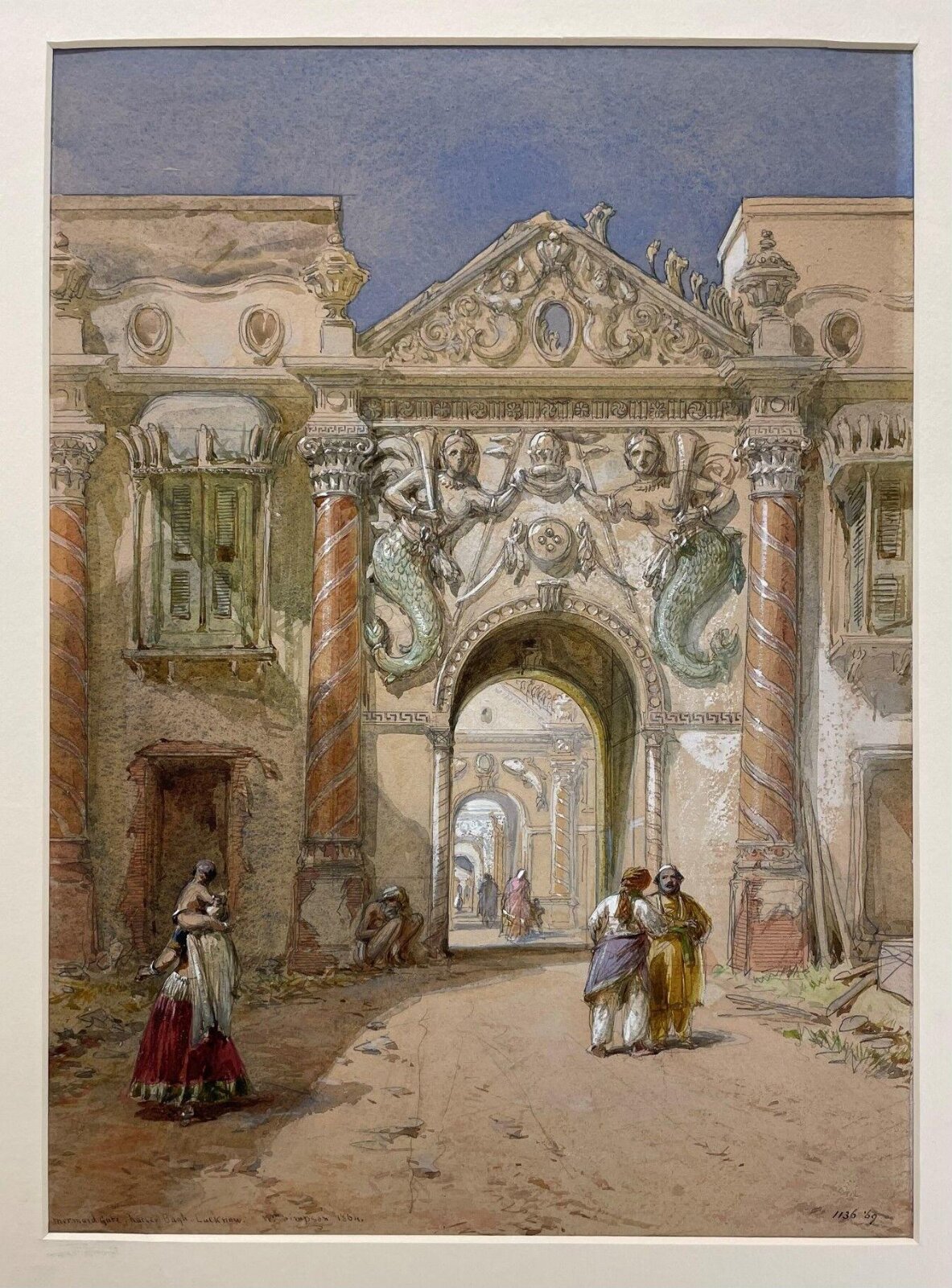
Mermaid gate, Kaiserbagh, Lucknow
Можно ли лицезреть?
Сейчас не принимает

Музей Виктории и Альберта
Лондон, Великобритания
Числится в собрании, но в залах её сейчас нет.
- Проверено
- В этом положении с
- Источник
- Музей
О картине
Словами музея — на английском
William Simpson (1823 - 1899) was a distinguished watercolourist and war artist. Having established his reputation by documenting the Crimean war in 1854, Day and Sons, the London lithography firm, commissioned him to sketch well-known sites in and around Delhi associated with the Revolt of 1857 by Indians against the rule of the British East India Company.
Simpson arrived in Calcutta (Kolkata) in 1859 and travelled widely. His rapid pencil drawings formed the preparatory studies for his finished watercolours done after his return to London in 1862. His detailed journal, sketches and pictures from India resulted in these highly coloured, evocative, and romantic interpretations of the landscape and architecture.
Читать дальше
Simpson completed the painting of the Jal Pari (Mermaid Gateway) at the Kaiserbagh Palace Complex in Lucknow in 1864. Jal Pari translates to ‘water fairy’. The Palace was built between 1848 and 1850 for Nawab Wajid Ali Shah (r. 1847-56). It consisted of an immense courtyard surrounded by living quarters, royal mansions, baradaris (pillared pavilions) and cupolas. The Nawab had an abiding interest in European architecture which resulted in this eclectic design. Passing through the Jal Pari, one arrived in a garden called Hazrat Bagh, at the centre of which was the Chandi Wali Baradari (Silver pillared pavilion). This pavilion was famed for the silver plating that covered the roof, walls and pillars.
A large part of the Kaiserbagh Palace Complex was destroyed during the Indian Mutiny of 1857-58 by the British. The Mermaid Gateway survived until 1870. Simpson’s painting is an important illustration of the Mermaid Gate that no longer exists.
Музей Виктории и Альберта
Сведения
- Инвентарный номер
- 1136-1869
В каталоге
Источники
- Музей Виктории и Альберта
- Изображение: Музей Виктории и Альберта — © Музей Виктории и Альберта