Эдвард СтайхенСША, 1879–1973
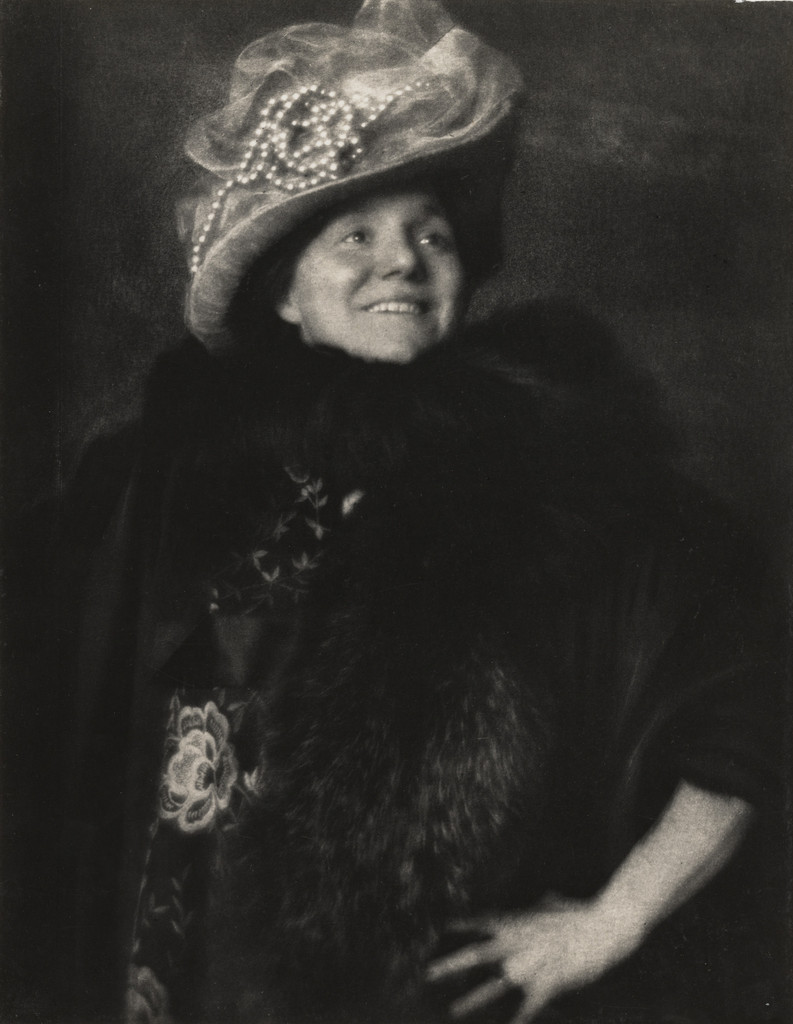
Kitty and Alfred Stieglitz
Можно ли лицезреть?
Сейчас не принимает

Чикагский институт искусств
Чикаго, США
Числится в собрании, но в залах её сейчас нет.
- Проверено
- В этом положении с
- Источник
- Музей
О работе
Словами музея — на английском
Edward Steichen began his career under the wings of photographer Alfred Stieglitz, who was also a modern-art gallerist. When Stieglitz saw the 21-year-old's portfolio in 1900, he was sufficiently impressed to buy three prints. The two men gradually built a strong personal and professional relationship. Stieglitz promoted the younger artist through Camera Work, his exquisitely printed quarterly journal, and with Steichen's help, he started the Little Galleries of the Photo-Secession, which eventually became known as Gallery 291. This rich platinum print depicting Stieglitz and his daughter Kitty reflects the prevailing aesthetic of fine-art photography around the turn of the 20th century. As proponents of pictorialism, Stieglitz, Steichen, and many of their contemporaries sought to elevate photography to the status of high art by infusing their work with handcraft and painterly effects.
Читать дальше
For more on the Alfred Stieglitz collection at the Art Institute, along with in-depth object information, please visit the website: The Alfred Stieglitz Collection.
Чикагский институт искусствCC BY 4.0
Сведения
- Инвентарный номер
- 1949.874
В каталоге
Источники
- Чикагский институт искусств
- Изображение: Чикагский институт искусств — © автор или правообладатель
А тем временем в жизни художника
Вся жизнь целиком1904
Первые опыты с цветной фотографией
Начинает экспериментировать с цветной фотографией и становится одним из первых в США, кто применил процесс «Автохром Люмьер».
1 июля 1904
Родилась дочь: Mary Calderone
1905
«Маленькие галереи» Фото-Сецессиона
Вместе со Стиглицем создаёт Little Galleries of the Photo-Secession в помещении бывшей портретной студии Стайхена — позднее галерею назовут «291» по адресу; здесь проходят одни из первых в США выставок Родена, Матисса, Сезанна, Пикассо и Бранкузи. Постоянно переезжая пароходом между Европой и США, он, по словам искусствоведа Уильяма Юинга, становится одним из первых «джетсеттеров» и знакомит Америку с европейским искусством.