Джек ВиттенСША, 1939–2018
Khee II
Можно увидеть?
Сейчас не выставлена
Где сейчас «Khee II»? Собрание: Чикагский институт искусств, Чикаго. Сейчас не выставлена. Проверено 23 ноября 2026 г.

Чикаго, США
Числится в собрании, но в залах её сейчас нет.
- Проверено
- Этот статус с
- Источник
- Музей
О картине
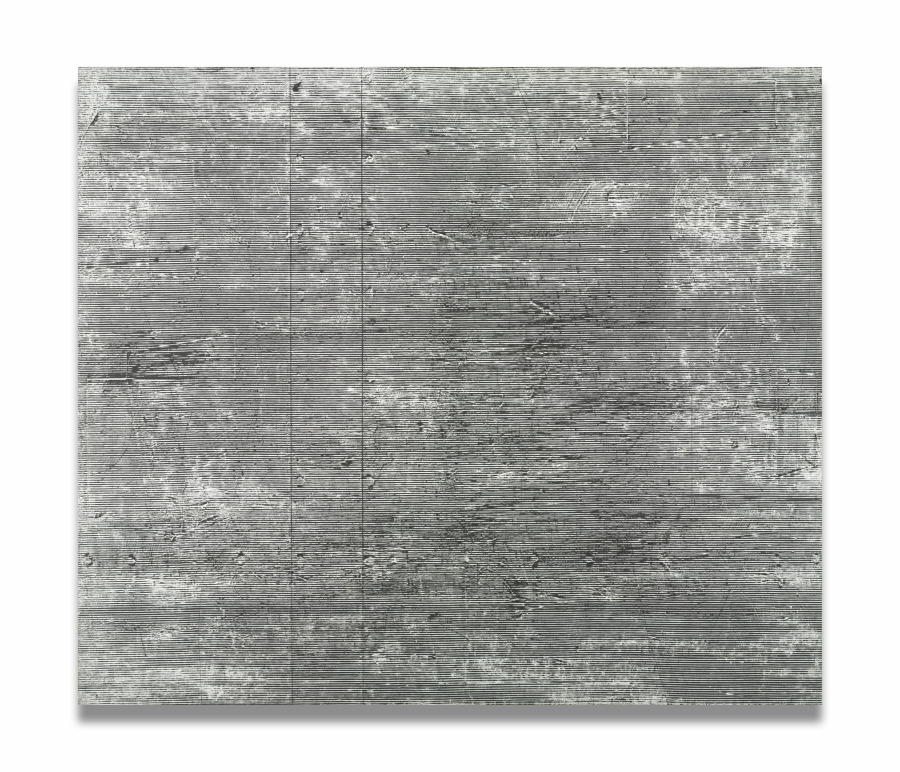
Джек Виттен создал «Кхи II» (Khee II) в 1978 году с помощью давления и растворяющейся бумаги; картина находится в Чикагском институте искусств, в Чикаго. Под холст он положил плоские предметы, поверхность покрыл грунтом и добавил листы цветной японской рисовой бумаги. Бумага растворялась, оставляя пигмент. Проводя по верху граблями или другим зубчатым инструментом, он вдавливал скрытые формы в холст и распределял цвет. Между чередующимися цветными полосами возникают призрачные изображения. Свой инструмент Виттен называл проявителем, заимствовав слово из фотографии.
Словами музея — на английском
In the early 1960s, as a young student in New York, Jack Whitten established ties with an older generation of black artists that included Romare Bearden and Jacob Lawrence, as well as with leading Abstract Expressionists such as Willem de Kooning, Ad Reinhardt, and Franz Kline. During the second half of the decade, Whitten began working toward an entirely unique relationship to painting that he described in this way: “About 1965 I wrote on my studio wall one day, the image is photographic; I must photograph my thoughts.” By 1970 the artist had eliminated both expressive color and figuration from his work, launching a ten-year series of paintings that capture, like a camera, the often chance-based immediacies of his dynamic studio process.
Читать дальше
Khee II exhibits all the hallmarks of Whitten’s mature process-derived paintings. As with other works from this period, the artist placed a variety of flat, shaped objects beneath the canvas. After preparing the surface with gesso, he layered it with thin sheets of colored Japanese rice paper. The rice paper dissolved, leaving behind pure pigment. Whitten then pulled a rake or other notched tool—which he calls a “developer,” in obvious reference to a photographer’s chemicals—across the work’s surface. This served both to impress the shapes from below, effectively embossing the canvas, and to disperse color on top of it. The result is a series of ghostlike images and alternating rows of color that vibrate with subtle luminosity. This is a glowing evocative abstract painting that is also a layer-by-layer document of its own making.
Чикагский институт искусствCC BY 4.0
Сведения
- Инвентарный номер
- 2013.123
В каталоге
Источники
- Чикагский институт искусств
- Изображение: Чикагский институт искусств — © автор или правообладатель