 Аннибале КарраччиИталия, 1560–1609
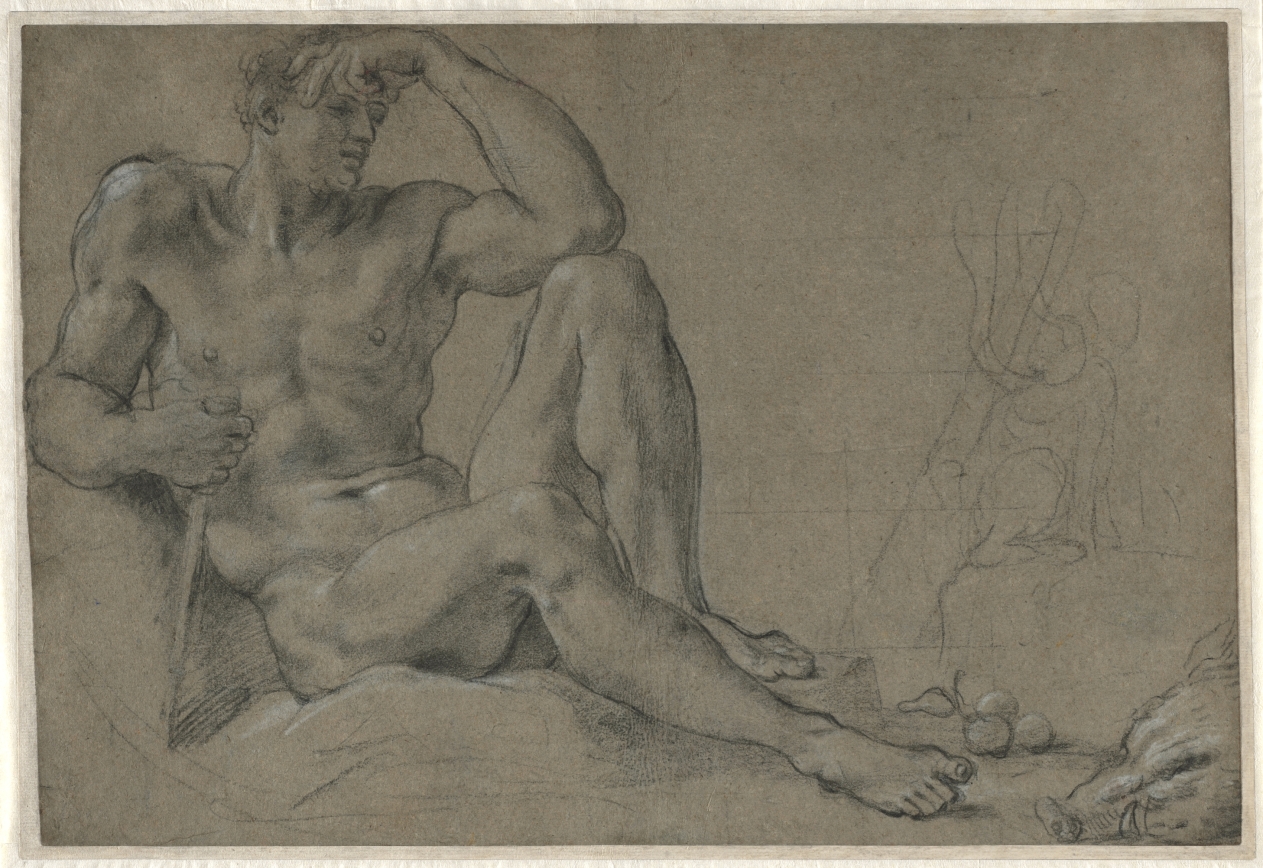
Hercules Resting (recto)
Можно ли лицезреть?
Сейчас не принимает

Художественный музей Кливленда
Кливленд, США
Числится в собрании, но в залах её сейчас нет.
- Проверено
- В этом положении с
- Источник
- Данные самого музея
О работе
Словами музея — на английском
To atone for the crime of killing his family, the Greek hero Hercules was required to perform twelve labors. In this final study for a fresco of this subject commissioned by Cardinal Odoardo Farnese for the ceiling of his study in his family’s Roman palace, Hercules rests, surrounded by evidence of his toil: the head of the Erymanthian boar he captured, the three golden apples of the Hesperides, and the hide of the Nemean lion on which he sits. The hero’s pose and exaggerated musculature are a result of the artist’s intense study of ancient models, and emulate specific antique sculptures depicting river gods in the Farnese collection. Carracci also worked with full knowledge of Michelangelo’s frescoes on the Sistine Chapel ceiling (1508-10), and the pose of Hercules may have been inspired by the reclining figure of Adam in Michelangelo's Creation of Adam scene.
Художественный музей Кливленда
Сведения
- Инвентарный номер
- 1997.52.a
В каталоге
Источники
- Художественный музей Кливленда: открытые данные самого музея · получено 7 дней назад
- Изображение: Художественный музей Кливленда — открытый доступ музея
А тем временем в жизни художника
Вся жизнь целиком1578–1595
Место работы: Болонья
1594
Кардинал Фарнезе зовёт братьев в Рим
В 1594 году кардинал Одоардо Фарнезе пригласил Аннибале вместе с братом Агостино в Рим, чтобы украсить Палаццо Фарнезе фресками на мифологические сюжеты.
1595
Окончательный переезд в Рим, в Палаццо Фарнезе
Вероятно, в сентябре или октябре 1595 года Карраччи окончательно переехал из Болоньи в Рим и поселился в Палаццо Фарнезе.
1595–1609
Место работы: Рим
1597–1605
Помощники в Палаццо Фарнезе: будущие мастера
Многие помощники и ученики Аннибале в работах Палаццо Фарнезе и капеллы Эррера стали выдающимися мастерами следующих десятилетий — среди них Доменикино, Франческо Альбани, Джованни Ланфранко, Доменико Виола, Гвидо Рени и Систо Бадалоккьо.