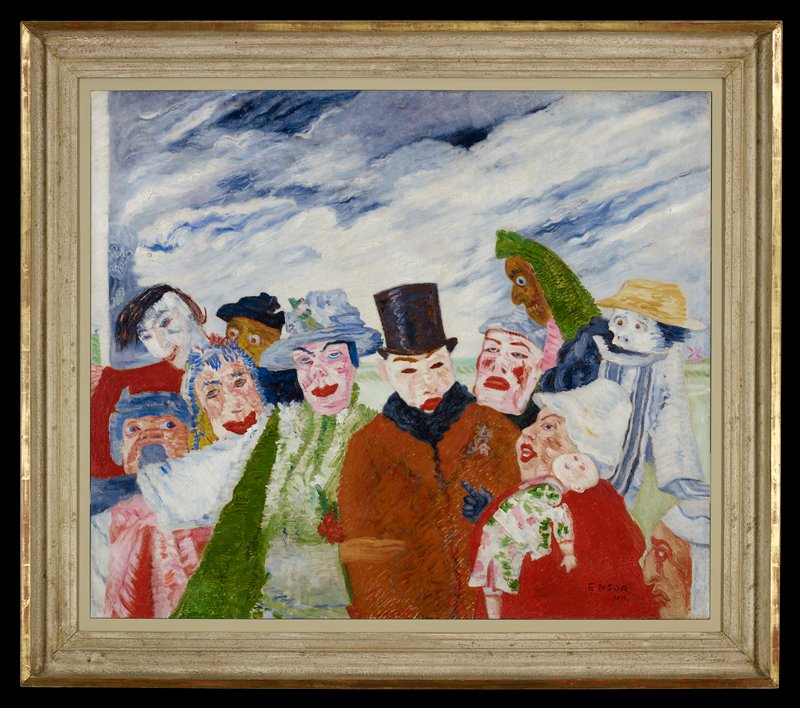
Вход Господень в Брюссель в 1889 году
О картине
Словами музея — на английском
James Ensor took on religion, politics, and art in this scene of Christ entering contemporary Brussels in a Mardi Gras parade. In response to the French pointillist style, Ensor used palette knives, spatulas, and both ends of his brush to put down patches of colors with expressive freedom. He made several preparatory drawings for the painting, including one in the J. Paul Getty Museum's collection. Ensor's society is a mob, threatening to trample the viewer--a crude, ugly, chaotic, dehumanized sea of masks, frauds, clowns, and caricatures. Public, historical, and allegorical figures, along with the artist's family and friends, make up the crowd. The haloed Christ at the center of the turbulence is in part a self-portrait: mostly ignored, a precarious, isolated visionary amidst the herdlike masses of modern society.
Читать дальше
Ensor's Christ functions as a political spokesman for the poor and oppressed--a humble leader of the true religion, in opposition to the atheist social reformer Emile Littré, shown in bishop's garb holding a drum major's baton and leading on the eager, mindless crowd. After rejection by *Les XX,* the artists' association that Ensor had helped to found, the painting was not exhibited publicly until 1929. Ensor displayed *Christ's Entry* prominently in his home and studio throughout his life. With its aggressive, painterly style and merging of the public with the deeply personal, *Christ's Entry* was a forerunner of twentieth-century Expressionism.
А тем временем в жизни художника
Вся жизнь целиком1860–1949
Место работы: Остенде
1880-е
Короткие поездки во Францию и Нидерланды
Энсор почти не путешествовал: за 1880-е годы — лишь три коротких поездки во Францию и две в Нидерланды.
1883–1893 · Членство
Общество ХХ
1887
Смерть отца
Умер отец, Джеймс Фредерик Энсор, — выходец из богатой английской семьи, так и не нашедший себя в Бельгии, над которым мещанский Остенде смеялся как над пьяницей и неудачником, но который всегда поддерживал увлечение сына искусством. Оставшись единственным мужчиной в семье, Джеймс почувствовал особую ответственность за младшую сестру Мариетт (Митче).
1888–1892
Переломные годы: страсти Христовы
Энсор обратился к религиозным темам, чаще всего к мукам Христа, выражая через них отвращение к бесчеловечности мира; атеист, он отождествлял себя с Христом как с жертвой насмешек. На вершине творческих сил, с 1886 по 1891 год, он сделал 86 из 133 своих офортов.