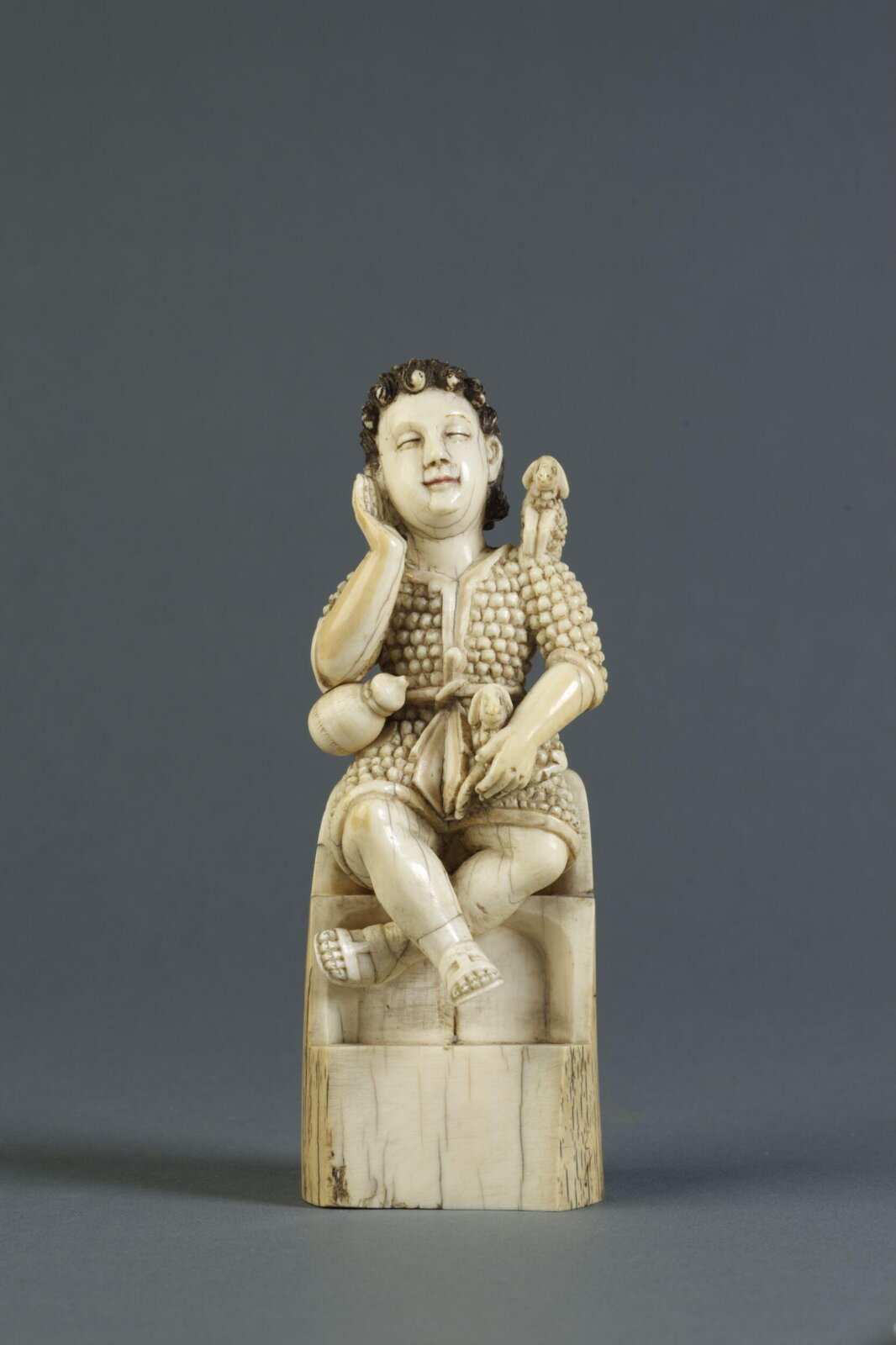
Christ as the Good Shepherd
Можно ли лицезреть?
Сейчас не принимает

Лондон, Великобритания
Числится в собрании, но в залах её сейчас нет.
- Проверено
- В этом положении с
- Источник
- Музей
О скульптуре
Словами музея — на английском
This Christ Child on an ivory seat would originally have been the main figure of a larger group showing the Mount of the Good Shepherd. It would have been placed at the top of the composition. This is a common subject in Indo-Portuguese ivories, and seems to be unique to Goa, which was the second base in India to be established by the Portuguese. It had been conquered by Alfonso de Albuquerque (about 1453-1515) during the reign of Manuel I of Portugal initially in 1510, and then reconquered in 1512. Portugal was interested first and foremost in trade, and the discovery of India was motivated by a desire to dominate trade-routes. But the Christian settlers and missionaries were also keen to convert the native populace to Christianity, and religious images in ivory were commissioned to assist in this.
Читать дальше
Some were exported to Europe, but others evidently remained and were used for evangelical purposes. From the sixteenth century onwards, the four main missionary Orders (Augustinians, Jesuits, Dominicans and Franciscans) built churches and aimed to convert the inhabitants of India. Despite the control of the Church over subject matter, the iconography of Indian art also permeated Christian ivories; the most obvious and at the same time strangest instance of this is the 'Mount of the Good Shepherd'. Although the precise parallels and/or sources in Indian are uncertain, this distinctive composition recurs again and again in Goan ivories. Often the Christ is shown asleep, recalling images of the Buddha in Indian art.
Музей Виктории и Альберта
Сведения
- Инвентарный номер
- A.43-1928
В каталоге
Источники
- Музей Виктории и Альберта
- Изображение: Музей Виктории и Альберта — © Музей Виктории и Альберта