 Герард ТерборхНидерланды, 1617–1681
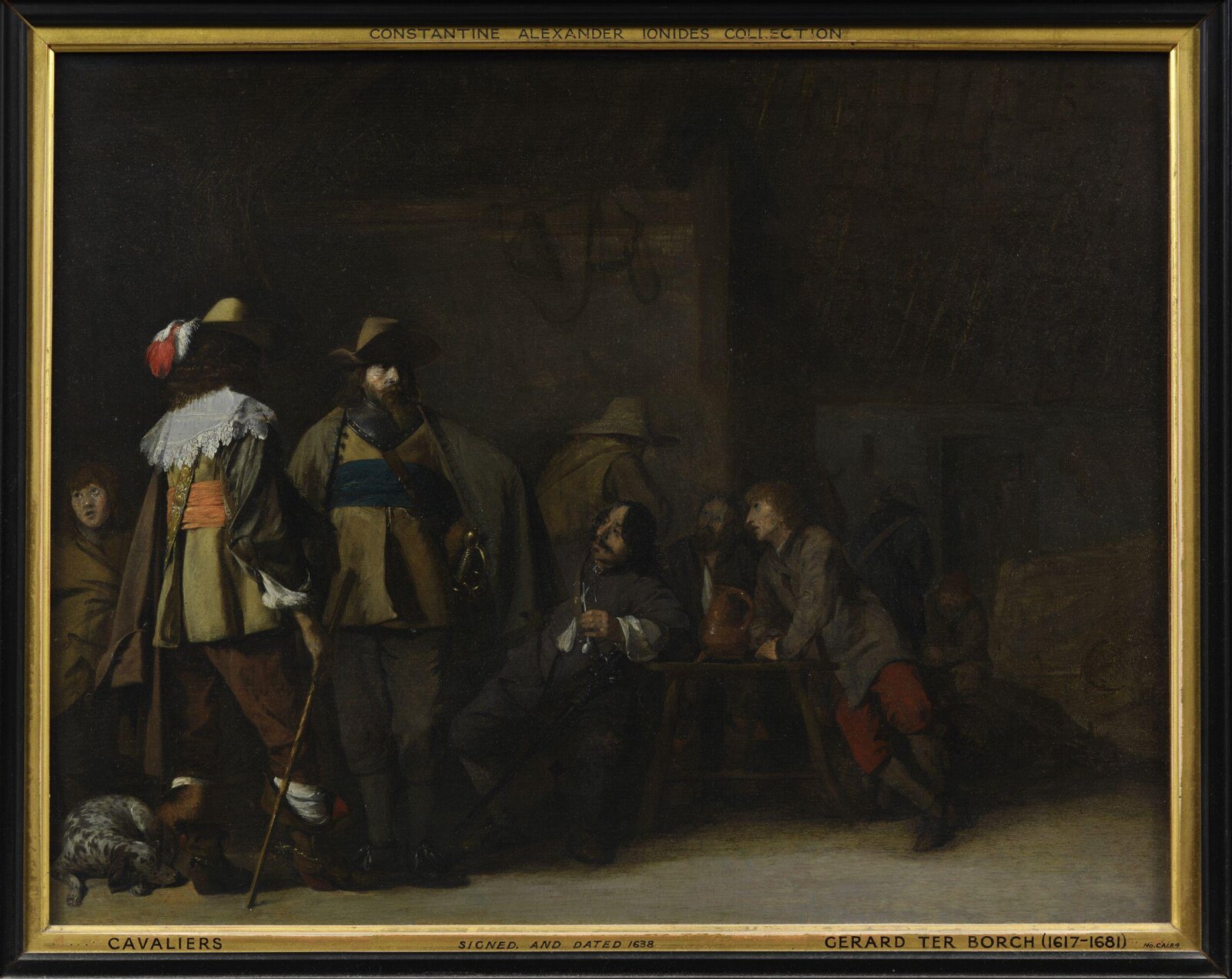
Cavaliers
Можно ли лицезреть?
Сейчас не принимает

Музей Виктории и Альберта
Лондон, Великобритания
Числится в собрании, но в залах её сейчас нет.
- Проверено
- В этом положении с
- Источник
- Данные самого музея
О картине
Словами музея — на английском
Gerard Ter Borch (1617-1681) was first trained by his father Gerard Ter Borch the Elder before going to Amsterdam in 1634 as an apprentice to the landscape painter Pieter Molijn (1595-1661). He joined the Haarlem Guild of St Luke in 1635 and soon went travelling in Europe until the early 1640s. He then moved to Deventer where he settled definitively at the end of the 1640s. He made few historical subjects and produced chiefly scenes of everyday life including scenes of skaters, soldiers and markets, high-life interior subjects and portraits. His genre paintings had a considerable influence on such contemporaries as Gabriel Metsu, Pieter de Hooch, Frans van Mieris and Johannes Vermeer. He had many pupils among which the most eminent was Caspar Netscher and his oeuvre was extensively copied.
Читать дальше
This painting shows a guardroom scene with cavaliers and peasants resting in a domestic interior or a tavern. Unlike many Dutch painters who depicted soldiers, Ter Borch was familiar with them from personal experience. His native city, Zwolle and Deventer where he permanently settled in 1654 both housed garrisons because they were situated along the strategic defence lines established during the war with the Spanish. The date inscribed on the painting by a probable later hand, 1638, is consistent with the style of the painting but at that time, Ter Borch was still travelling in Europe. He most likely executed this painting during the early 1640s, once he was back in the Netherlands and witnessed the end of the Thirty Years War (1618-1648).
Музей Виктории и Альберта
Сведения
- Инвентарный номер
- CAI.84
Источники
- Музей Виктории и Альберта: открытые данные самого музея · получено 10 дней назад
- Изображение: Музей Виктории и Альберта — © Музей Виктории и Альберта
А тем временем в жизни художника
Вся жизнь целиком1636–1643
Путешествия по Италии, Испании и Франции
По сведениям биографа Арнольда Хоубракена, в 1636–1643 годах путешествует по Италии, Испании, Франции и Южным Нидерландам; в Мадриде пишет не сохранившийся портрет Филиппа IV и испытывает влияние Веласкеса. По другим данным, в Мадрид его пригласили позднее, и Филипп IV пожаловал ему службу и рыцарское звание, но из-за интриги ему пришлось вернуться в Нидерланды.
1640
Возвращается в Зволле
После смерти дяди от чумы в 1640 году возвращается в родной Зволле.
1640–1645
Работает портретистом в Амстердаме и Харлеме
С 1640 по 1645 год живёт в Голландии, главным образом в Амстердаме и Харлеме, и делает себе имя портретиста: пишет небольшие портреты в полный рост, возможно, под влиянием Хендрика Пота и Питера Кодде, а также «солдатские сцены» (kortegaardjes) — группы гвардейцев. Его портретный стиль складывается к началу 1640-х и почти не меняется: модели в чёрном на нейтральном, чаще сером фоне.