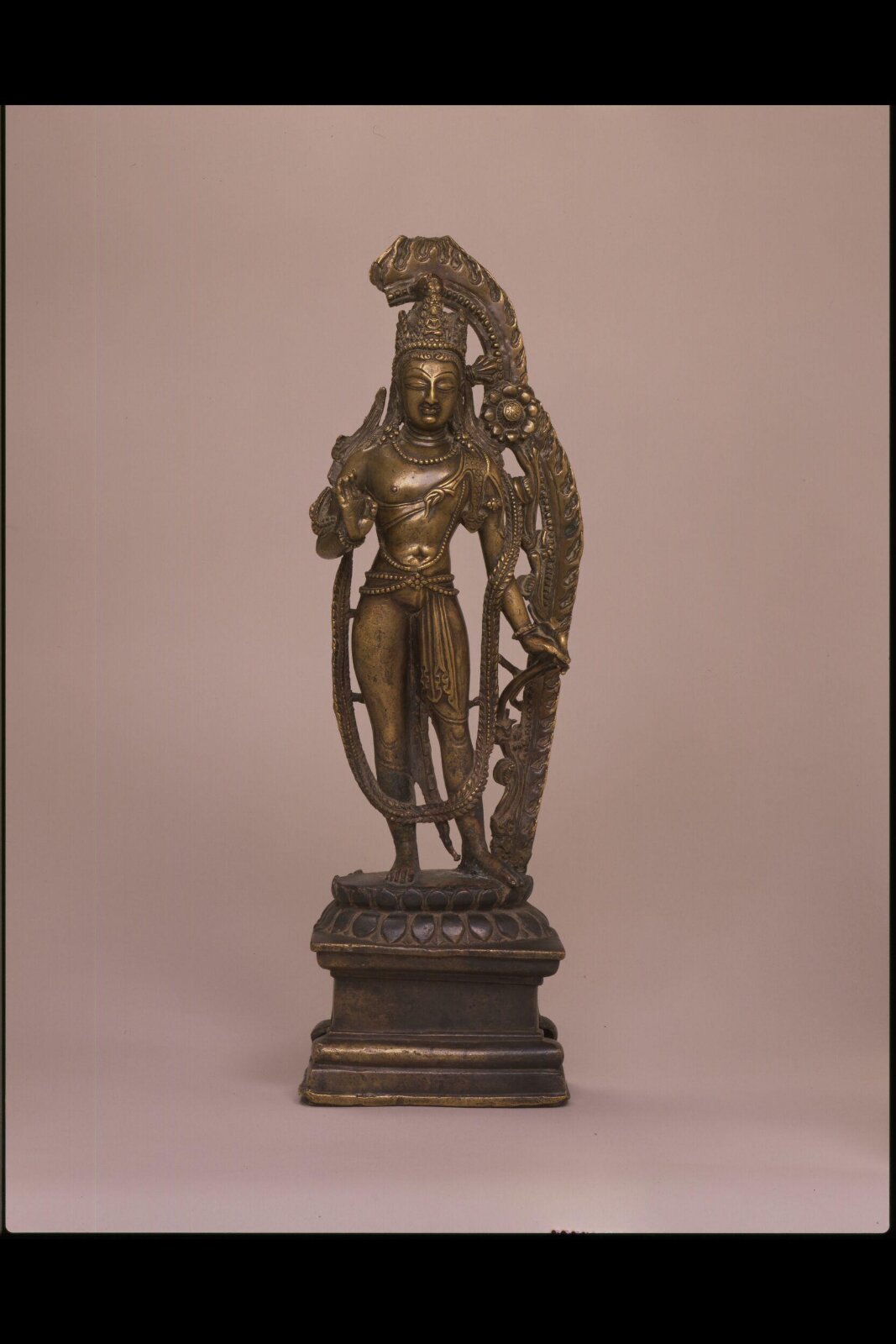
Bodhisattva Avalokitesvara
Можно ли лицезреть?
Сейчас не принимает

Музей Виктории и Альберта
Лондон, Великобритания
Числится в собрании, но в залах её сейчас нет.
- Проверено
- В этом положении с
- Источник
- Музей
О скульптуре
Словами музея — на английском
Here the supreme Buddhist saviour Avalokitesvara raises his hand in a gesture of reassurance and protection to his devotees. The gesture underscores the role of the bodhisattva, as the supreme expression of the Mahayana Buddhist concept of the compassionate saviour. (Bodhisattava is the name given to one on the path towards becoming a buddha.)
The figure is flanked by a lotus stem and flower asserting his dual title as Padmapani, the ‘Lotus-bearer’. He wears a three-pointed crown (mukuta) in the centre of which is the figure of Amitabha, the Buddha of Eternal Light and his spiritual mentor. An antelope skin (mrigajma), Avalokitesvara’s principal attribute, is tied firmly across his chest.
Читать дальше
Several features reflect stylistic conventions that were part of the tradition of the Gupta period (320-about 540 AD) tradition that were well-preserved in Kashmir. These include the conventional folds of the figure’s neck (kombu-griva), the flexed torso and masterfully modelled pleats of the waist-skirt.
The dating of Kashmir Buddhist sculpture is problematic, but this example has a close stylistic correspondence with one of the few dated Kashmiri bronzes. In this instance it is the Sugatisandarsana Lokesvara, which was dedicated during the reign of Queen Didda (980-1003).
Музей Виктории и Альберта
Сведения
- Инвентарный номер
- IS.26-1987
В каталоге
Источники
- Музей Виктории и Альберта
- Изображение: Музей Виктории и Альберта — © Музей Виктории и Альберта