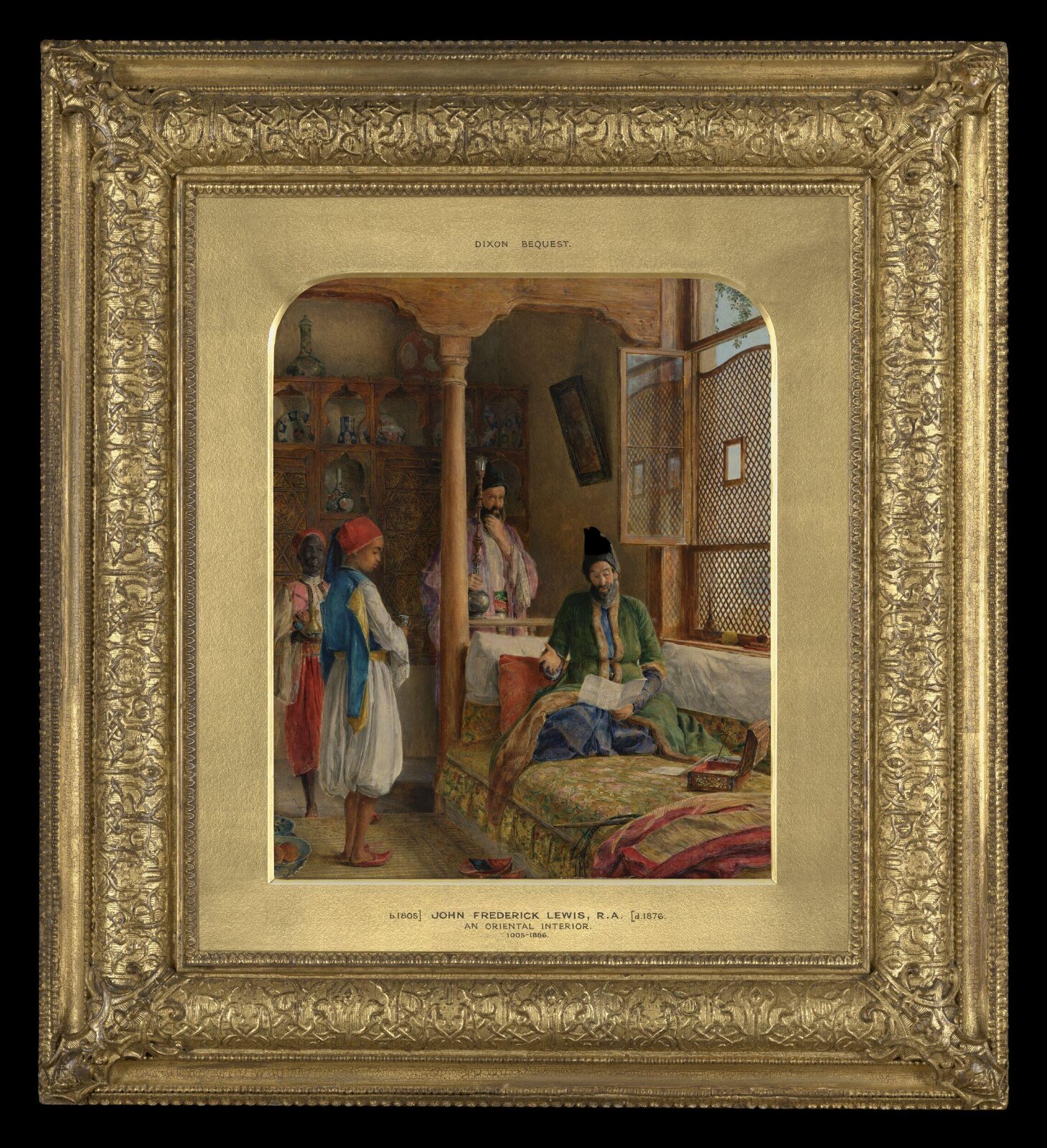
 Джон Фредерик ЛьюисАнглия, 1805–1876
An Oriental Interior
Можно ли лицезреть?
Неизвестно: музей хранит молчание

Музей Виктории и Альберта
Лондон, Великобритания
Хозяин известен. Выставлена ли она сейчас, музей не сообщает, а гадать мы не обучены.
- В этом положении с
- Источник
- Данные самого музея
О картине
Словами музея — на английском
At first sight, this painting is an exotic and rather subtle version of what must have been a fairly common Victorian domestic drama. In a Turkish interior, a rich Persian is upbraiding his shifty-looking servants, having been presented with alarmingly high household bills. For some unexplained reason, Lewis does not indicate that it is also a portrait of Prince Hulugu Mirza, the cousin of the reigning Shah of Persia.
Читать дальше
Lewis and the painter David Wilkie were both in Constantinople in 1840, and both had visited and produced several portraits of the Prince, his servants and his new Circassian slave. Hulugu was in exile, as his father had tried unsuccessfully to seize the throne. According to David Wilkie the Prince was 'living at Constantinople on a pension allowed him by the Turkish Government. Having been active in political intrigue, his return to his native country would be unwelcome to the existing power, and dangerous to himself.' Presumably the pension was not big enough to pay all the bills. Wilkie had wanted to use the noble head of the Prince as a model for a figure of Christ, while Lewis (perhaps aware of Wilkie's intention) slyly portrays the Prince as an all-too-human being.
Музей Виктории и Альберта
Сведения
- Инвентарный номер
- 1005-1886
В каталоге
Источники
- Музей Виктории и Альберта: открытые данные самого музея · получено 7 дней назад
- Изображение: Музей Виктории и Альберта — © Музей Виктории и Альберта