Рой ЛихтенштейнСША, 1923–1997
Alka Seltzer
Можно ли лицезреть?
Сейчас не принимает

Чикагский институт искусств
Чикаго, США
Числится в собрании, но в залах её сейчас нет.
- Проверено
- 5 часов назад
- В этом положении с
- 19 авг. 2026 г.
- Источник
- Данные самого музея
О работе
Словами музея — в подлиннике
Roy Lichtenstein had been exhibiting in galleries for nearly ten years when, in 1961, he dramatically changed the course of his work. Prompted by the comic strips on his children’s gum wrappers, he began to create paintings based on cartoon images. The reductive style that soon emerged became his particular contribution to the idiom known as Pop Art. From around 1961 until 1968, the artist created a group of highly finished black-and-white drawings that demonstrate his subversive use of commercial illustration techniques. In Alka Seltzer, Lichtenstein exploited everyday practices of visual representation and magnified them, indicating the gas bubbles rising over the glass by meticulously scraping away extra spaces from a field of imitation hand-stenciled Benday dots.
Читать дальше
To signify the reflective surface of the glass, he drew flat black graphite shapes—a parody, like the dots, of the reductive, linecut effect of pulp advertising. The artist’s use of mechanical reproduction conventions served to unify his composition and produce movement and volume on a two-dimensional surface. Alka Seltzer is one of Lichtenstein’s watershed works because it shows the artist summing up his early graphic techniques and introducing what would become his most significant formal preoccupations in the years that followed.
Чикагский институт искусствCC BY 4.0
Сведения
- Инвентарный номер
- 1993.176
В каталоге
Источники
- Чикагский институт искусств: открытые данные самого музея · получено 6 дней назад
- Изображение: Чикагский институт искусств — © автор или правообладатель
А тем временем в жизни художника
Вся жизнь целиком1963–1964
Уход из Рутгерса и возвращение в Нью-Йорк
В сентябре 1963 года Лихтенштейн взял отпуск в колледже Дуглас при Рутгерском университете, а в 1964 году вернулся в Нью-Йорк, чтобы быть в центре художественной жизни, и ушёл из Рутгерса, чтобы посвятить себя живописи.
1964
Первый американец на выставке в галерее Тейт
Лихтенштейн стал первым американцем, показавшим работы в лондонской галерее Тейт, — на выставке «’54–’64: Painting and Sculpture of a Decade».
1964
Журнал Life: «Худший ли он художник в США?»
Когда работы Лихтенштейна впервые выставили, критики оспаривали их оригинальность и называли их вульгарными и пустыми; статья журнала Life 1964 года была озаглавлена «Худший ли он художник в США?». Художник отвечал, что чем ближе его работа к оригиналу, тем острее её содержание.
1967
Первая музейная ретроспектива в Пасадене
В 1967 году в Художественном музее Пасадены в Калифорнии прошла первая музейная ретроспектива Лихтенштейна.
1967
Первые персональные выставки в Европе
В том же 1967 году Лихтенштейн впервые показал персональные выставки в Европе — в музеях Амстердама, Лондона, Берна и Ганновера.
1968
Брак: Дороти Лихтенстайн


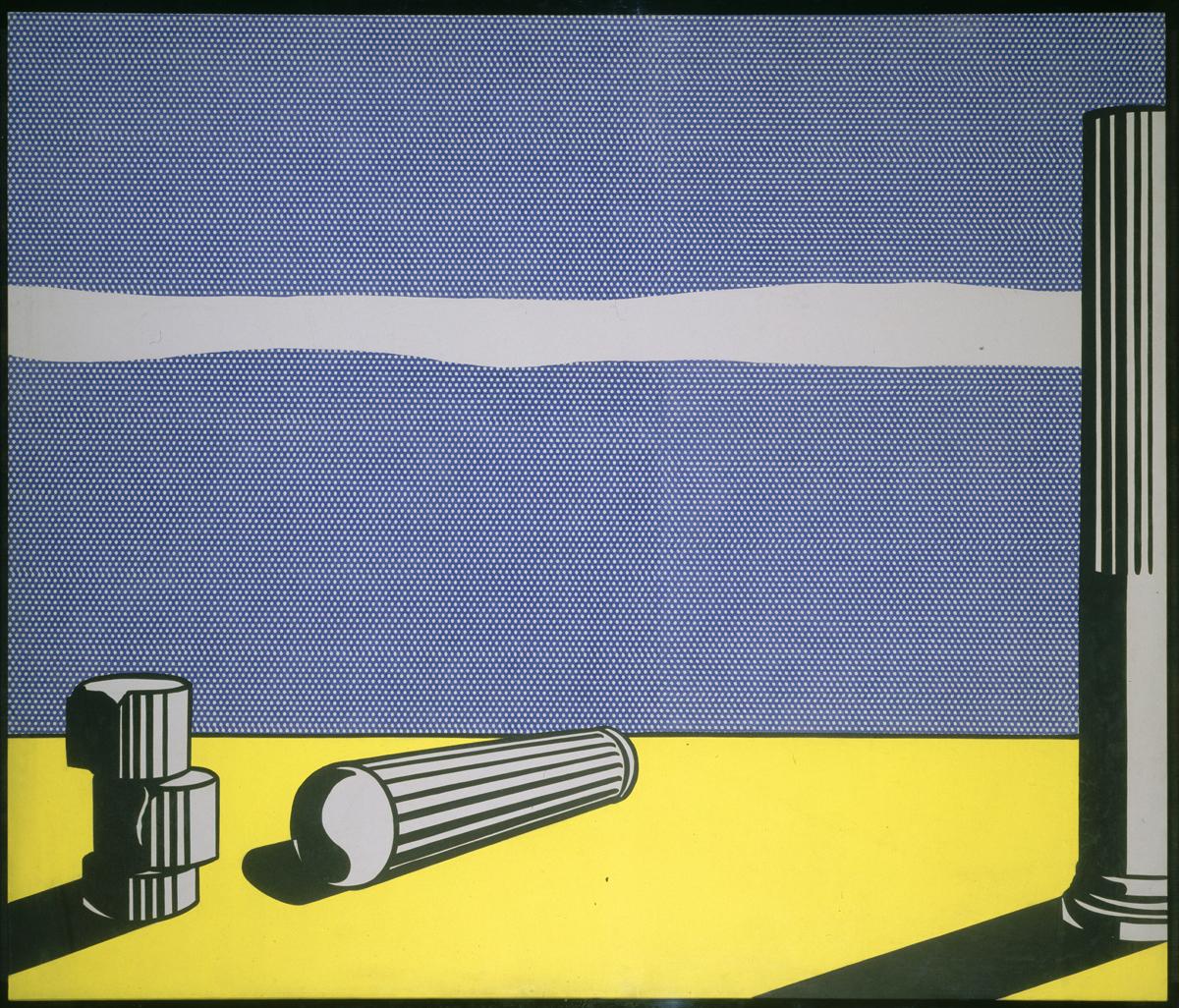
![Без названия [pyramid], Рой Лихтенштейн, ок. 1970](https://whitneymedia.org/assets/artwork/61776/2019_234_14_cropped.jpg)
![Без названия [pyramid], Рой Лихтенштейн, ок. 1970](https://whitneymedia.org/assets/artwork/61778/2019_234_16_cropped.jpg)
![Без названия [pyramid], Рой Лихтенштейн, ок. 1970](https://whitneymedia.org/assets/artwork/61777/2019_234_15_cropped.jpg)
![Без названия [pyramid], Рой Лихтенштейн, ок. 1970](https://whitneymedia.org/assets/artwork/61763/2019_234_1_cropped.jpg)