 Антонис ван ДейкФландрия, 1599–1641
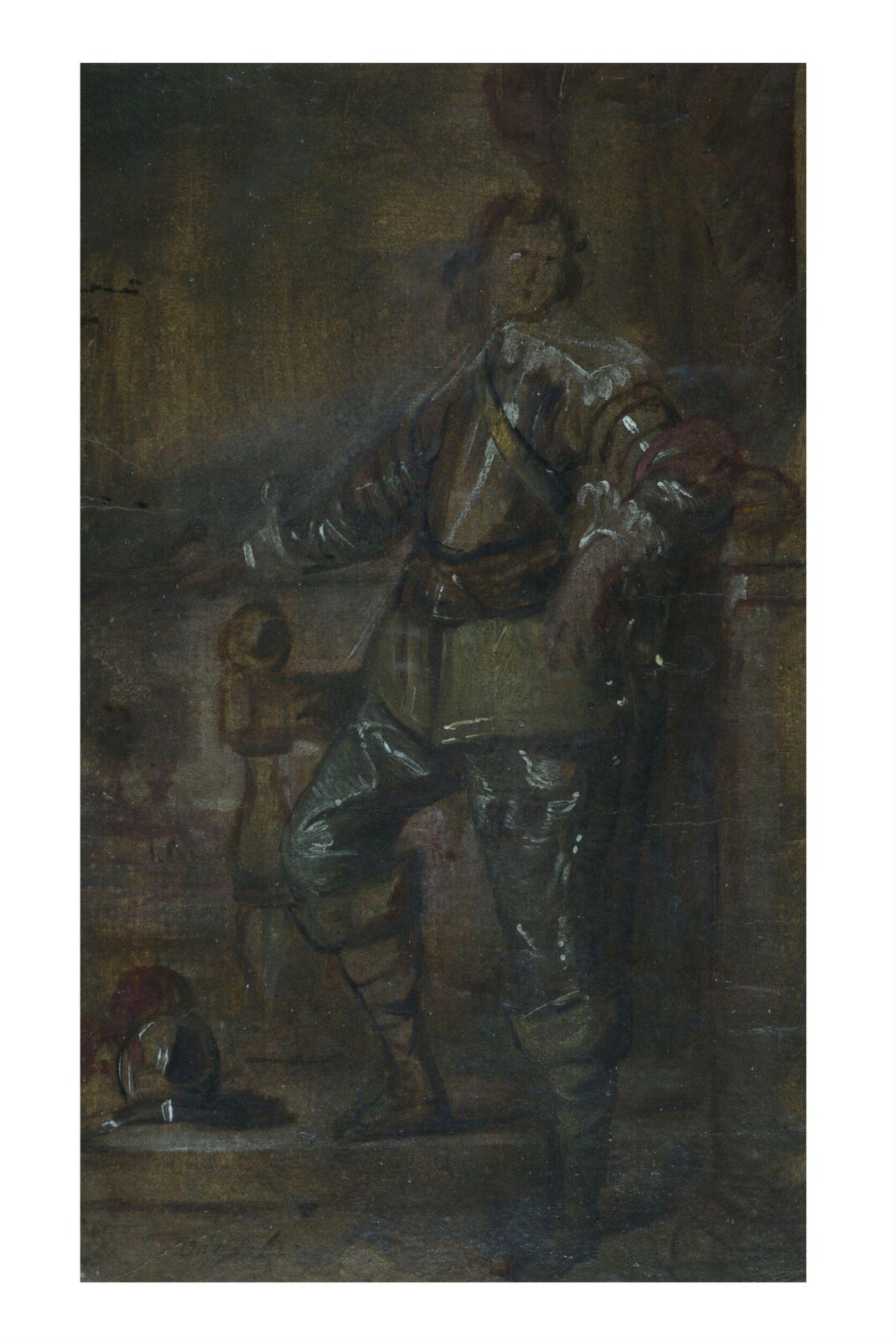
A Man in Half Armour
Можно увидеть?
Сейчас не выставлена
Где сейчас «A Man in Half Armour»? Собрание: Музей Виктории и Альберта, Лондон. Сейчас не выставлена. Проверено 25 сентября 2026 г.

Лондон, Великобритания
Числится в собрании, но в залах её сейчас нет.
- Проверено
- Этот статус с
- Источник
- Музей
О картине
Словами музея — на английском
A man in half armour and wearing a sheathed sword, standing at a balustrade with left arm akimbo and right arm outstretched, his red plumed helmet at his feet and a red scarf tied at his right elbow. Sir Anthony van Dyck (b. 1599, Antwerp, d. 1641, London) was a Flemish painter and one of the most important and prolific portraitists of the 17th century. He spent two years in the workshop of Peter Paul Rubens in Antwerp and from 1620-1627 traveled in Italy, where he was in great demand as a portraitist and where he developed his maturing style. He toned down the Flemish robustness of his early work to concentrate on a more dignified, elegant manner. In his portraits of Italian aristocrats he painted idealized figures with proud, erect stances, slender figures, and the famous expressive “van Dyck” hands.
Читать дальше
Influenced by the Venetian painters Titian, Paolo Veronese, and Giovanni Bellini, he adopted their rich, jewel-like colours. In 1632 he moved to London and became court painter to King Charles I, who knighted him shortly after his arrival. Van Dyck painted most of the English aristocracy and his style became lighter and more luminous, with thinner paint and more sparkling highlights in gold and silver. He set a new style for Flemish art and founded the English school of painting; the portraitists Sir Joshua Reynolds and Thomas Gainsborough of that school were his artistic heirs. Dyce.11 appears to be an oil sketch for a portrait or history painting by van Dyck or in his manner and may represent only a section of a larger composition. The arm akimbo stance and 3/4 turn are favourite motifs in van Dyck and similar half-length portraits of men in armour dating to the 1620s are found for example in musuems in Vienna and Dresden e.
Музей Виктории и Альберта
Сведения
- Инвентарный номер
- DYCE.11
В каталоге
Источники
- Музей Виктории и Альберта
- Изображение: Музей Виктории и Альберта — © Музей Виктории и Альберта
В жизни художника
Вся жизнь целиком22 марта 1599
Рождение
с 1617 года
Начало работы с Рубенсом
Начиная с 1617 года Ван Дейк длительное время сотрудничал с Питером Паулем Рубенсом, учеником которого он стал, оставив свою независимую мастерскую; Рубенс отзывался о нём как о своём лучшем ученике.
20 ноября 1621
Отъезд в Италию, прибытие в Геную
В 1621 году Ван Дейк решил уехать в Италию; Рубенс снабдил его средствами и рекомендательными письмами. 20 ноября 1621 года он прибыл в Геную и оставался в Италии шесть лет, где закрепилась его слава портретиста.
5 июля 1632
Первый живописец короля Карла I
5 июля 1632 года Карл I официально назначил Ван Дейка первым королевским живописцем, гарантировав годовой доход в двести фунтов стерлингов; король подарил ему большой дом с садом на берегу Темзы.
27 февраля 1640
Брак: Мэри Рутвен
9 декабря 1641
Кончина