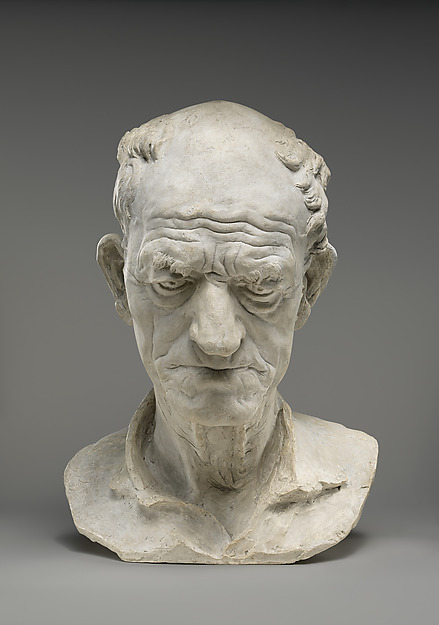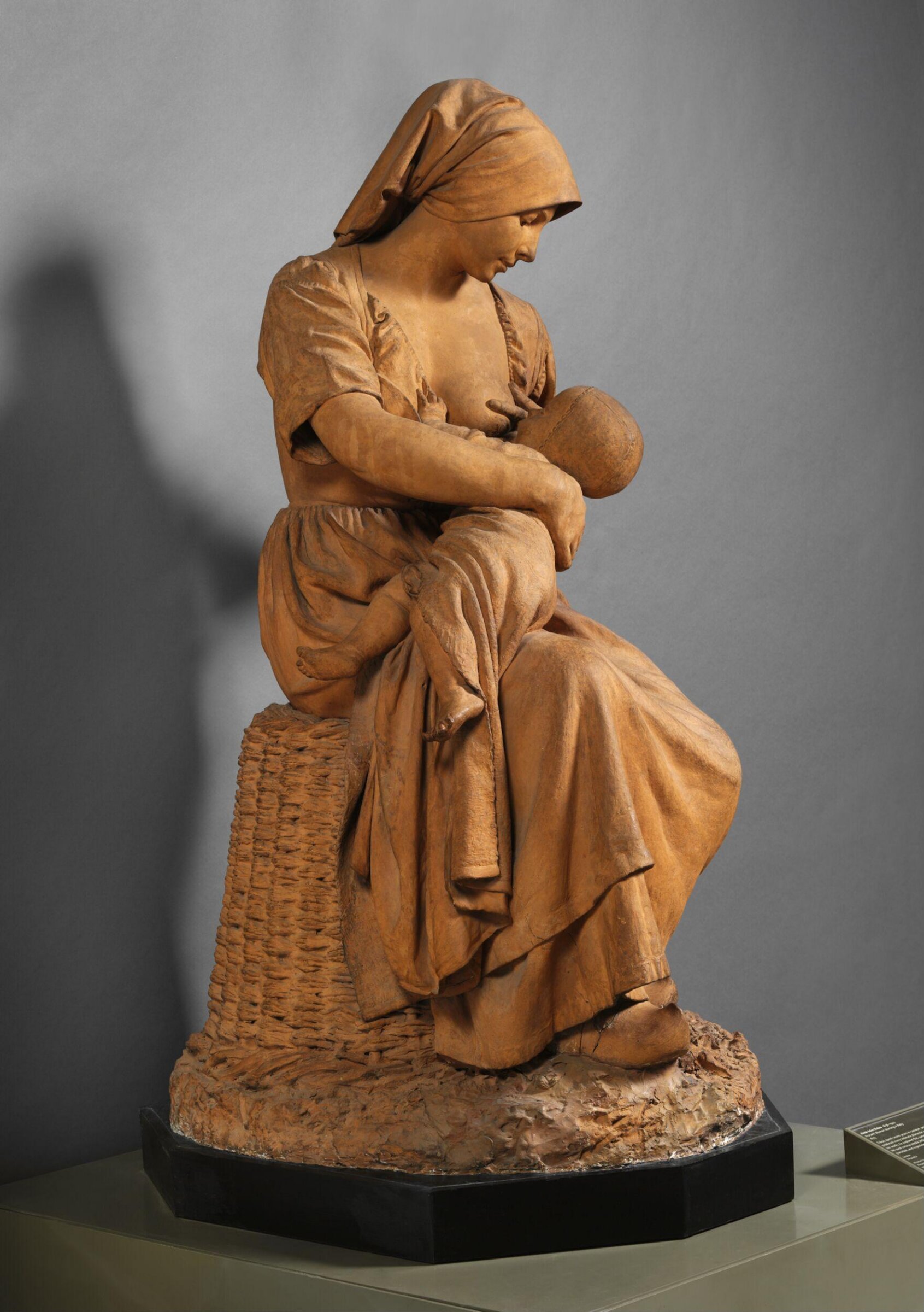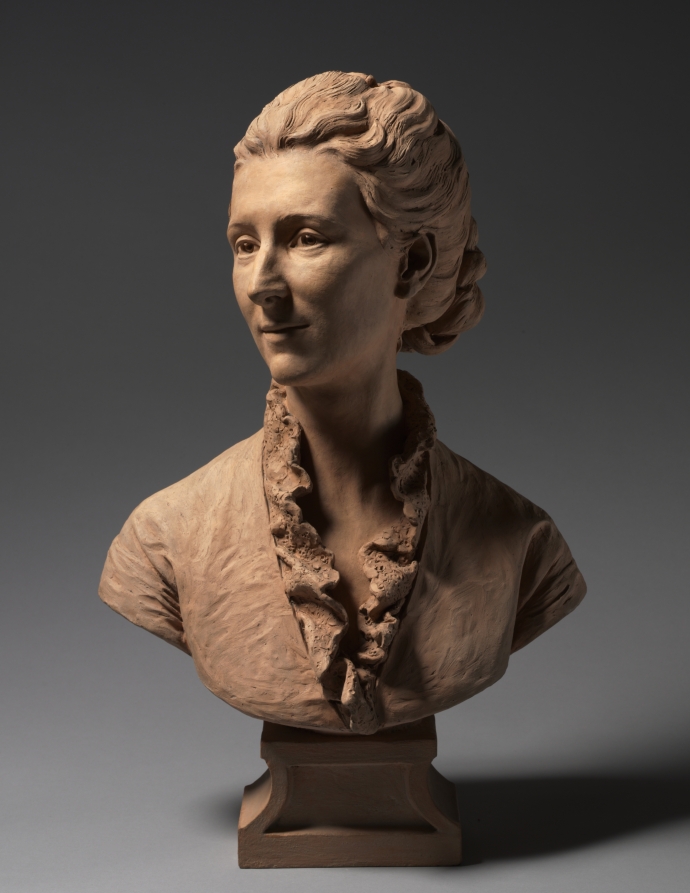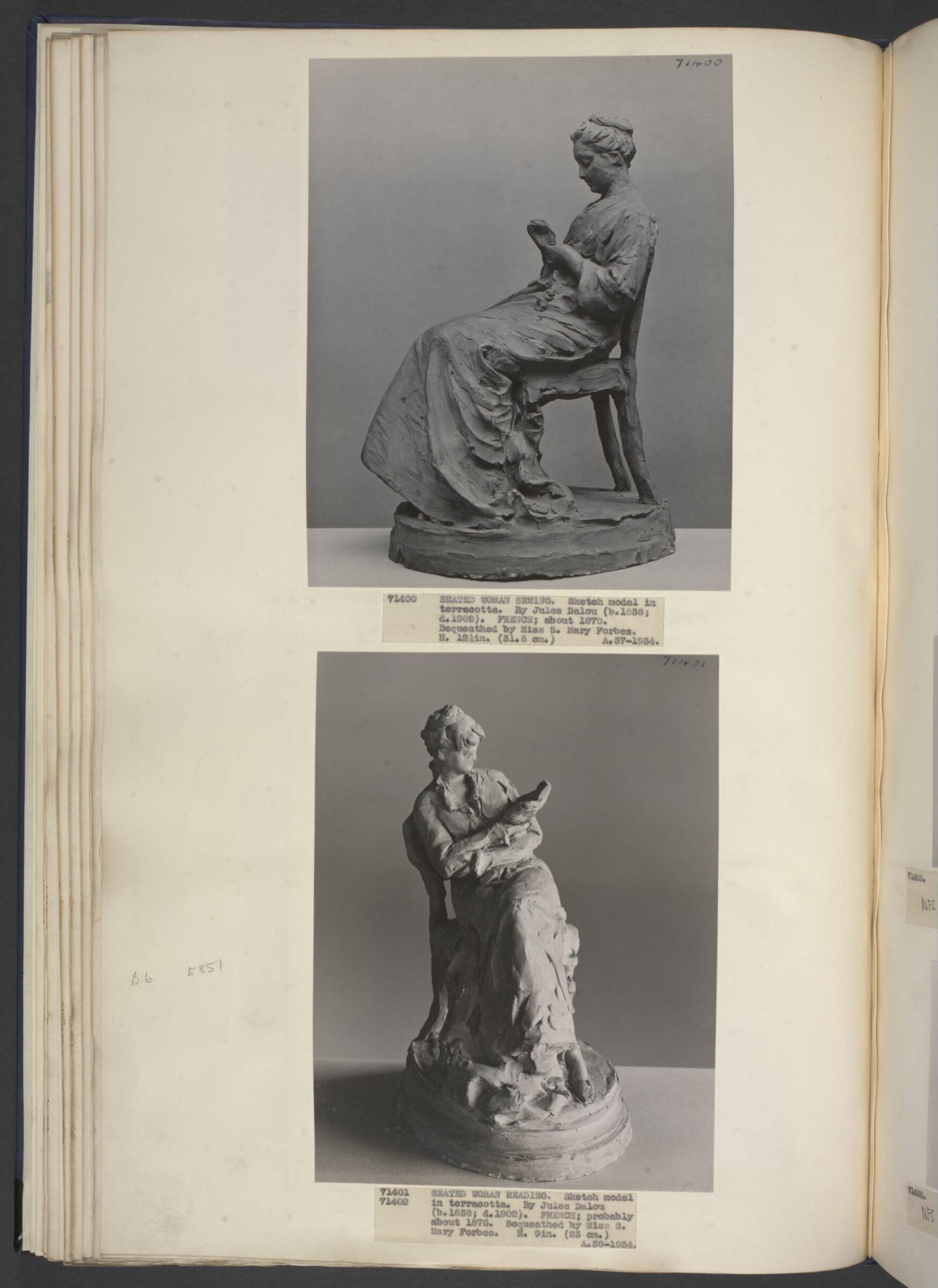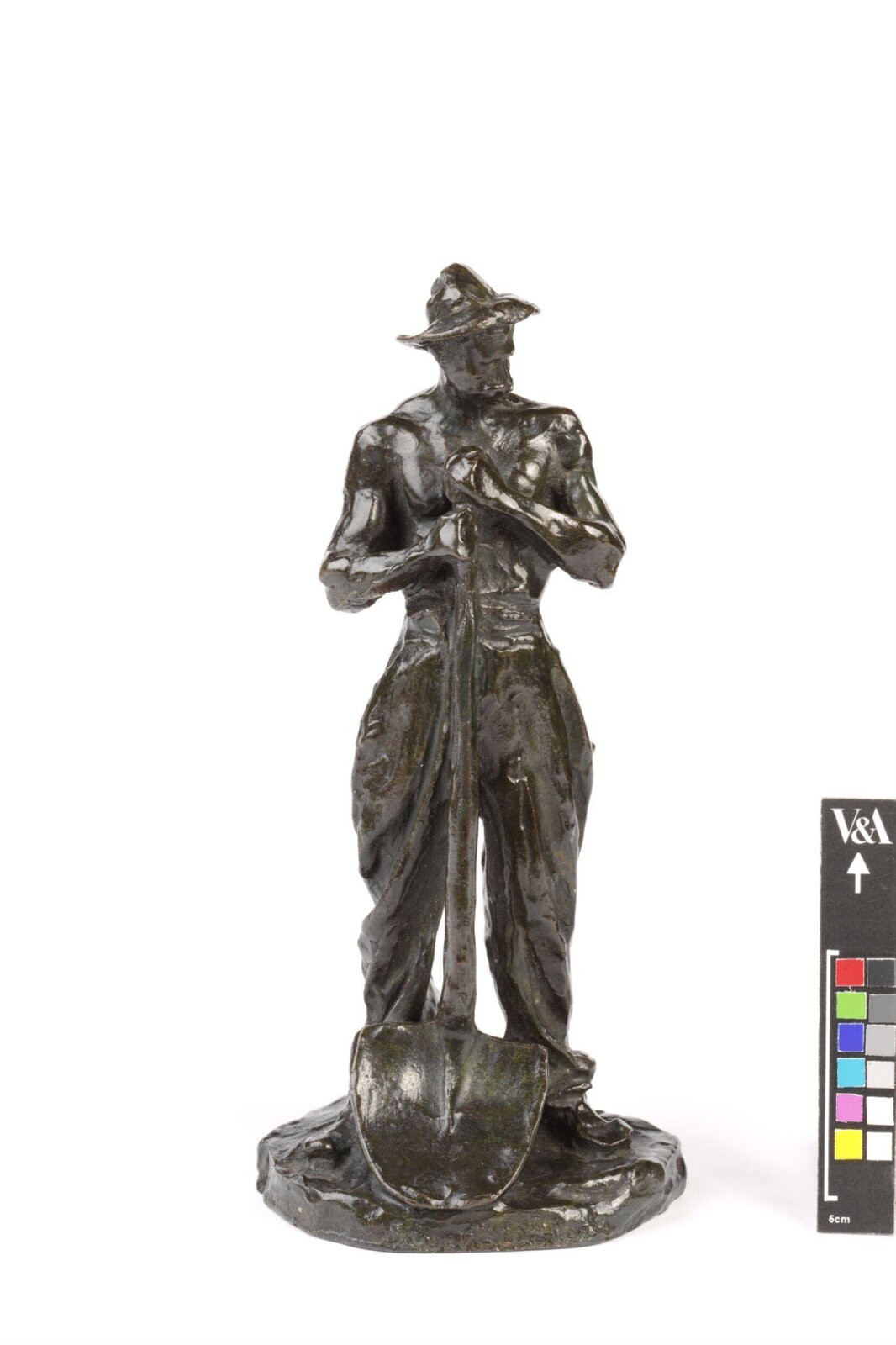
 Aimé-Jules DalouFrança, 1838–1902
Workman with a Shovel
Será possível contemplá-la?
Sim, recebe visitas

Exposta ao público. Quem o garante vem indicado abaixo.
- Verificado
- Neste estado desde
- Fonte
- O museu
Sobre a escultura
Dalou believed in traditional craftsmanship and disapproved of the contemporary practice of producing sand-cast sculpture in large quantities. This model is signed by the artist as well as by the foundry that cast it. It was intended for a large-scale monument but never brought to completion. This figure is cast by the lost-wax method. Inscribed ‘DALOU’ and ‘cire perdue’ on the back of the base and ‘Susse Frs Edn Paris’on the front. Stamped with the foundry mark ‘SUSSE FRERES PARIS LOITEURS’ and, in the middle, a trademark of blacksmiths’ tools.
Continuar a ler
Dalou (1838-1902) was the son of a glove maker and initially trained in drawing at the Petit École in Paris. There he was encouraged to do sculpture. In 1854 he entered the École des Beaux-Arts, where he trained for four years. He was known for his left-wing political sympathies and was involved in the establishment of the Paris Commune in 1871. After his overthrow he was forced into exile in London, where he lived from 1871 until his return to Paris in 1879. In London he frequently exhibited at the Royal Academy and he was given a teaching appointment at the National Art Training School in South Kensington (later the Royal College of Art), where he had a profound effect on the development of British sculpture.
Museu Vitória e Alberto
Pormenores
- Número de inventário
- A.31-1971
O que mostra
No catálogo
Fontes
- Museu Vitória e Alberto
- Imagem: Museu Vitória e Alberto — © Victoria and Albert Museum, London