ART WIKI32 963 em exposição
MapaColeçãoArtistasMuseusExposiçõesRevista
Entrar

ART WIKI

Onde está a obra-prima, e a que horas se abre a porta.

Coleções: Art Institute of Chicago, Galeria Nacional de Arte, Galeria Tretiakov, Getty Villa, Harvard Art Museums, Hermitage, Hirshhorn Museum and Sculpture Garden, Instituto de Artes de Minneapolis, Museu de Arte de Cleveland, Museu de Arte Moderna, Museu do Louvre, Museu Estatal de Amesterdão, Museu J. Paul Getty, Museu Metropolitano de Arte, Museu Nacional de Arte da Dinamarca, Museu Pushkin, Museu Russo, Museu Smithsoniano de Arte Americana, Museu Vitória e Alberto, Museu Whitney de Arte Americana, National Museum of Asian Art, National Portrait Gallery, Catálogo Estatal do Fundo Museológico da Rússia (274 museus), Europeana (19 museus), Wikidata (6 museus), Paris Musées (12 museus) e Joconde, a base de museus do Ministério da Cultura de França (495 museus). As imagens pertencem aos titulares dos direitos.

Secções

  • Mapa
  • Pesquisa
  • Coleção
  • Obras-primas
  • Em exposição agora
  • Artistas

Mais

  • Museus e galerias
  • Exposições
  • Revista
  • De onde vêm os dados
  • Privacidade e cookies
InícioMapaCatálogo
  1. Coleção/
  2. Museu Estatal de Amesterdão/
  3. Winter Landscape
Winter Landscape, Gustave Courbet, 1850 - 1877
Gustave Courbet, retratoGustave CourbetFrança, 1819–1877

Winter Landscape

1850 - 1877 · Painting

Será possível contemplá-la?

Desconhecido

Museu Estatal de Amesterdão

Amesterdão, Países Baixos

O proprietário é conhecido; não se sabe se hoje está exposta.

Fonte
O museu
No mapaPágina do museu

Sobre a pintura

Nas palavras do museu — em holandês

Winterlandschap. Gezicht in een besneeuwd bos.

Museu Estatal de Amesterdão

Pormenores

1850 - 1877
18191877
Número de inventário
SK-A-3295

O que mostra

Forest, woodSnow

No catálogo

PinturasÓleoPintura francesaRealismoSéculo XIX

Fontes

  • Museu Estatal de Amesterdão
  • Imagem: Museu Estatal de Amesterdão — public domain

Entretanto, na vida de Gustave Courbet

A vida inteira
  1. 1849

    Gold medal at the Salon of 1849

    Courbet's first Salon success came with “After Dinner at Ornans”, reminiscent of Chardin and Le Nain; it earned him a gold medal and was purchased by the state. The medal exempted his works from jury approval at the Salon until 1857, when the rule changed.

  2. 1850–1851

    Salon of 1850–1851: “A Burial at Ornans”

    At the Salon of 1850–1851 Courbet showed “The Stone Breakers”, “The Peasants of Flagey” and “A Burial at Ornans”: the canvas, about 3 by 6.7 metres, drew both praise and fierce denunciation, with critics accusing him of a deliberate pursuit of ugliness. Courbet became a celebrity, spoken of as a genius, a “terrible socialist” and a “savage”.

  3. 1855

    Stages the “Pavilion of Realism”

    Refusing to accept the jury's decision, Courbet asked museums and private owners to lend his paintings, had a separate building erected and showed about forty canvases there, without state permission, under the Second Empire. The public was baffled and laughed at the “crude art”, and the critics mocked him; the paintings were appreciated by Delacroix and Baudelaire.

  4. 16 May 1871

    The fall of the Vendôme Column

    On 16 May 1871, nine days before the fall of the Commune, the column whose removal Courbet had requested back in September 1870 was pulled down in a large ceremony with military bands and photographers and broke into pieces. Some witnesses said Courbet was there, others denied it.

  5. 1873

    Leaves for Switzerland to escape the debt for the column

    In 1873 the newly elected president of the Republic, Patrice de MacMahon, announced plans to rebuild the column at Courbet's expense. Unable to pay, he went into self-imposed exile in Switzerland to avoid bankruptcy and remained there until his death.

  6. 31 de dezembro de 1877

    Died

Mais obras de Gustave Courbet

Todas as obras
Young Ladies of the Village, Gustave Courbet, 1851–52

Young Ladies of the Village

1851–52 · Museu Metropolitano de Arte

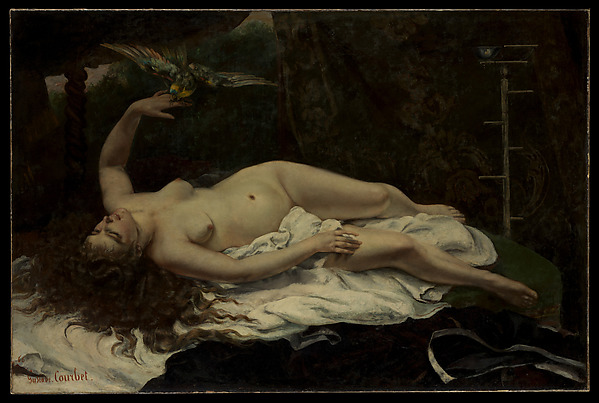
Woman with a Parrot, Gustave Courbet, 1866

Mulher com um louro

1866 · Museu Metropolitano de Arte

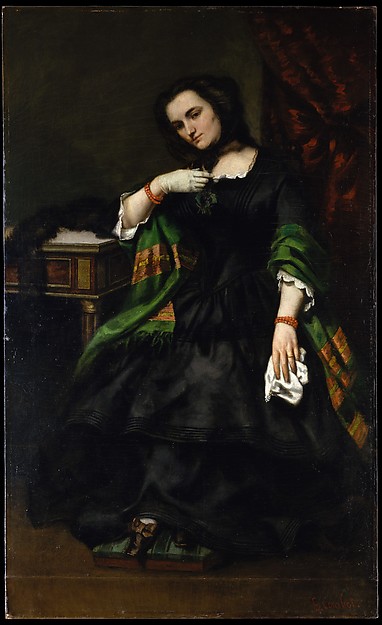
Madame Auguste Cuoq (Mathilde Desportes, 1827–1910), Gustave Courbet, ca. 1852–57

Madame Auguste Cuoq (Mathilde Desportes, 1827–1910)

ca. 1852–57 · Museu Metropolitano de Arte

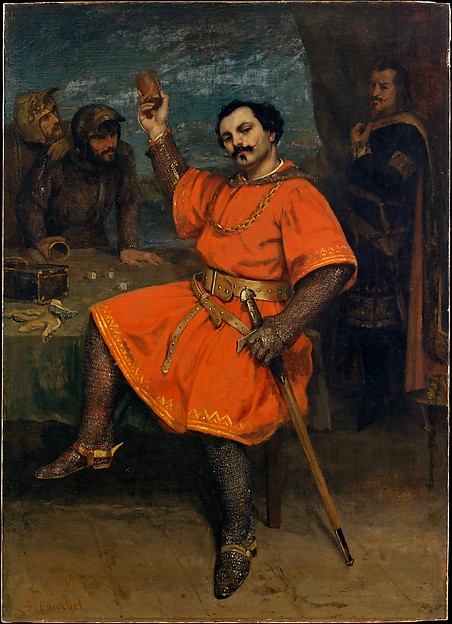
Louis Gueymard (1822–1880) as Robert le Diable, Gustave Courbet, 1857

Louis Gueymard (1822–1880) as Robert le Diable

1857 · Museu Metropolitano de Arte

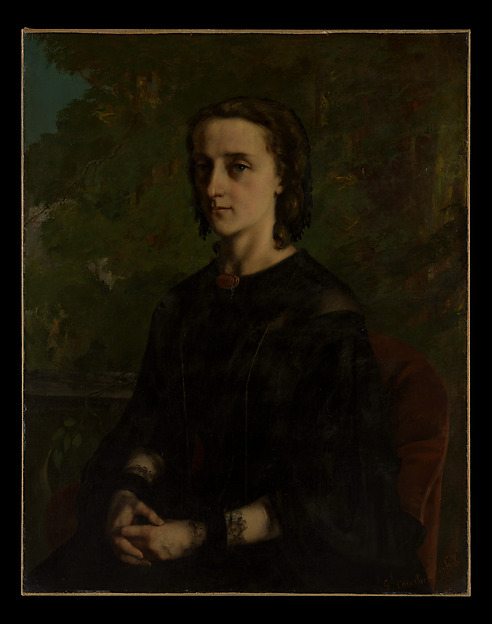
Madame Frederic Breyer (Fanny Hélène Van Bruyssel, 1830–1894), Gustave Courbet, 1858

Madame Frederic Breyer (Fanny Hélène Van Bruyssel, 1830–1894)

1858 · Museu Metropolitano de Arte

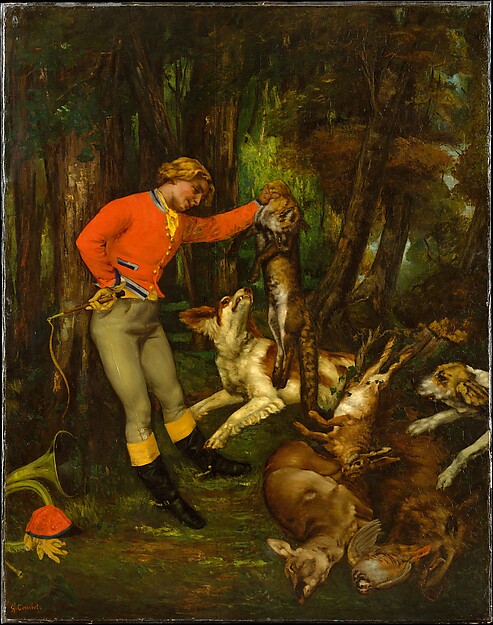
After the Hunt, Gustave Courbet, ca. 1859

After the Hunt

ca. 1859 · Museu Metropolitano de Arte

The Source, Gustave Courbet, 1862

The Source

1862 · Museu Metropolitano de Arte

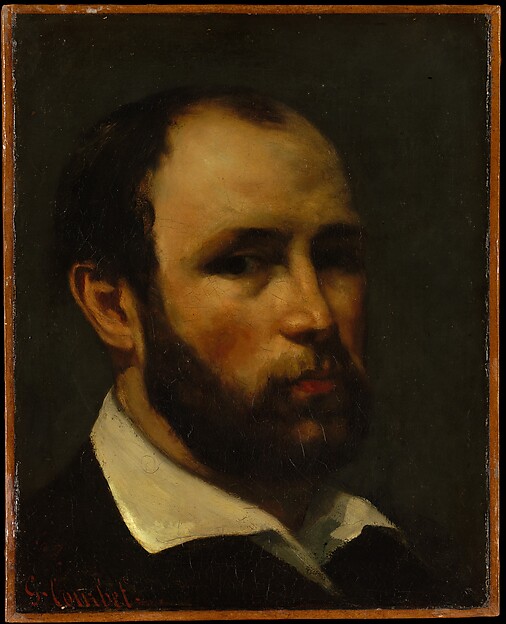
Portrait of a Man, Gustave Courbet, probably ca. 1862

Portrait of a Man

probably ca. 1862 · Museu Metropolitano de Arte

Vizinhas de sala: Museu Estatal de Amesterdão

Página do museu
Self-portrait, Vincent van Gogh, 1887

Vincent van Gogh

Self-portrait, 1887

La Corniche near Monaco, Claude Monet, 1884

Claude Monet

La Corniche bij Monaco, 1884

De Nachtwacht, Rembrandt van Rijn, 1642

Rembrandt van Rijn

A Ronda Nocturna, 1642

Portrait of a Woman, Probably Maria Trip (1619-1683), Rembrandt van Rijn, 1639

Rembrandt van Rijn

Portrait of a Woman, Probably Maria Trip (1619-1683), 1639

Still Life with Peacocks, Rembrandt van Rijn, c. 1639

Rembrandt van Rijn

Still Life with Peacocks, c. 1639

Landscape with a Stone Bridge, Rembrandt van Rijn, c. 1638

Rembrandt van Rijn

Ponte de Pedra, c. 1638

Man in Oriental Dress, Rembrandt van Rijn, 1635

Rembrandt van Rijn

Man in Oriental Dress, 1635

Portrait of Haesje Jacobsdr van Cleyburg, Rembrandt van Rijn, 1634

Rembrandt van Rijn

Portrait of Haesje Jacobsdr van Cleyburg, 1634