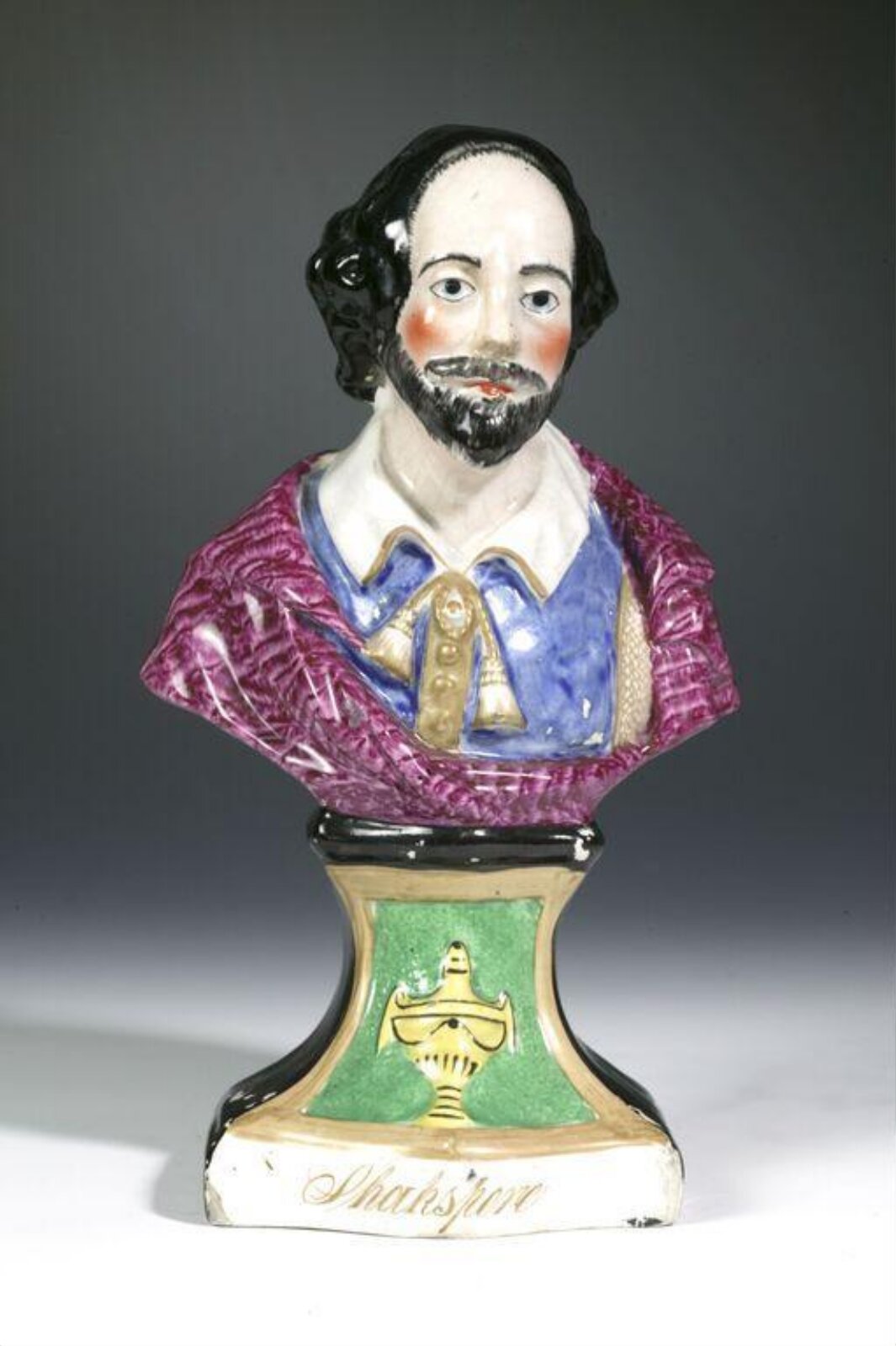
William Shakespeare
Será possível contemplá-la?
De momento, não recebe

Museu Vitória e Alberto
Londres, Reino Unido
Pertence à coleção, mas de momento não está exposta.
- Verificado
- há 7 dias
- Neste estado desde
- 25 de set. de 2026
- Fonte
- Os dados da própria coleção do museu
About the sculpture
There was a flourishing market in the 19th century for small, decorative ceramic items, especially for earthenware figurines of actors and actresses. Small mass-produced busts such as this were also popular: when displayed in the home they suggested that the owner was a cultivated person. Several different figurines and busts were produced of William Shakespeare (1564-1616) by Staffordshire pottery firms, especially around the time of the tricentenary of his birth in 1864.
Read on
This bust appears to have been based on an engraving of the Chandos portrait of Shakespeare which some consider to be the most reliable record of his appearance. Now in the National Portrait Gallery, it was owned by the actor Thomas Betterton, painted probably between 1603 and 1610, showing Shakespeare as a rather swarthy middle-aged man with a receding hairline, goatee beard and moustache. Another famous early depiction of Shakespeare is the copper engraving by Martin Droeshout published as a frontispiece to the First Folio in 1623, but since the artist was only fifteen when Shakespeare died, he probably worked from descriptions of Shakespeare by his friends.
Museu Vitória e Alberto
Pormenores
- Número de inventário
- S.198-1983
What it shows
No catálogo
Fontes
- Museu Vitória e Alberto: the museum's own open data · obtido há 7 dias
- Imagem: Museu Vitória e Alberto — © Victoria and Albert Museum, London