Rosa BonheurFrança, 1822–1899
Wild Cat
Será possível contemplá-la?
Desconhecido: o museu guarda silêncio

Museu Nacional de Belas-Artes da Suécia
Estocolmo, Suécia
O dono é conhecido. Se hoje está exposta, o museu não o diz, e adivinhar não é da nossa competência.
- Neste estado desde
- Fonte
- Os dados da própria coleção do museu
About the painting
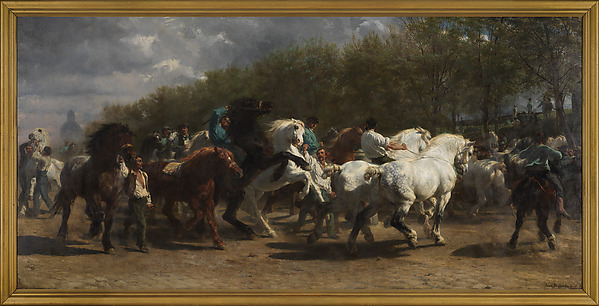
Rosa Bonheur was one of the most famous painters of animals of her time. This wild cat is an excellent example of her realistic way of portraying animals. Bonheur was genuinely interested in the animals she depicted. In addition to a large number of dogs, birds and cats, she also had an otter, Mouflon sheep and lions. In 1853, at the age of 31, she gained wide recognition for her monumental painting The Horse Market. Bonheur’s choice of subjects required her to frequent places where it was impractical to wear long skirts. In 1857, the police granted her permission to wear trousers in public.
Museu Nacional de Belas-Artes da Suécia
Pormenores
No catálogo
Fontes
- Museu Nacional de Belas-Artes da Suécia: the museum's own open data · obtido há 6 dias
- Imagem: Museu Nacional de Belas-Artes da Suécia — Public Domain Mark 1.0
Entretanto, na vida de Rosa Bonheur
A vida inteira1848
First medal and a 3,000-franc state commission
Bonheur won a first medal for “Oxen and Bulls of the Cantal”, which brought her a 3,000-franc state commission — for “Ploughing in the Nivernais”.
1849
“Ploughing in the Nivernais” at the Salon
Painted for the government, the picture was shown at the Salon and won a First Medal — Bonheur's first major success (other sources give that honour to “The Horse Fair”).
March 1849
Death of her father, Raymond Bonheur
Her father died, and Rosa took his place as teacher at the free drawing school for girls. She often told her pupils: “Follow my advice, and I will make you Leonardos in skirts.”
março de 1849 – 1860
Employed by: École nationale gratuite de dessin pour les jeunes filles
1850s
Police permission to wear trousers
Women in Paris were forbidden to wear trousers without police permission, so Bonheur had to apply for it: trousers were her preferred attire for the sheep and cattle markets where she studied her animals.