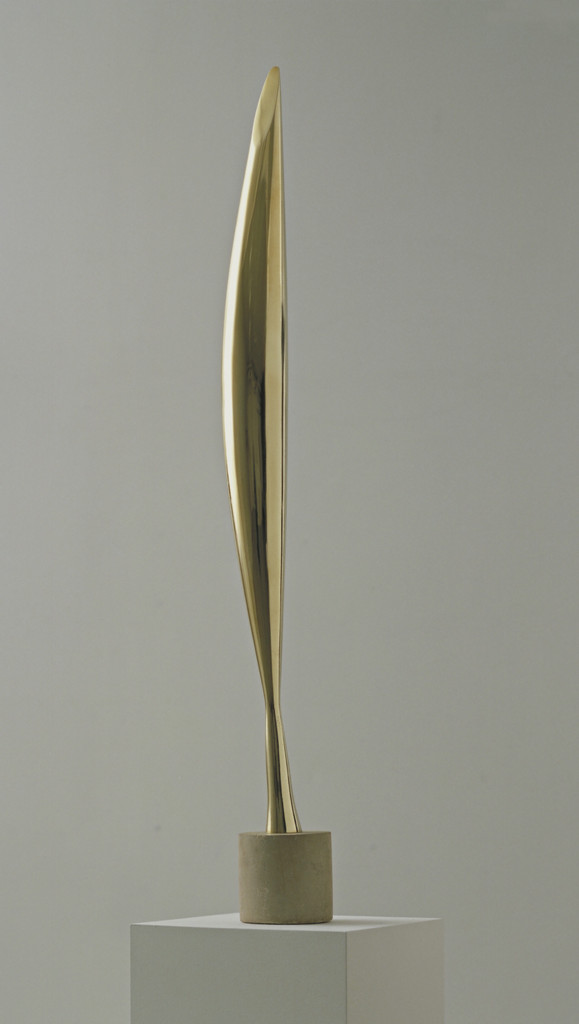
Constantin BrancusiRoménia, 1876–1957
White Negress II
Será possível contemplá-la?
Sim, recebe visitas

Chicago, Estados Unidos
Exposta ao público.
- Verificado
- Neste estado desde
- Fonte
- O museu
Sobre a escultura
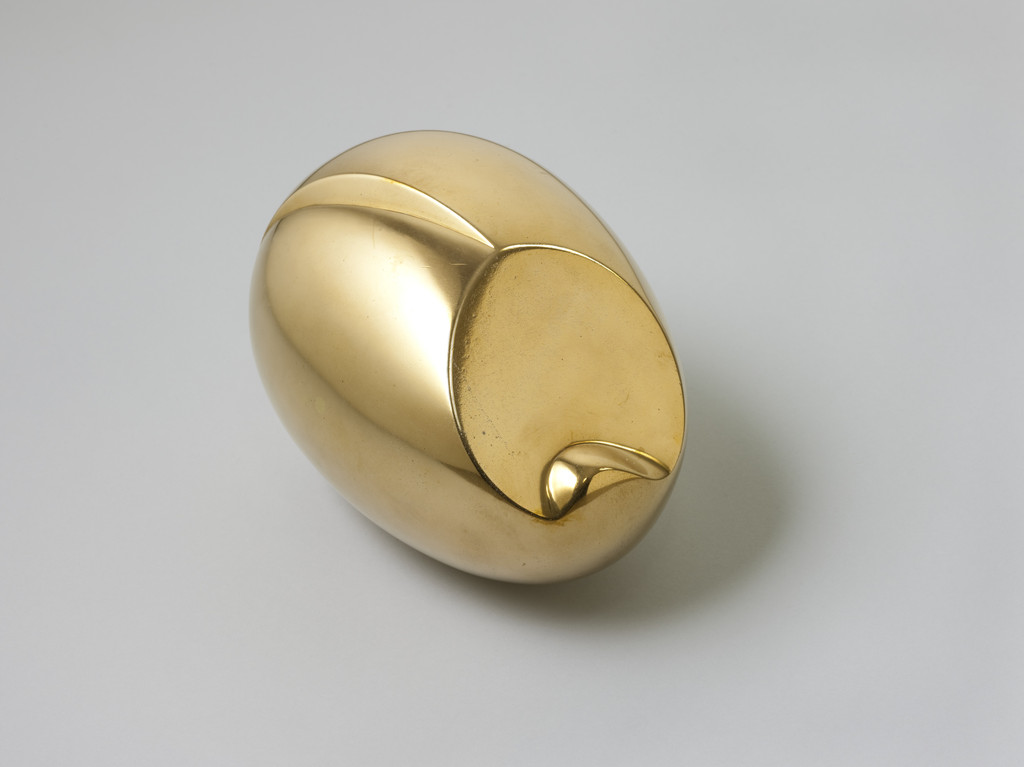
Among sculptors of his generation in Europe, Constantin Brancusi was arguably the most influenced by African art in his choices of materials and forms, but it was not until the middle of his career, in the 1920s and 1930s, that he chose to represent his impression of an African subject in two related series: White Negress and Blond Negress. According to the artist, the impetus for these works was a visit to the 1922 Colonial Exposition—an expansive exhibition demonstrating France’s dominance as a colonial power held in Marseille—where he observed a woman he understood to be of African descent. The anonymous subject, rendered as an elongated volume with just two features, lips and hair, reflected European stereotypes about African physiognomy, and presented the paradox of seeing a black body represented in light-colored materials.
Ler mais
White in the title refers to the color of the marble, which at once relates to the tradition of marble statuary but also to an ongoing 20th-century fetishism of black bodies. In the blond versions, this same form appears in highly polished, mirror-like bronze.
Art Institute of ChicagoCC BY 4.0
Pormenores
- Número de inventário
- 1966.4
O que mostra
No catálogo
Fontes
- Art Institute of Chicago
- Imagem: Art Institute of Chicago — © the artist or rights holder
Entretanto, na vida de Constantin Brancusi
A vida inteira1926
Back to the United States: the Wildenstein and Brummer exhibitions
In 1926 Brâncuși returns to the United States: the Wildenstein Gallery presents his work in a group exhibition and then in a solo exhibition (16 February to 3 March), and on 17 November another exhibition opens at the Brummer Gallery, remaining on view until 15 December.
1926–1928
Brancusi v. United States: a bird is a work of art
During the trip United States customs officials detain a bronze “Bird in Space”, classify it as an article of metal and impose the tariff applied to manufactured objects. The case “Brancusi v. United States” ends in 1928 with the sculpture being accepted as a work of art.
1927
Isamu Noguchi as his studio assistant
In 1927 the Japanese American sculptor Isamu Noguchi works as an assistant in Brâncuși’s studio, sawing and polishing pieces, preparing the studio and keeping the tools sharp. The experience brings him closer to direct carving in stone and wood.
1929
A portrait of James Joyce for the Black Sun Press
In 1929 Harry and Caresse Crosby commission portraits of James Joyce from Brâncuși for the limited edition of “Tales Told of Shem and Shaun”, published by the Black Sun Press. He makes profile and frontal drawings and a composition formed from a spiral and vertical lines, which Caresse selects for the frontispiece: the book calls it “Portrait of the Author”, while Brâncuși uses the title “Symbol of James Joyce”.