Mikhail Nesterov1862–1942
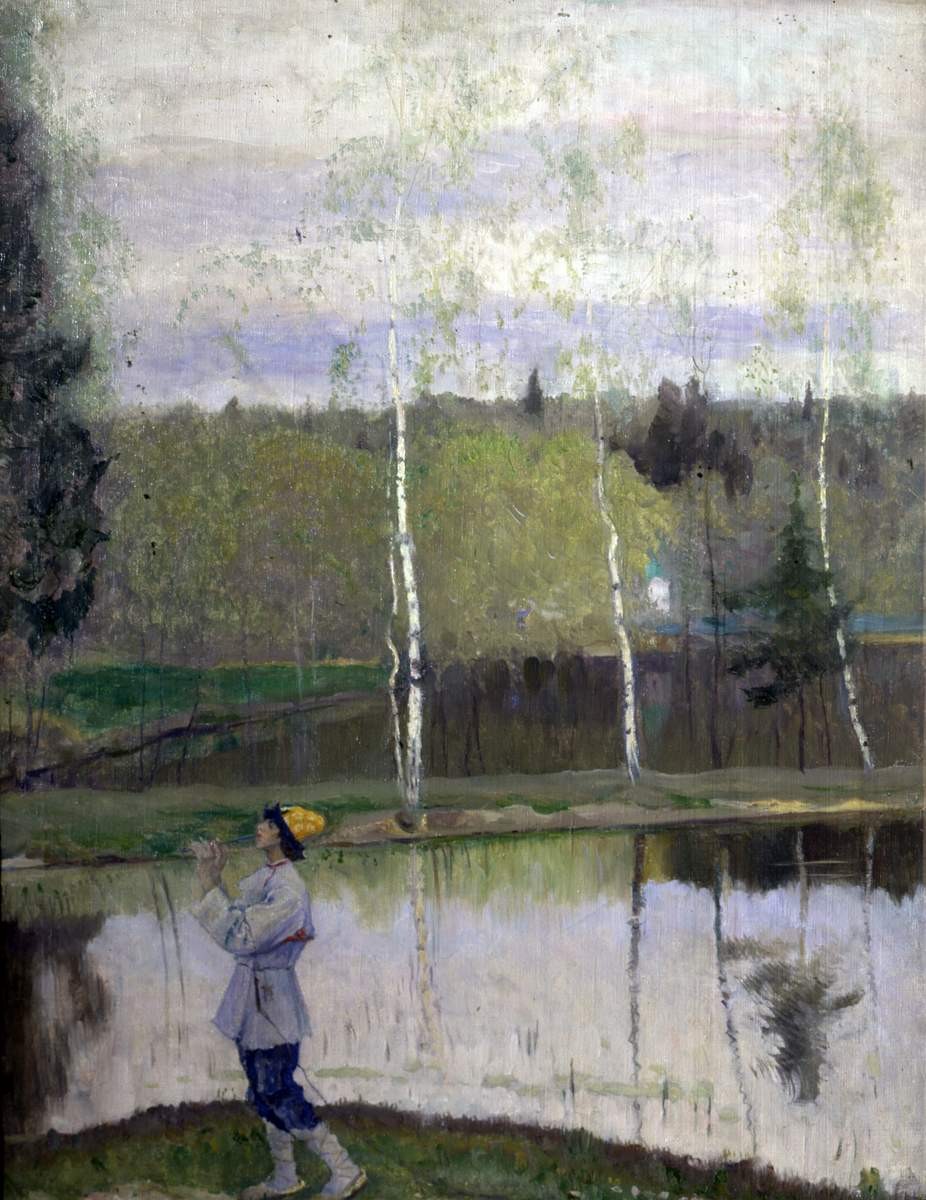
Весна
Será possível contemplá-la?
Desconhecido
São Petersburgo, Rússia
O proprietário é conhecido; não se sabe se hoje está exposta.
- Neste estado desde
- Fonte
- O museu
Pormenores
- Número de inventário
- ПДМП 1321-ж
No catálogo
Fontes
- O Catálogo Estatal do Fundo Museológico da Rússia
- Imagem: Peterhof — © Петергоф · Госкаталог музейного фонда РФ
Entretanto, na vida de Mikhail Nesterov
A vida inteira1889
“The Hermit” at the 17th Peredvizhniki show
Shown at the 17th Peredvizhniki exhibition, “The Hermit” caused a stir and placed the young Nesterov among the most outstanding painters of the day; the word “mood” recurred in almost every review. Pavel Tretyakov bought the painting.
May 1889
First journey abroad
With the money from selling “The Hermit” to Tretyakov, Nesterov set off on his first trip abroad: Warsaw, Vienna, Venice, Florence, Rome, Naples with Pompeii and Capri, Paris, Munich, Berlin, Dresden. He brought back dozens of studies on lemon-wood panels, most of them from Capri; his travel diary (20 April – 24 July 1889) is kept in the Presidential Library.
May – July 1889
Carpaccio in Venice, Bastien-Lepage in Paris
In Venice Nesterov was struck above all by Vittore Carpaccio's “naive composition” and “childlike faith”, in Rome by Raphael's frescoes and the Sistine Chapel. In Paris he saw the painting of Puvis de Chavannes and Bastien-Lepage, whose “Joan of Arc”, art historians agree, decisively shaped the concept of “The Vision to the Youth Bartholomew”.
1890
Invited to paint St Volodymyr's Cathedral
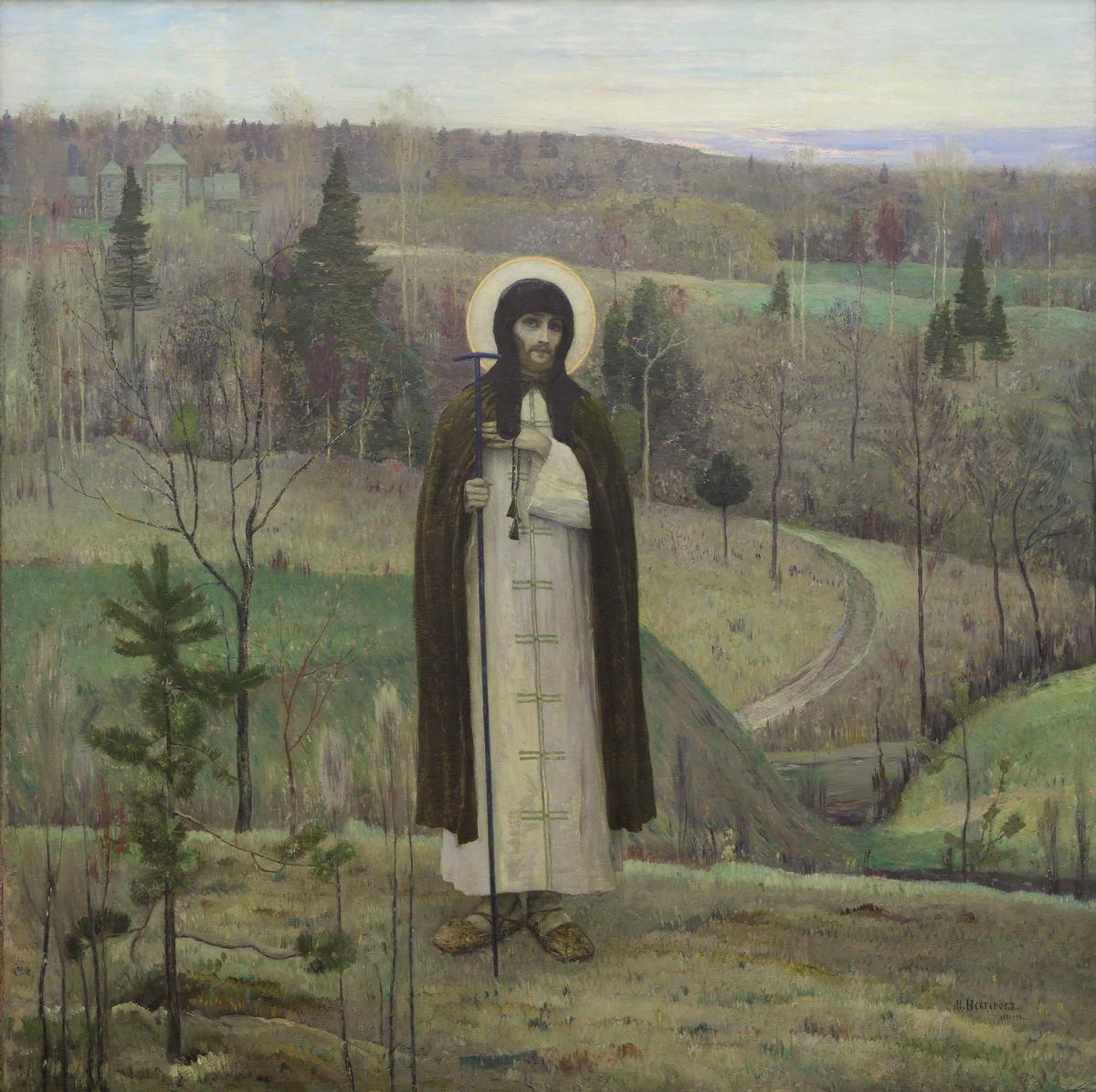
Professor Adrian Prakhov, who was in charge of decorating St Volodymyr's Cathedral in Kiev, saw “The Youth Bartholomew” and invited its author. After some hesitation Nesterov agreed — and ended up devoting more than 22 years to church murals and icons.
1890
“The Vision to the Youth Bartholomew” causes a sensation
The painting, for which Nesterov made landscape studies near the Trinity-Sergius Lavra while living in the village of Komyakino near Khotkovo, provoked the most conflicting opinions, became the sensation of the 18th Peredvizhniki exhibition and was bought by Tretyakov. To the end of his days the artist considered it his finest work.
1902
Marries Ekaterina Vasilyeva
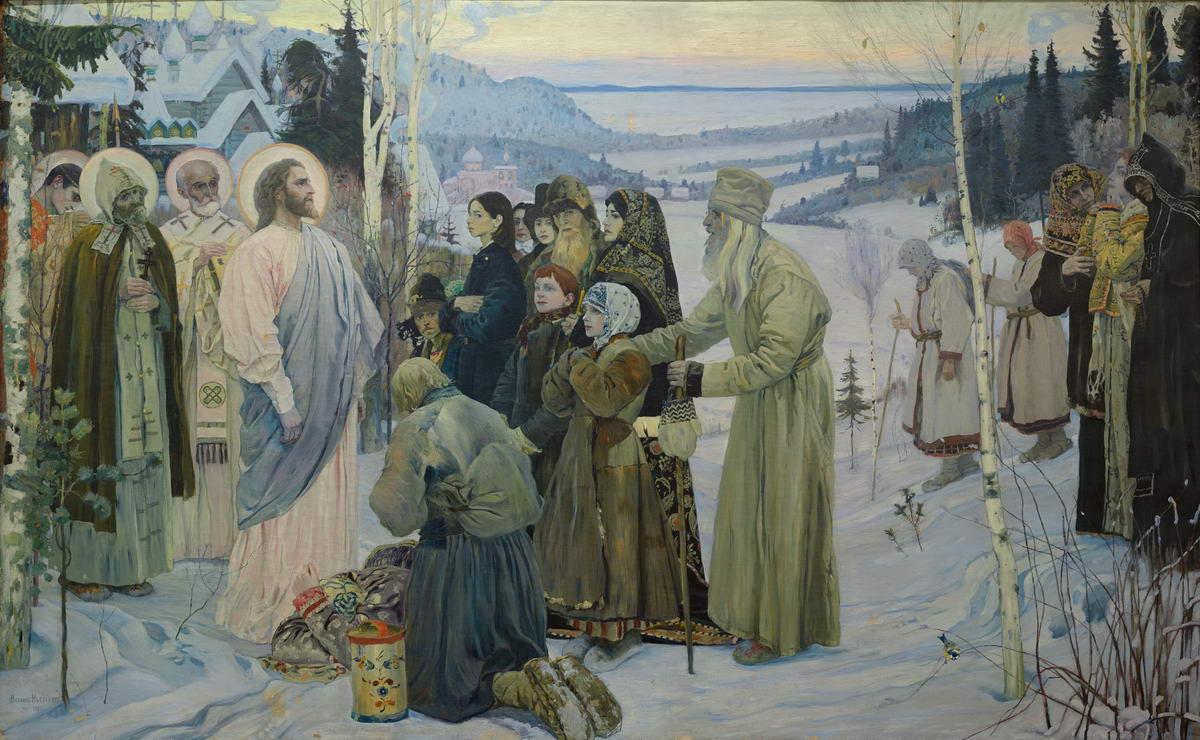
In spring 1902 Nesterov exhibited in Kiev his programmatic painting “Holy Rus” (“Come unto Me, all ye that labour and are heavy laden…”), finished in rough — Christ surrounded by saints and by pilgrims, the people's Russia. Ekaterina Petrovna Vasilyeva, who came to see it, became his wife a few months later — an acquaintance that proved a turning point in his life.