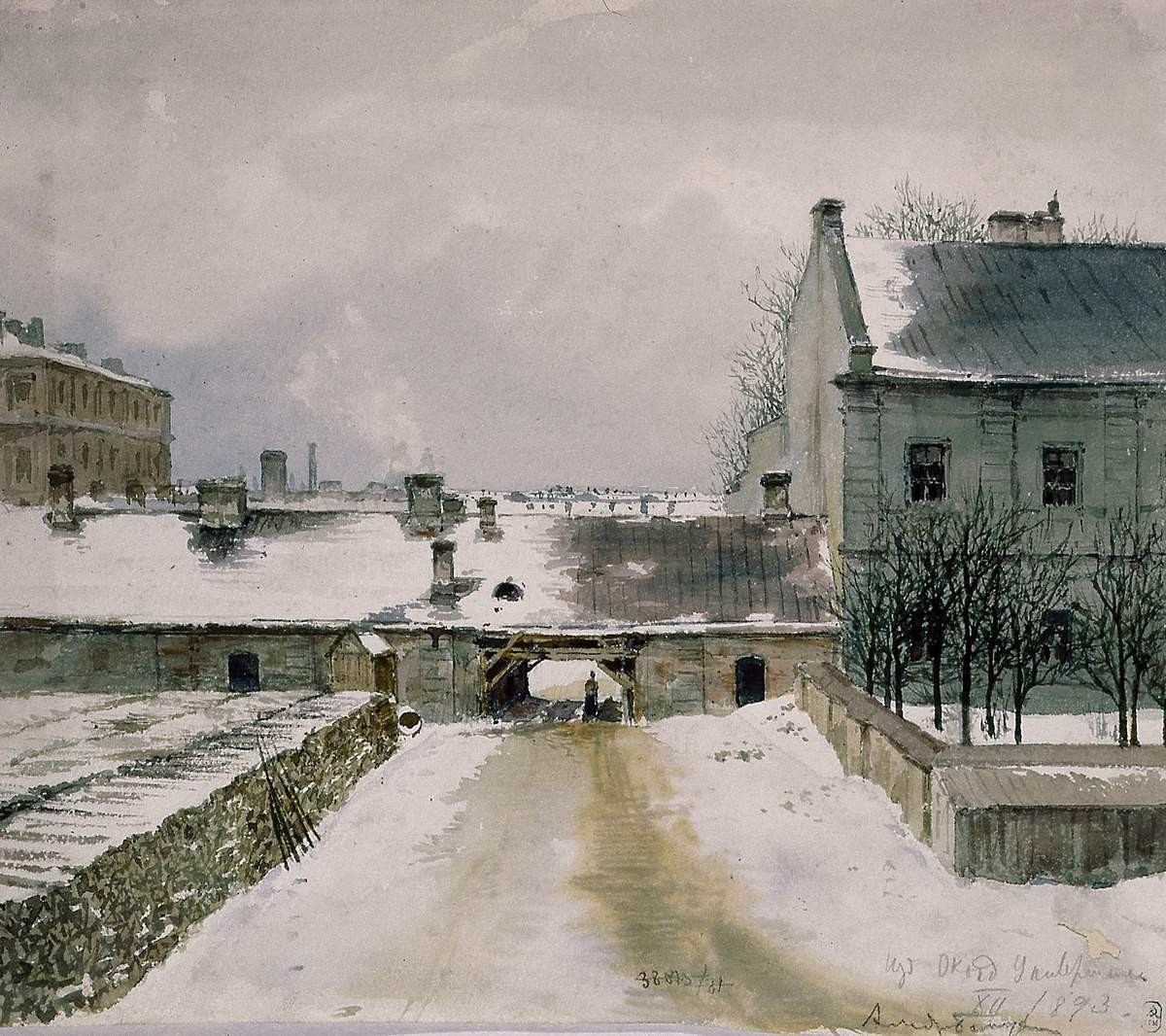
Alexandre BenoisRússia, 1870–1960
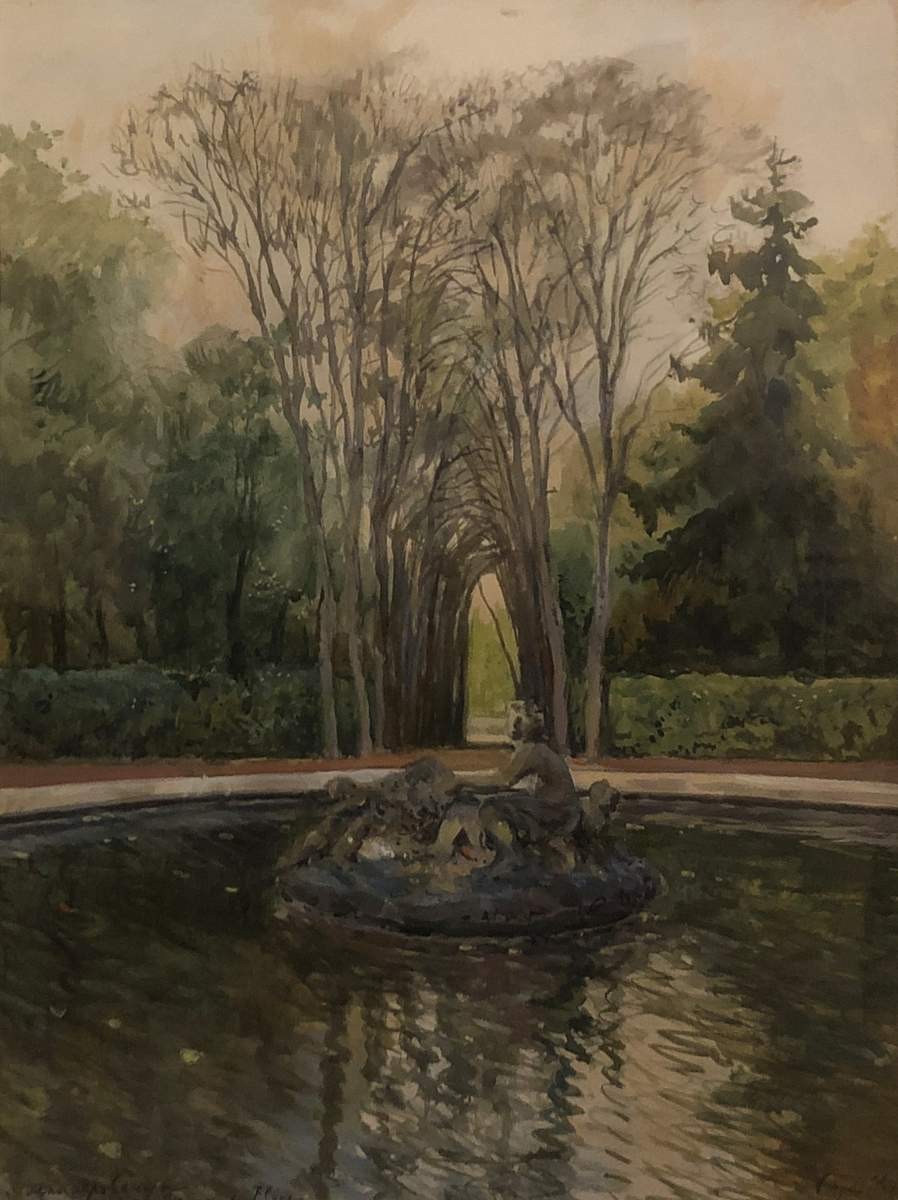
Версаль
Será possível contemplá-la?
Desconhecido
Tambov, Rússia
O proprietário é conhecido; não se sabe se hoje está exposta.
- Neste estado desde
- Fonte
- O museu
Sobre a pintura
Nas palavras do museu — em russo
Пейзаж. Часть французского регулярного парка. На первом плане уходящая влево и затем поворачивающая вглубь аллея с серо-охристым покрытием. На ней с лева высокая серая ваза, в глубине еще одна. В правой части картины, ниже по уровню, чем аллея, фигурный зеленый партер, окайленный боскетом, с круглой сиренов-зеленой клумбой в центре (срезана краем). По левую сторону аллеи по всей ее длине, идет вглубь зеленовато-темный боскет, за ним постриженные в виде конусов темнозеленые деревья. В глубине отдельно стоящие высокие редкие деревья. Серое небо.
Tambov Regional Art Gallery
Pormenores
- Número de inventário
- Ж 181
No catálogo
Fontes
- O Catálogo Estatal do Fundo Museológico da Rússia
- Imagem: Tambov Regional Art Gallery — © Тамбовская картинная галерея · Госкаталог музейного фонда РФ
Entretanto, na vida de Alexandre Benois
A vida inteira1887–1926 · Local de trabalho
Saint Petersburg
1896–1899 · Local de trabalho
Paris
1901
Appointed to the Mariinsky Theatre
Appointed scenic director of the Mariinsky Theatre in Saint Petersburg, the home of the Imperial Russian Ballet.
1906
The “Russian Art Exhibition” in Paris
Following the Tauride exhibition of 1905, he organizes the “Russian Art Exhibition” in Paris together with Diaghilev and Bakst — an undertaking from which the theatrical Russian Seasons abroad will grow.
1908–1911
Artistic director of the Russian Seasons
Becomes artistic director of Sergei Diaghilev's Russian Seasons, which made Russian ballet famous abroad; under his direction Konstantin Korovin, Nicholas Roerich, Bakst and Alexander Golovin work in the theatre.
19 May 1909
“The Pavilion of Armida” opens the Russian Seasons
The ballet “The Pavilion of Armida” opens the first Russian Seasons in Paris.