Hans von AachenAlemanha, 1552–1615
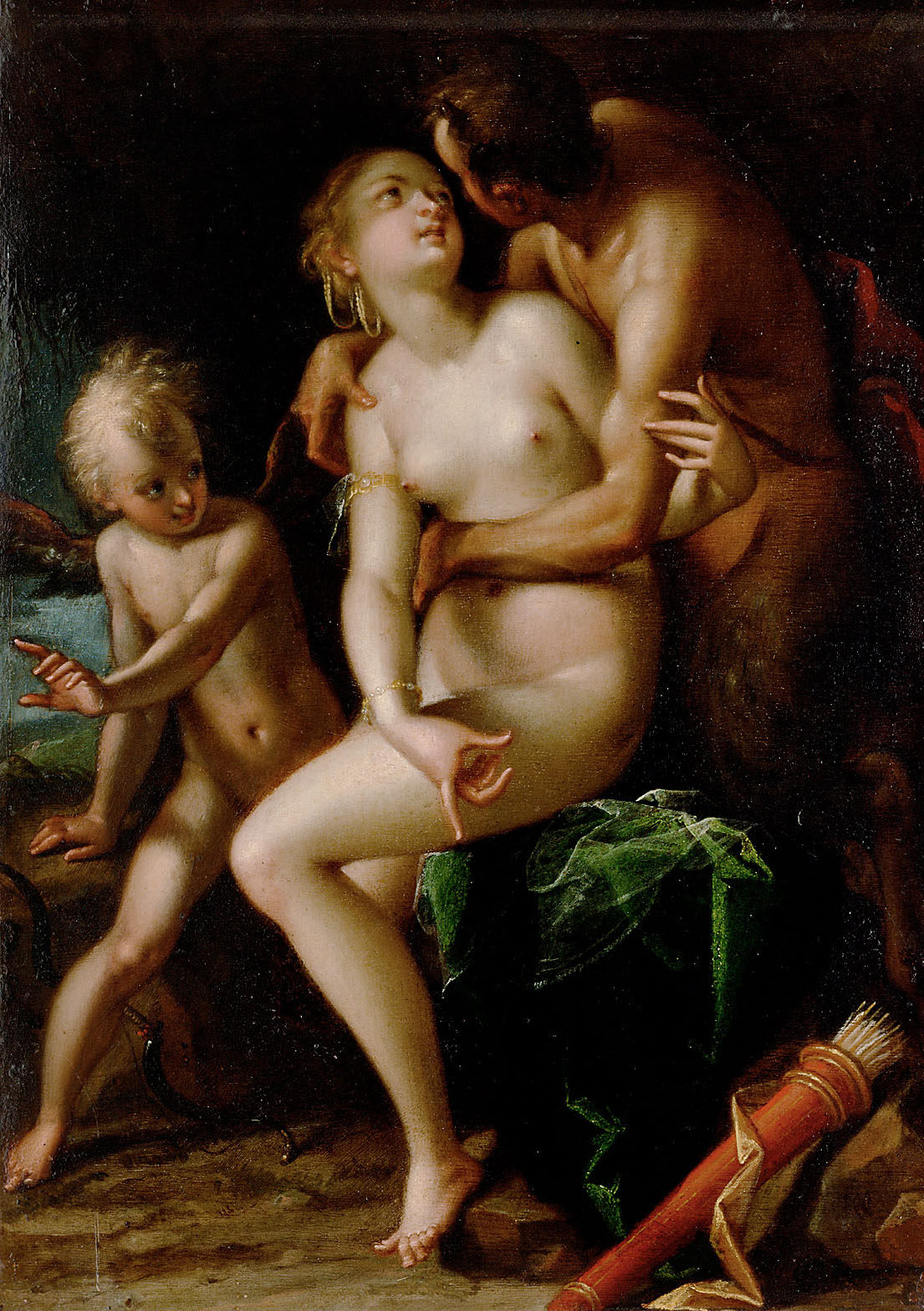
Venus and Adonis
Posso vê-la?
Sim, exposta agora
Onde está «Venus and Adonis» hoje? Harvard Art Museums, Gallery 2540, floor 2, European Art, 13th–16th century, Cambridge. Sim, exposta agora. Verificado 29 de setembro de 2026.

Exposta ao público.
- Verificado
- Neste estado desde
- Fonte
- O museu
Sobre a pintura
Venus and Adonis depicts the ancient Roman goddess of love lounging outdoors with the object of her affection. Accompanied here by Cupid, Venus warns Adonis of the dangers of hunting, an admonition he ignores. The hunting dogs held by Adonis foreshadow his death by a wild boar attack. Painted while von Aachen was in Italy, the figures and landscape show the influence that northern Italian painting had on the German artist, particularly the vivid coloristic effects of Venetian art and the elongated body types made famous by the artist Parmigianino. Although von Aachen eventually returned to northern Europe, he continued working in the mannerist style he developed in Italy. In 1592, Holy Roman Emperor Rudolf II named von Aachen the First Court Painter of Prague, a distinguished appointment that placed him at the center of the most celebrated royal court of the time.
Harvard Art Museums
Pormenores
- Número de inventário
- BR77.1
No catálogo
Fontes
- Harvard Art Museums
- Imagem: Harvard Art Museums — © President and Fellows of Harvard College
Na vida de Hans von Aachen
A vida inteirac. 1574
Departure for Italy
Having trained in Cologne under the Flemish portrait painter Georg Jerrigh and probably having joined the painters' guild, the 22-year-old sets off for Italy. Venice attracts him first.
1574–1587
Copyist in Venice
He joins the community of Netherlandish and German artists, printmakers and art dealers and works as a copyist in the workshop of Gaspar Rem, who arranges an apprenticeship for him with an artist known as Morett (Moretto): he copies famous works in Venice's churches, and many of the copies go to the northern European market. Pieter Isaacsz was his pupil in Italy.
1575
Trip to Rome
He studies antique sculptures and the works of Italian masters and joins the circle of northern artists active in Rome: Otto van Veen, Joris Hoefnagel, the brothers Paul and Matthijs Bril, Hans Speckaert and Joseph Heintz the Elder. He secures a commission for a Nativity for the Church of the Gesù, the mother church of the Jesuits.
1582–1583
Portraits in Florence
In Florence he builds a reputation as a portraitist, which brings commissions from the ruling Medici family; other accounts place his work at the court of Grand Duke Francesco I de' Medici in 1585.
1587
Return to Germany
After long years in Italy he returns to his homeland, first to Augsburg, where he paints portraits for the wealthy Fugger family; he also works in Munich, where he is commissioned to paint two altarpieces for the church of St Michael (other accounts date his return to about 1588).
1589
Chooses Munich as his residence
After visiting his native Cologne and making another trip to Venice, he chooses Munich as his residence and paints several works for Duke William V of Bavaria. Under the influence of the strictly Catholic court he develops an iconography strongly shaped by Counter-Reformation ideas.