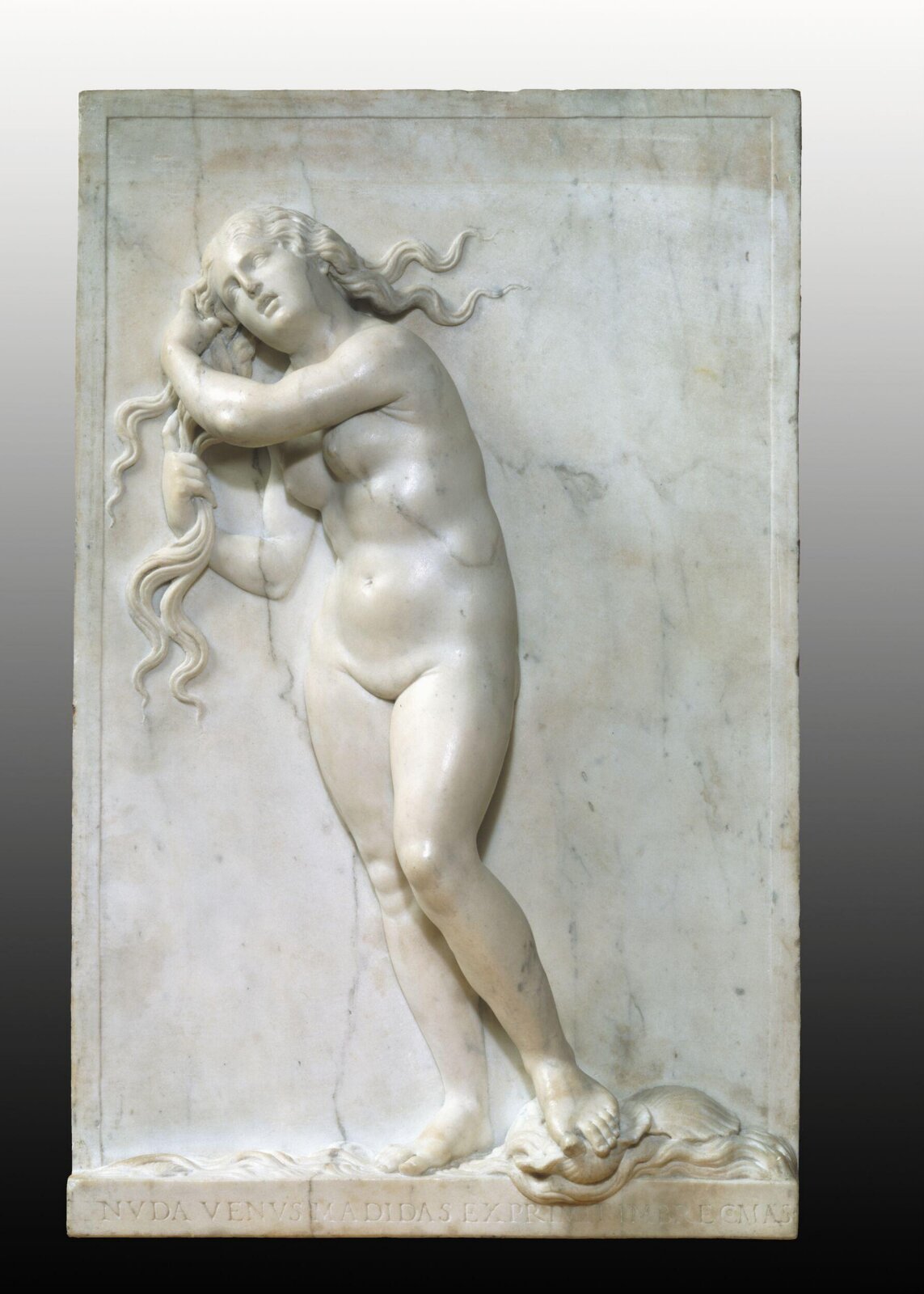
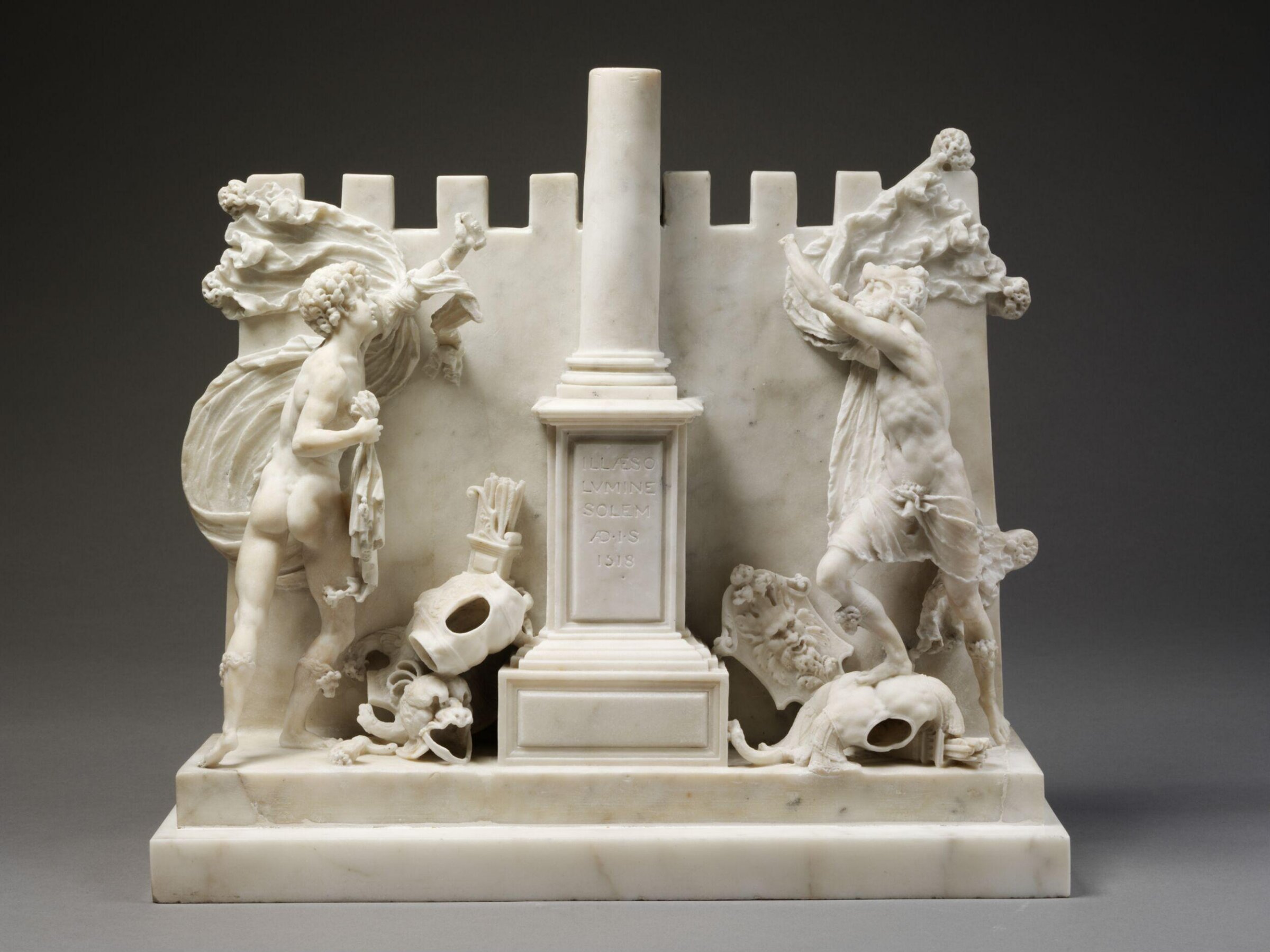
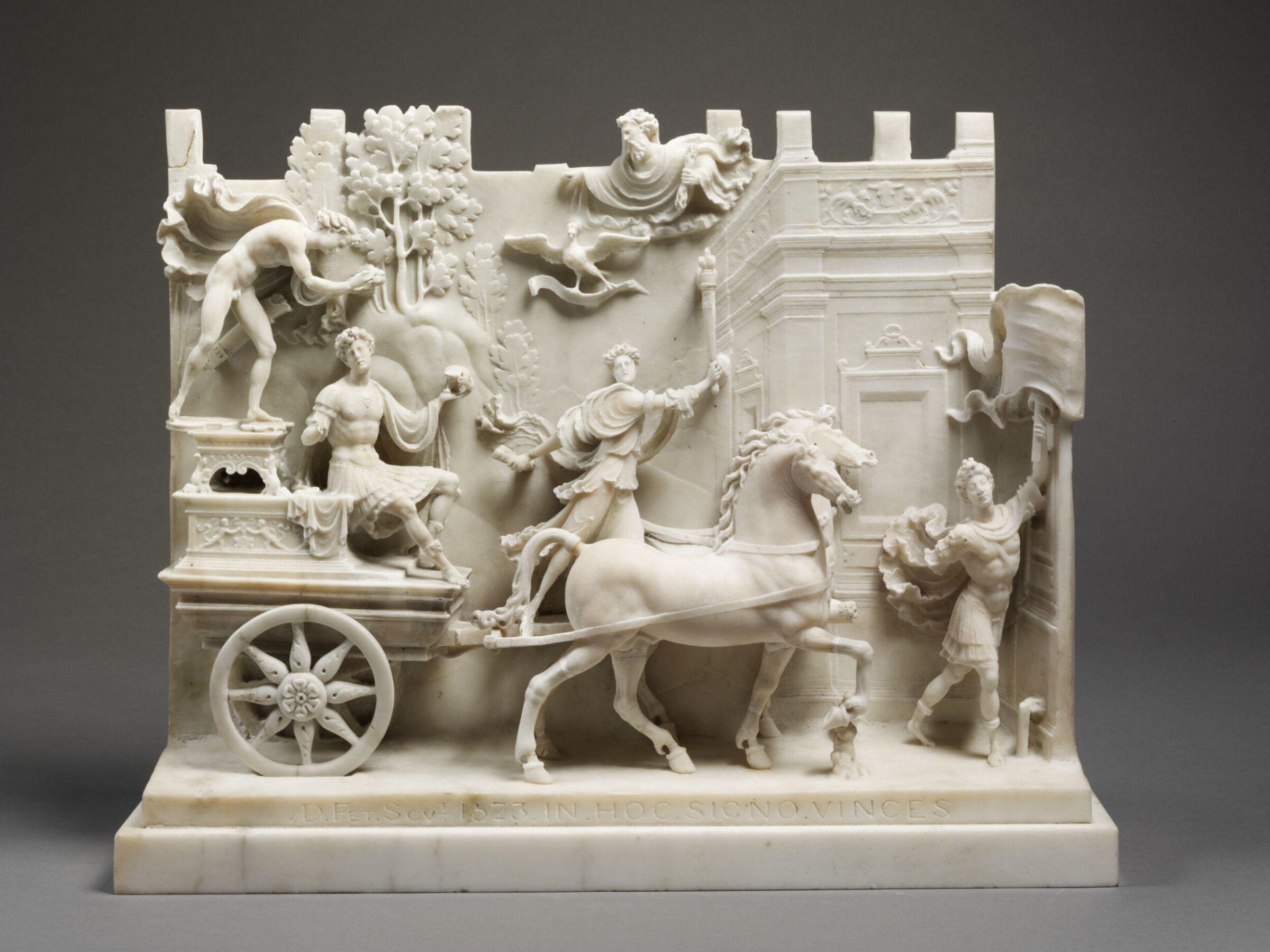
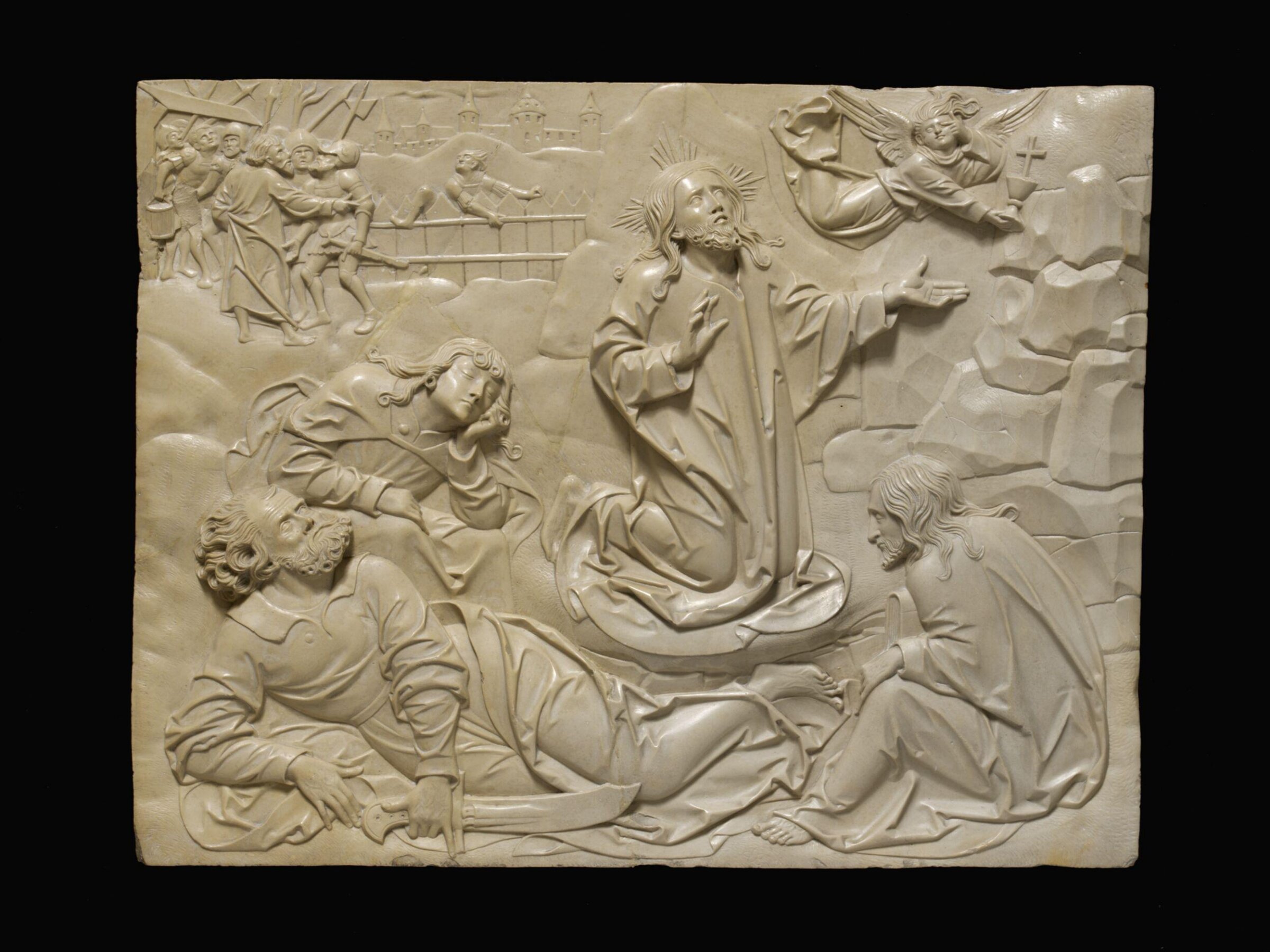
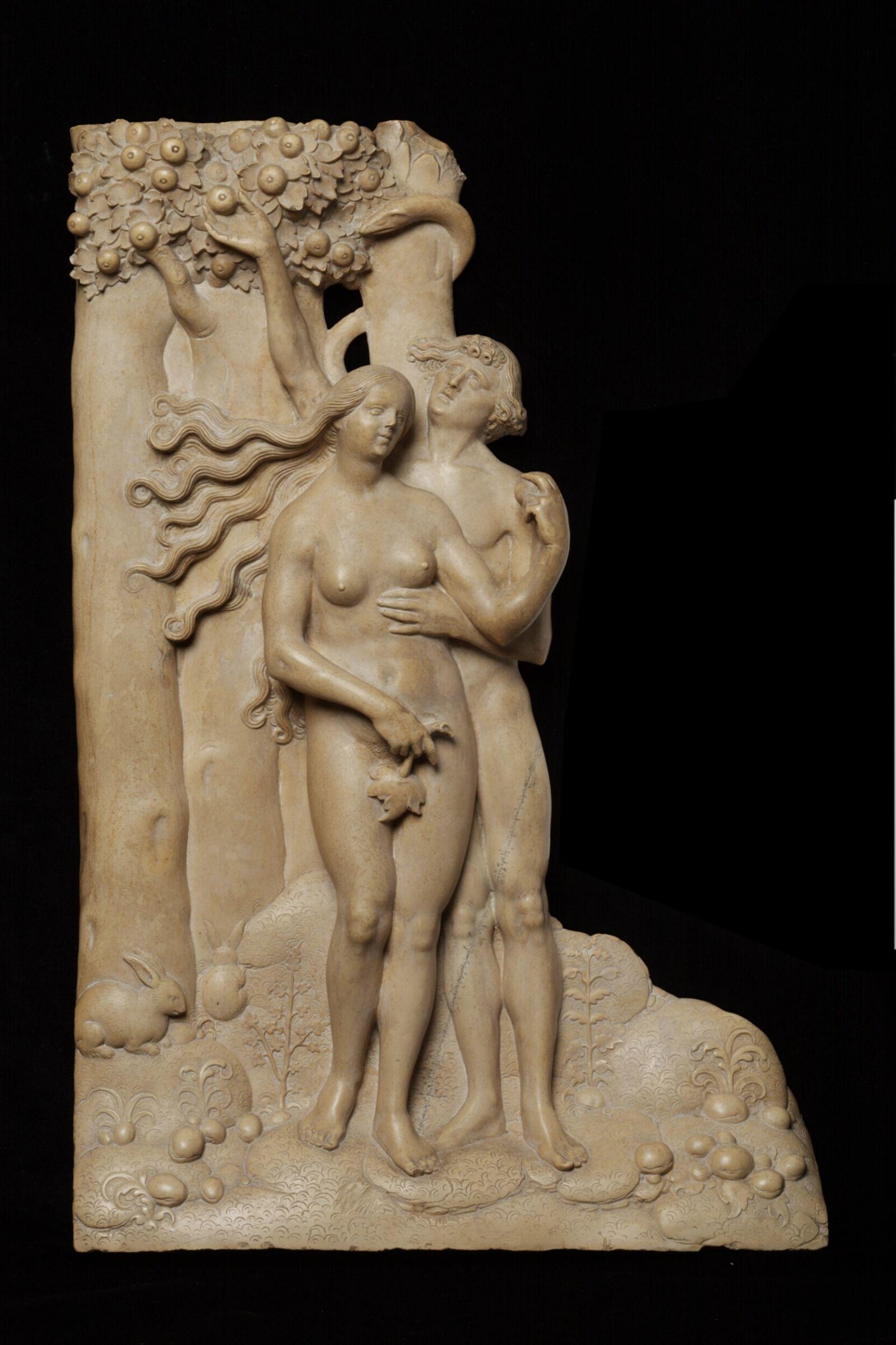
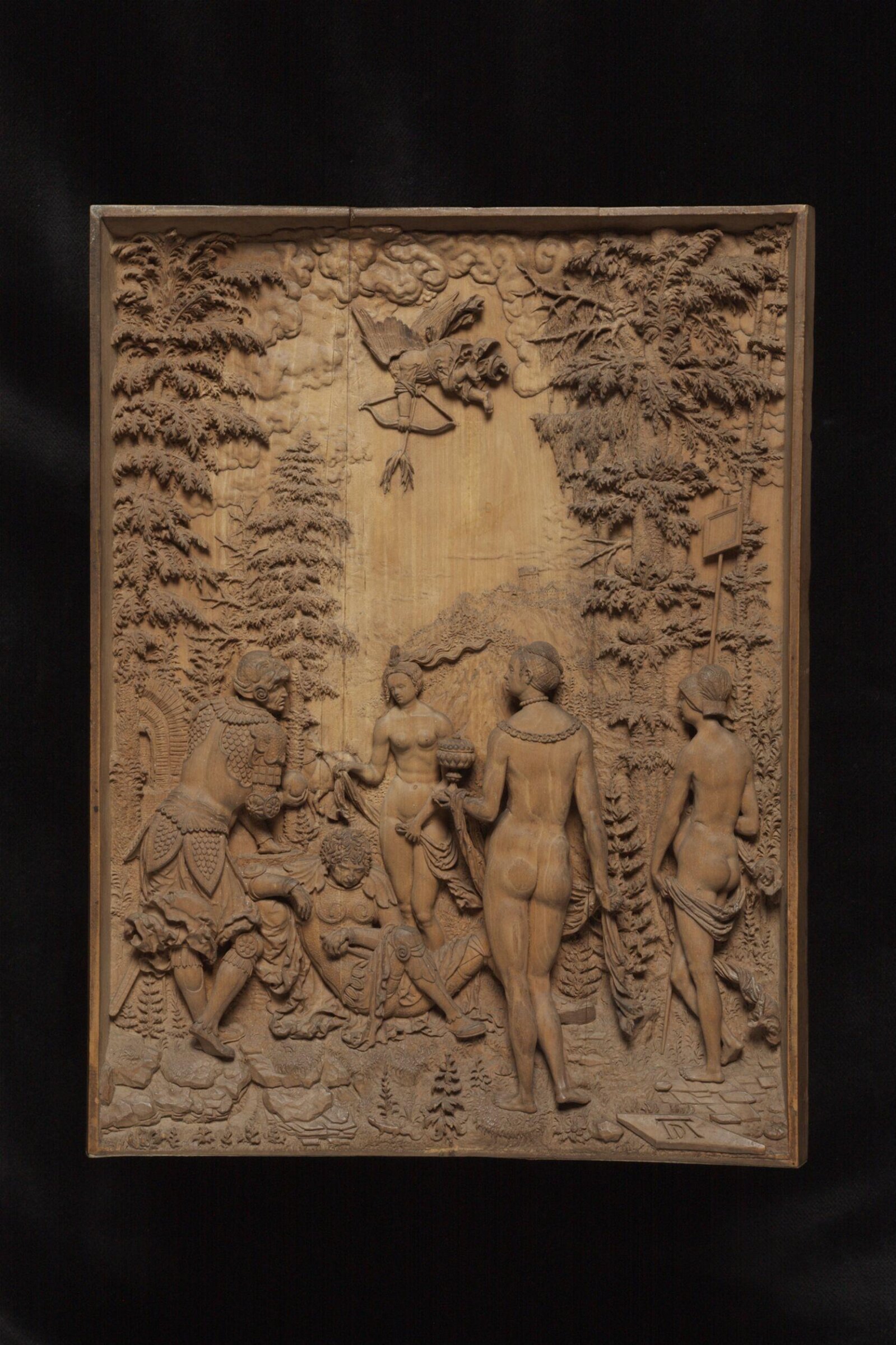
This relief formed part of a cycle of carvings of mythological figures by the Venetian sculptor Antonio Lombardo (ca. 1458 - 1516). The inscription on the base is taken from Book III of Ovid's Ars Amatoria (The Art of Love), in which the poet describes a gem incised with an image of Venus rising from the sea, in which "naked Venus is wringing her spray-drenched tresses" (line 224, trans. J. H. Mozley). This quotation signalled to the learned viewer not only the ancient origins of the subject matter, but also the rivalry between the arts of sculpture and poetry, a perennial topic of debate among painters, sculptors, and writers.