 Olafur EliassonDinamarca, 1967
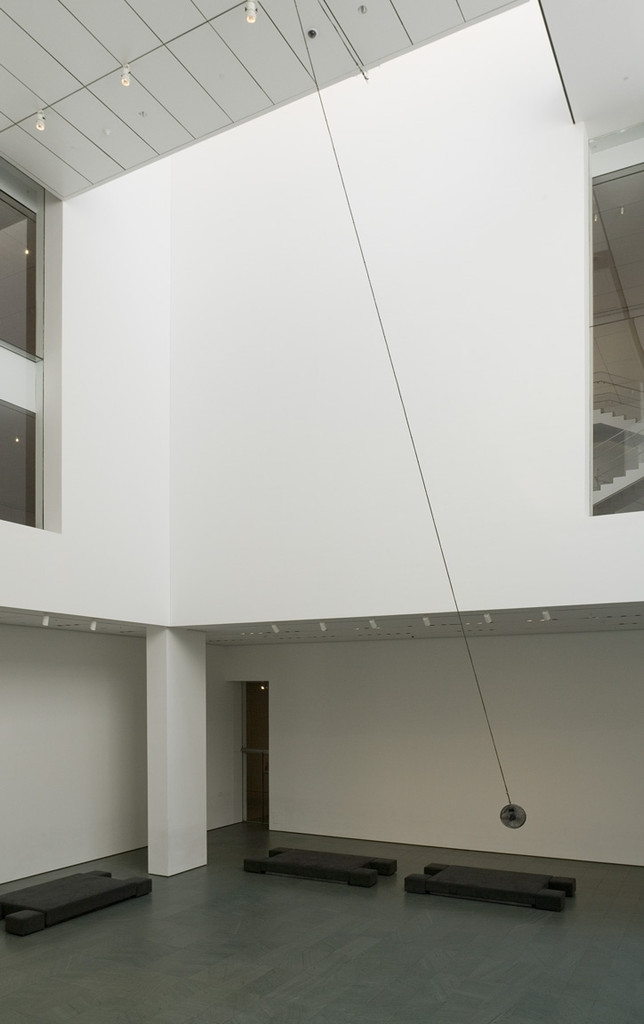
Ventilator
Será possível contemplá-la?
De momento, não recebe

Museu de Arte Moderna
Nova Iorque, Estados Unidos
Pertence à coleção, mas de momento não está exposta.
- Verificado
- há 12 dias
- Fonte
- Os dados da própria coleção do museu
Pormenores
- Número de inventário
- 44.2011
Fontes
- Museu de Arte Moderna: the museum's own open data · obtido há 12 dias
- Imagem: Museu de Arte Moderna — © the artist or rights holder
Entretanto, na vida de Olafur Eliasson
A vida inteira1995
Founds Studio Olafur Eliasson in Berlin
He sets up the studio as a “laboratory for spatial research”; by 2008 some thirty architects, engineers, craftsmen and assistants work there, together conceiving and building installations, sculptures and large-scale commissions.
1995
Graduates from the Royal Danish Academy
He receives his degree from the academy in Copenhagen, where he studied from 1989 (other accounts give 1985).
1996
Begins working with Einar Thorsteinn
An architect and geometry expert 25 years his senior and a former friend of Buckminster Fuller, Thorsteinn becomes one of his frequent collaborators. Their first piece, “8900054”, is a stainless-steel dome 30 feet (9.1 m) wide and 7 feet (2.1 m) high, designed to look as if it were growing from beneath the ground.
1996
First US show at Tanya Bonakdar Gallery
His first show in the United States takes place at Tanya Bonakdar Gallery.
1997–1998
Meets his future wife at the São Paulo Biennial
At the São Paulo Biennial, where he shows work (in 1997 by one account, in 1998 by another), Eliasson meets the Danish art historian Marianne Krogh Jensen, who curated the Danish Pavilion; they will marry in 2003.
1999
The Spiral Pavilion at the Venice Biennale
The pavilion, conceived in 1999 for the Venice Biennale and now on display at Kunsthalle Bielefeld, wins Eliasson the Benesse Prize from the Benesse Corporation. The same year he takes part in the Carnegie International.