ART WIKI32 963 em exposição
MapaColeçãoArtistasMuseusExposiçõesRevista
Entrar

ART WIKI

Onde está a obra-prima, e a que horas se abre a porta.

Coleções: Art Institute of Chicago, Galeria Nacional de Arte, Galeria Tretiakov, Getty Villa, Harvard Art Museums, Hermitage, Hirshhorn Museum and Sculpture Garden, Instituto de Artes de Minneapolis, Museu de Arte de Cleveland, Museu de Arte Moderna, Museu do Louvre, Museu Estatal de Amesterdão, Museu J. Paul Getty, Museu Metropolitano de Arte, Museu Nacional de Arte da Dinamarca, Museu Pushkin, Museu Russo, Museu Smithsoniano de Arte Americana, Museu Vitória e Alberto, Museu Whitney de Arte Americana, National Museum of Asian Art, National Portrait Gallery, Catálogo Estatal do Fundo Museológico da Rússia (274 museus), Europeana (19 museus), Wikidata (6 museus), Paris Musées (12 museus) e Joconde, a base de museus do Ministério da Cultura de França (495 museus). As imagens pertencem aos titulares dos direitos.

Secções

  • Mapa
  • Pesquisa
  • Coleção
  • Obras-primas
  • Em exposição agora
  • Artistas

Mais

  • Museus e galerias
  • Exposições
  • Revista
  • De onde vêm os dados
  • Privacidade e cookies
InícioMapaCatálogo
  1. Coleção/
  2. Art Institute of Chicago/
  3. Two Plant Specimens
Two Plant Specimens, William Henry Fox Talbot, 1839
William Henry Fox Talbot, retratoWilliam Henry Fox TalbotInglaterra, 1800–1877

Two Plant Specimens

1839 · Photograph

Será possível contemplá-la?

De momento, não recebe

Art Institute of Chicago

Chicago, Estados Unidos

Pertence à coleção, mas de momento não está exposta.

Verificado
há 3 dias
Neste estado desde
19 de ago. de 2026
Fonte
O museu
No mapaPágina do museu

Sobre a obra

Contained within this haunting and poetic image is the seed of photography: the possibility of creating a negative from which an unlimited number of positives can be made. William Henry Fox Talbot produced this image by placing botanical specimens on sensitized paper and exposing them to light. He made this groundbreaking discovery after his 1833 honeymoon on the shores of Lake Como, in Lombardy, Italy. Frustrated by his inability to draw his Italian surroundings accurately, Talbot recalled the fleeting images of external objects that appeared within a camera lucida (an optical prism that creates a superimposed image on an artist’s drawing surface) and wondered how he could make them “imprint themselves durably, and remain fixed upon the paper.” What resulted, two years later, were the first camera negatives.

Continuar a ler

Unveiled in 1839 and called photogenic drawing, Talbot’s process was perfected two years later into the calotype (from the Greek word kalos, meaning “beautiful”). By the end of his life, Talbot—whose far-ranging interests included mathematics, botany, etymology, and ancient Assyria—had also discovered the basis of halftone printing, obtained twelve patents, and authored seven books, including one of the first photographically illustrated books, The Pencil of Nature (1844).

Art Institute of Chicago · CC BY 4.0

Pormenores

1839 · aos 39 anos
18001877
Número de inventário
1972.325

O que mostra

FlowersPlants

No catálogo

FotografiasRomantismoSéculo XIXInglaterra

Fontes

  • Art Institute of Chicago
  • Imagem: Art Institute of Chicago — CC0

Entretanto, na vida de William Henry Fox Talbot

A vida inteira
  1. 1837 · Prémio

    Royal Society Bakerian Medal

  2. 16 de março de 1837

    Daughter born: Rosamond Constance Talbot

  3. 25 January 1839

    First showing of photographs at the Royal Institution

    Shortly after Louis Daguerre’s daguerreotype was announced in early January, Talbot asserted his priority and, at a Friday Evening Discourse at the Royal Institution, exhibited several paper photographs he had made in 1835. Within a fortnight he described the nature of his process to the Royal Society, while Daguerre revealed no useful details of his own until mid-August.

  4. 1840

    Invents the calotype

    Talbot found a way to print any number of positives on salted paper from a paper negative; new chemicals cut the exposure to a minute in bright sunlight. He called the method the “calotype” (from kalos, beautiful), informally the “talbotype”: unlike the daguerreotype with its single positive, it effectively created modern photography.

  5. 1840–1841

    Post: High Sheriff of Wiltshire

  6. February 1841

    Patents the calotype

    Talbot obtained an English patent for the calotype process and sold licences at £20 each, later lowering the fee for amateurs to £4 while professionals paid up to £300 a year; scientists saw it as a hindrance to scientific freedom. He justified his rigour by the roughly £5,000 he had spent on photography; for science the method was free, and Talbot himself published the first known photomicrograph of a mineral crystal.
Mais obras de William Henry Fox Talbot

Todas as obras
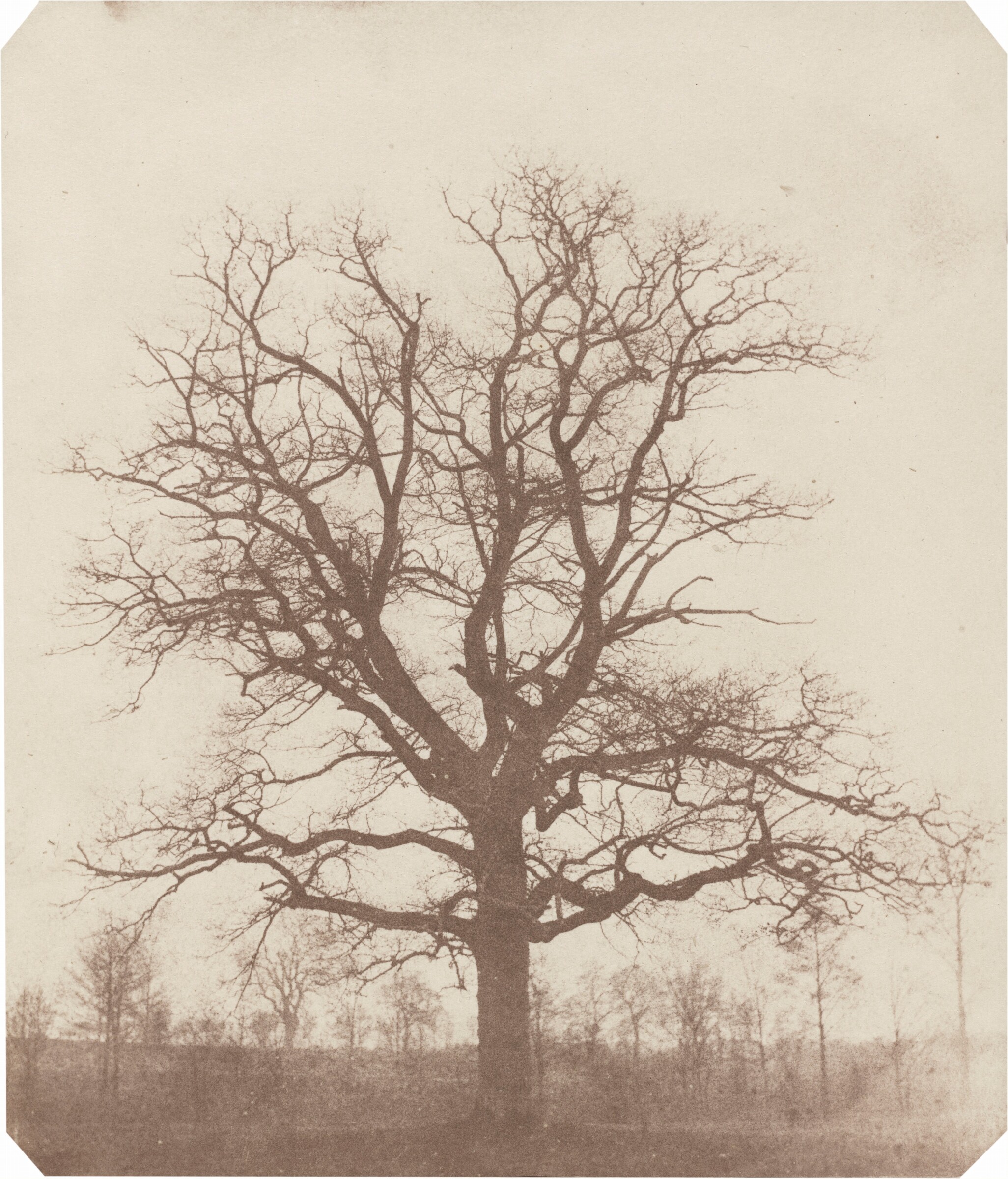
Oak Tree, William Henry Fox Talbot, mid-1840s

Oak Tree

mid-1840s · Não exposta · Galeria Nacional de Arte

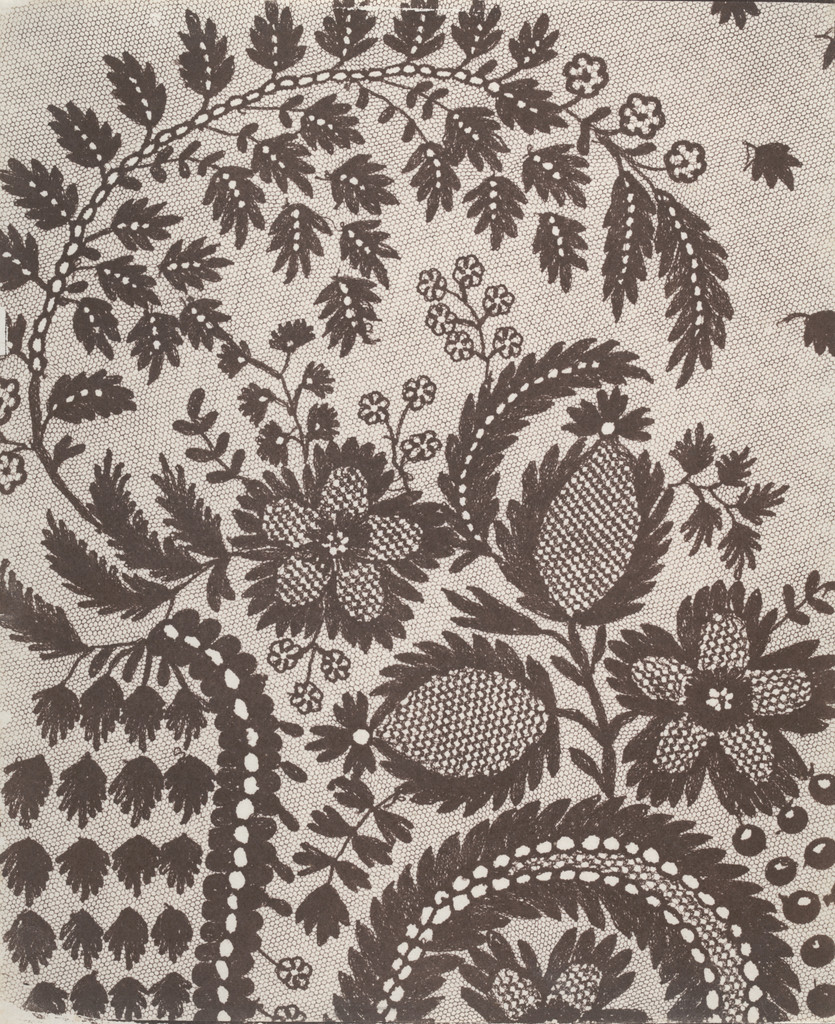
Lace, William Henry Fox Talbot, 1840s

Lace

1840s · Não exposta · Museu de Arte Moderna

Leaf Study, William Henry Fox Talbot, 1839/1840

Leaf Study

1839/1840 · Não exposta · Galeria Nacional de Arte

Lace, William Henry Fox Talbot, 1839-1844

Lace

1839-1844 · Não exposta · Galeria Nacional de Arte

Porseleinen beeld naar Giambologna, voorstellende de Sabijnse maagdenroof, William Henry Fox Talbot, in or after 1839-04 - in or before 1840-04

Porseleinen beeld naar Giambologna, voorstellende de Sabijnse maagdenroof

in or after 1839-04 - in or before 1840-04 · Museu Estatal de Amesterdão

Entrée van de Magdalen College Chapel in Oxford, William Henry Fox Talbot, c. 1840 - c. 1850

Entrée van de Magdalen College Chapel in Oxford

c. 1840 - c. 1850 · Museu Estatal de Amesterdão

[Group of Trees from the American Walnut], William Henry Fox Talbot, June 1, 1840

[Group of Trees from the American Walnut]

June 1, 1840 · Não exposta · Museu J. Paul Getty

Winter Trees, Reflected in a Pond, William Henry Fox Talbot, 1841-1842

Winter Trees, Reflected in a Pond

1841-1842 · Não exposta · Galeria Nacional de Arte

Vizinhas de sala: Art Institute of Chicago

Página do museu
The Bedroom, Vincent van Gogh, 1889

Vincent van Gogh

The Bedroom, 1889

A Sunday on La Grande Jatte — 1884, Georges Seurat, 1884–86, border added 1888–89

Georges Seurat

Tarde de Domingo na Ilha de Grande Jatte, 1884–86, border added 1888–89

Paris Street; Rainy Day, Gustave Caillebotte, 1877

Gustave Caillebotte

Paris Street; Rainy Day, 1877

Two Sisters (On the Terrace), Pierre-Auguste Renoir, 1881

Pierre-Auguste Renoir

As Duas Irmãs, 1881

The Basket of Apples, Paul Cézanne, c. 1893

Paul Cézanne

A Cesta de Maçãs, c. 1893

Stacks of Wheat (End of Summer), Claude Monet, 1890–91

Claude Monet

Stacks of Wheat (End of Summer), 1890–91

American Gothic, Grant Wood, 1930

Grant Wood

Gótico Americano, 1930

Nighthawks, Edward Hopper, 1942

Edward Hopper

Nighthawks, 1942

Sobre o mesmo tema · Flowers

Todas as obras sobre o tema
Irises, Vincent van Gogh, 1890

Vincent van Gogh

Irises, 1890

Museu Metropolitano de Arte

Nasturtiums, Ansel Adams, 1951

Ansel Adams

Nasturtiums, 1951

Não exposta · Galeria Nacional de Arte

Desert Flower, Ansel Adams, 1937

Ansel Adams

Desert Flower, 1937

Não exposta · Museu de Arte Moderna

A Sunday on La Grande Jatte — 1884, Georges Seurat, 1884–86, border added 1888–89

Georges Seurat

Tarde de Domingo na Ilha de Grande Jatte, 1884–86, border added 1888–89

Art Institute of Chicago

Flower Beds in Holland, Vincent van Gogh, c. 1883

Vincent van Gogh

Flower Beds in Holland, c. 1883

Não exposta · Galeria Nacional de Arte

Roses, Vincent van Gogh, 1890

Vincent van Gogh

Roses, 1890

Galeria Nacional de Arte

Oleanders, Vincent van Gogh, 1888

Vincent van Gogh

Oleanders, 1888

Museu Metropolitano de Arte

Bouquet of Flowers in a Vase, Vincent van Gogh, 1890

Vincent van Gogh

Bouquet of Flowers in a Vase, 1890

Museu Metropolitano de Arte