 Auguste RodinFrança, 1840–1917
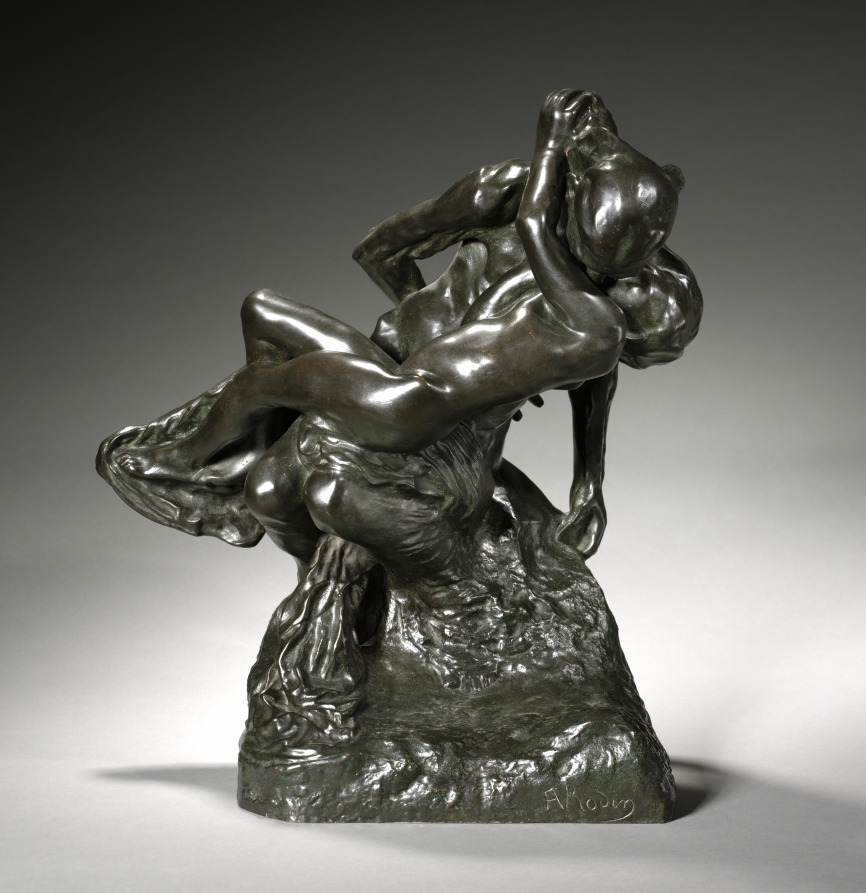
Triumphant Youth
Posso vê-la?
Não exposta de momento
Onde está «Triumphant Youth» hoje? Coleção: Museu de Arte de Cleveland, Cleveland. Não exposta de momento. Verificado 29 de setembro de 2026.

Cleveland, Estados Unidos
Pertence à coleção, mas de momento não está exposta.
- Verificado
- Neste estado desde
- Fonte
- O museu
Sobre a escultura
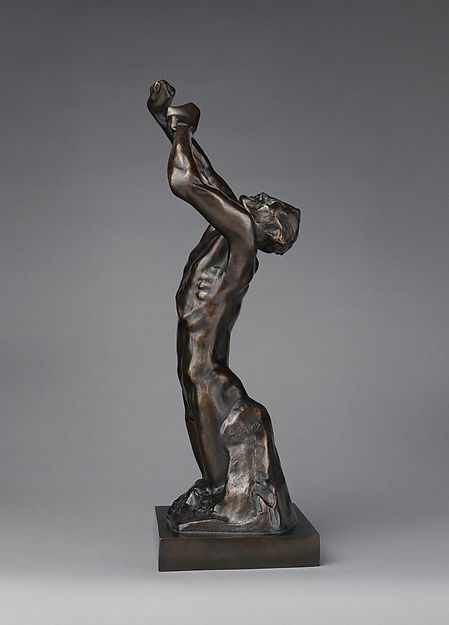
Youth Triumphant is one of the sculptures created by Auguste Rodin as part of the planning for his The Gates of Hell. It was inspired by Jean Dampt's The Grandmother's Kiss, exhibited in 1893. That work shows a young woman resting in the arms of an old woman, with the pair deeply kissing.
Pormenores
- Número de inventário
- 1960.88
No catálogo
Fontes
- Museu de Arte de Cleveland
- Imagem: Museu de Arte de Cleveland — Museum open access
Na vida de Auguste Rodin
A vida inteira1890s–1900s
Young sculptors in Rodin's studio
His income let him hire gifted young sculptors, among them Antoine Bourdelle, Charles Despiau, Jules Desbois, François Pompon and Aristide Maillol. Constantin Brancusi left after two months, convinced that nothing grows under a big tree.
19 de janeiro de 1892 · Prémio
Officer of the Legion of Honour
1893
Chicago: nudes behind a drape
Through the curator Sarah Hallowell, Rodin sent “Cupid and Psyche”, “Sphinx” and “Andromeda” to the Chicago World's Fair; the nudes caused such controversy that they were hidden behind a drape, with special permission needed to see them. Even so, the financier Charles Yerkes bought two large marbles and was probably the first American to own a Rodin.
1895
Buys the Villa des Brillants at Meudon
Rodin bought the Villa des Brillants estate near Paris and moved his studio there, but there was not enough room and two years later it went back to Paris. His income let him collect: Egyptian, Greek and Roman sculpture, Persian miniatures and paintings by his contemporaries, including Van Gogh's “Portrait of Père Tanguy”.
1895
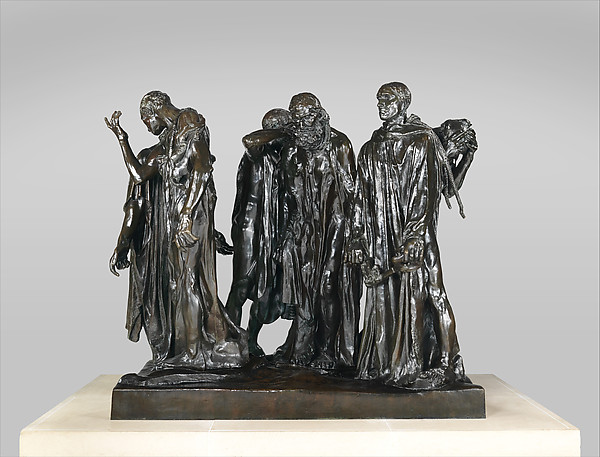
“The Burghers of Calais” installed in Calais
Against Rodin's wishes — he had hoped to place the group at ground level near the town hall — Calais chose a high platform in front of a public garden, with a cast-iron railing. Rodin had proposed doing without a pedestal so that viewers could “penetrate to the heart of the subject”.