Auguste RodinFrança, 1840–1917
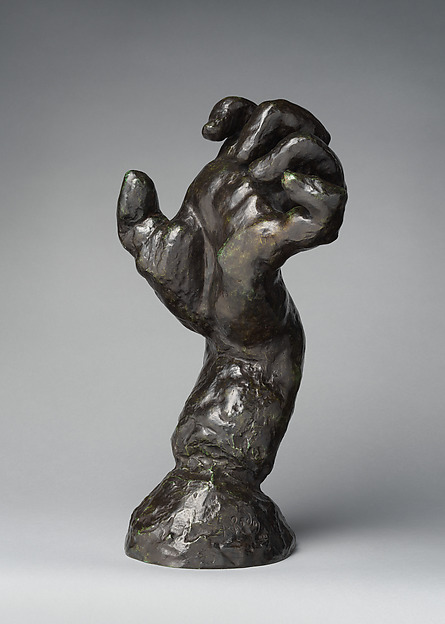
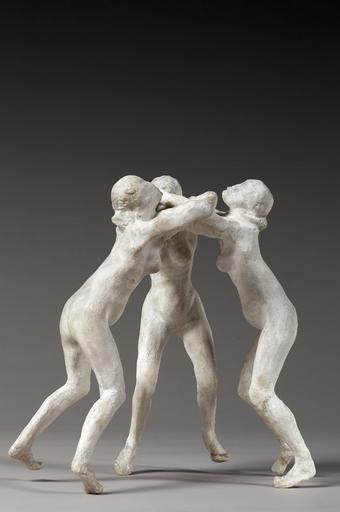
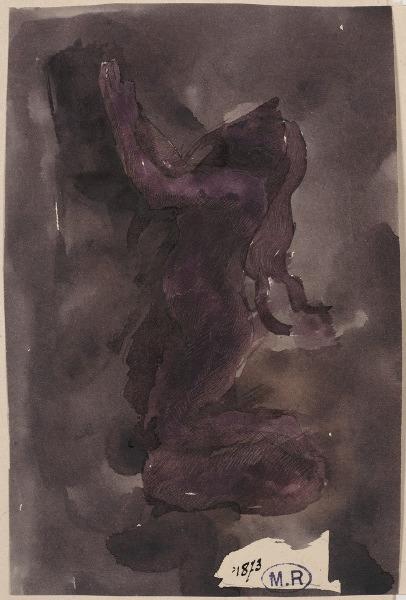
TORSE D'ADELE
Dá para ver?
Desconhecido
Onde está “TORSE D'ADELE” hoje? Coleção: Museu Rodin, Paris. Se está exposta hoje, não se sabe.
Paris, França
O proprietário é conhecido; não se sabe se hoje está exposta.
- Com este status desde
- Fonte
- O museu
Detalhes
- Número de inventário
- S 3219
O que mostra
No catálogo
Fontes
- Museu Rodin
- Imagem: Wikimedia Commons — Attribution 2.0 Generic | Author: Flickr user Jean-Pierre Dalbéra
Na vida de Auguste Rodin
A vida inteira1880
Receives the commission for “The Gates of Hell”
His first state commission was a sculptural portal for a planned Museum of Decorative Arts; with it Rodin received two studios on the Rue de l'Université. The museum was never built and “The Gates of Hell” remained unfinished: they were first cast in bronze after the master's death.
1880
The 1880 Salon: third prize
Rodin showed “St. John the Baptist”, which won third prize. In the same Salon “The Age of Bronze” was exhibited a second time, now cast in bronze.
c. 1880 – 1881
Juliette Adam's salon and first recognition
Rodin was received at the salon of the writer Juliette Adam, where he was presented to Gambetta; Gambetta recommended him to Antonin Proust, the minister of fine arts, who bought “St. John the Baptist” for the state. It was the first recognition to reach a sculptor who was already forty.
1881
London: meeting William Ernest Henley
Rodin's friend Alphonse Legros introduced him in London to the poet William Ernest Henley, who did more than anyone to win him a British audience. Through Henley Rodin met Robert Louis Stevenson and Robert Browning.
1883
Meets Camille Claudel
Standing in for Alfred Boucher, who was away, Rodin supervised his students' course and met the eighteen-year-old Camille Claudel. She became his assistant, model, lover and creative rival.
1884
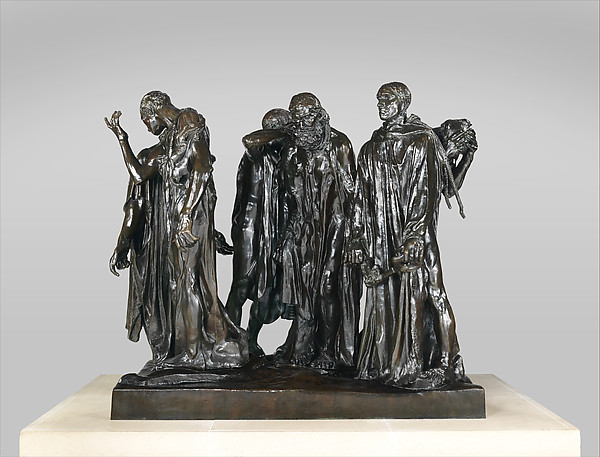
Commission for “The Burghers of Calais”
Rodin pursued the commission for a monument to the town of Calais, but instead of a lone hero, Eustache de Saint-Pierre, he conceived six citizens, each with his own emotions. A year later the committee was unimpressed with his progress; Rodin was ready to abandon the project rather than change his design, and the town told him to carry on.