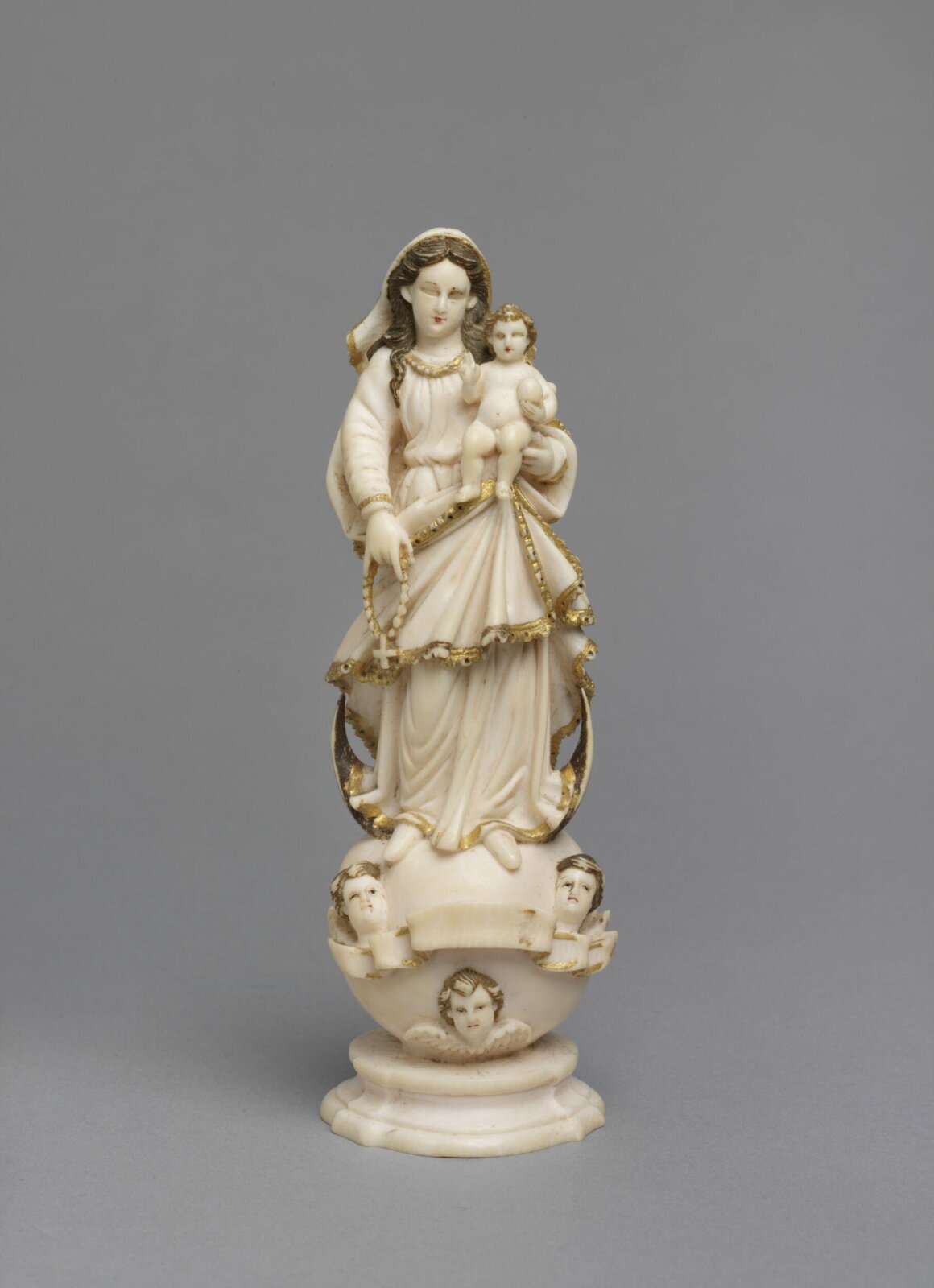
the Virgin and Child
Posso vê-la?
Não exposta de momento
Onde está «the Virgin and Child» hoje? Coleção: Museu Vitória e Alberto, Londres. Não exposta de momento. Verificado 25 de setembro de 2026.

Londres, Reino Unido
Pertence à coleção, mas de momento não está exposta.
- Verificado
- Neste estado desde
- Fonte
- O museu
Sobre a escultura
This Virign and Child ivory statuette is made in about 1650 in Goa. A comparable piece is in the Ashmolean Museum, and other similar pieces in the Vatican. The stylised carving is typical of Goan work of the seventeenth century.
Ivory carving had a long tradition on the Indian subcontinent, and elaborate works of art were made, particularly as diplomatic gifts, often presented to Western rulers. The Virgin Mary was often standing on the crescent moon, triumphant over a dragon, both symbols derived from the Book of the Apocalypse in the New Testament. From the sixteenth century onwards, the four main missionary Orders, the Augustinians, Jesuits, Dominicans and Franciscans, built churches and aimed to convert the inhabitants of India. The ivories would assist in the presentation of Christian imagery, as well as being exported back to churches, convents and private collectors in Europe.
Museu Vitória e Alberto
Pormenores
- Número de inventário
- A.21-1949
O que mostra
No catálogo
Fontes
- Museu Vitória e Alberto
- Imagem: Museu Vitória e Alberto — © Victoria and Albert Museum, London










