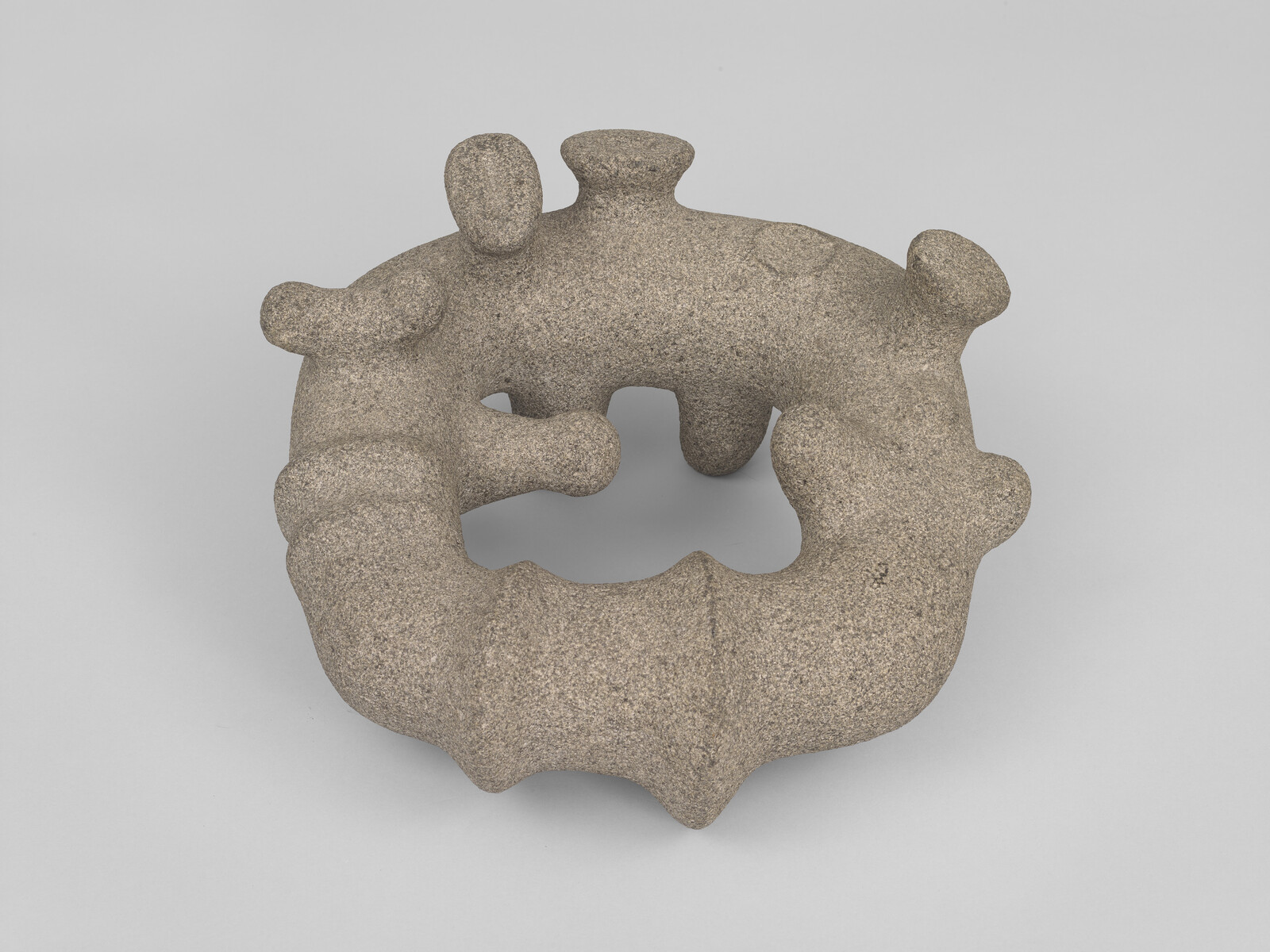
 Isamu NoguchiEstados Unidos, 1904–1988
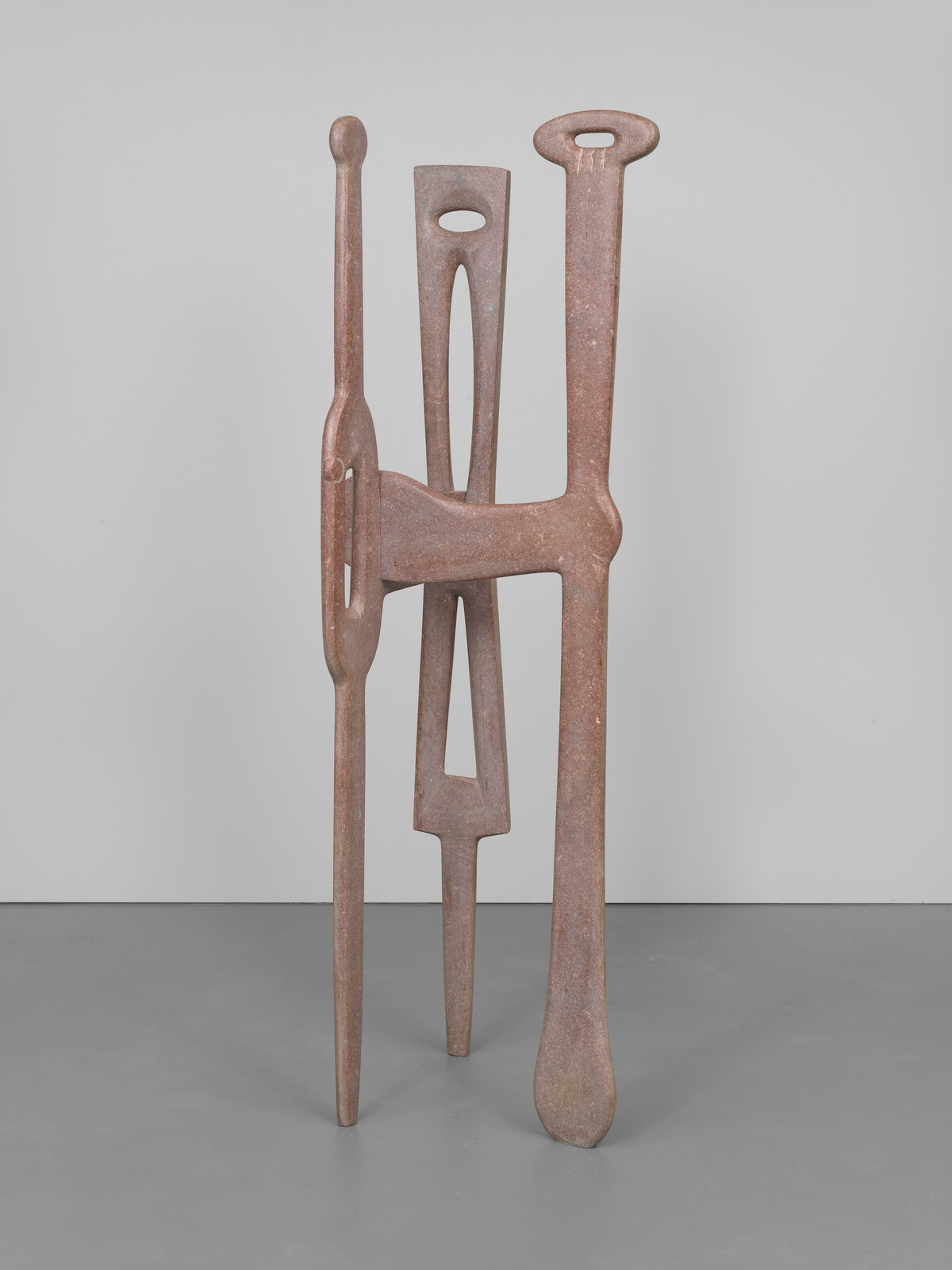
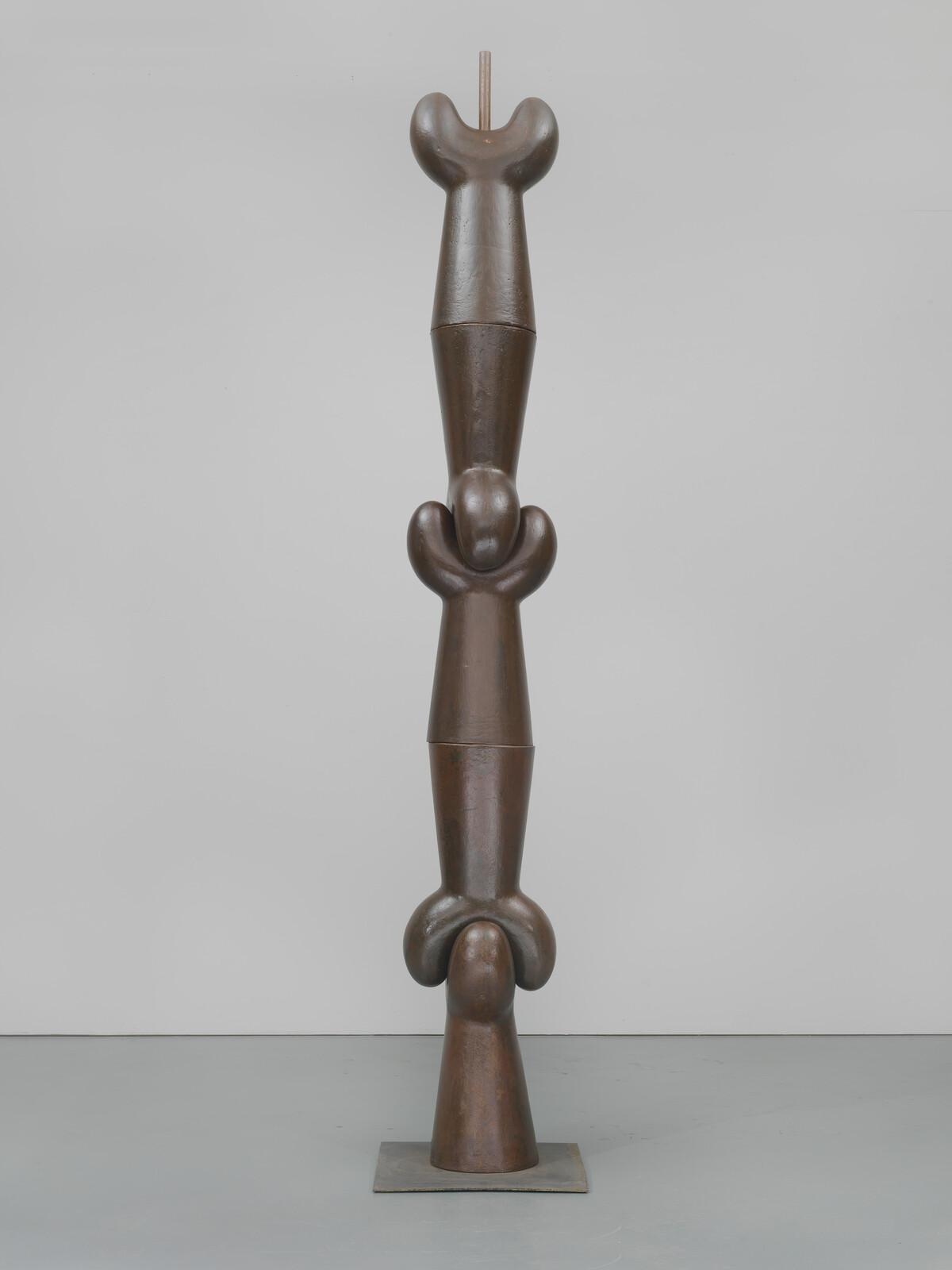
The Ring
Será possível contemplá-la?
De momento, não recebe

Museu Whitney de Arte Americana
Nova Iorque, Estados Unidos
Pertence à coleção, mas de momento não está exposta.
- Verificado
- há 9 dias
- Fonte
- Os dados da própria coleção do museu
Pormenores
- Número de inventário
- 69.106
Fontes
- Museu Whitney de Arte Americana: the museum's own open data · obtido há 9 dias
- Imagem: Museu Whitney de Arte Americana — © the artist or rights holder
Entretanto, na vida de Isamu Noguchi
A vida inteiraSeptember 1946
“Kouros” at the 1946 exhibition
In the new Greenwich Village studio he took upon his return to New York, his sculpture of the 1940s draws from surrealism, from mixed-media constructions and landscape reliefs to lunars (self-illuminating reliefs) and biomorphic sculptures made of interlocking slabs. The most famous of the slab works, Kouros, is first shown in a September 1946 exhibition, helping to cement his place in the New York art scene.
1947
Begins working with Herman Miller and Knoll
He begins a working relationship with Herman Miller of Zeeland, Michigan, which proves very fruitful, resulting in designs that become symbols of the modernist style, including the iconic Noguchi table, still in production today; he also designs furniture and lamps for Knoll. During this period he continues his involvement with theater, designing sets for Martha Graham’s Appalachian Spring and John Cage and Merce Cunningham’s The Seasons.
1948
Suicide of his friend Arshile Gorky
In 1948 his artist friend Arshile Gorky takes his own life.
1948
Applies for a Bollingen Fellowship
After Gorky’s death and a failed romantic relationship with Nayantara Pandit, the niece of the Indian nationalist Jawaharlal Nehru, Noguchi applies for a Bollingen Fellowship to travel the world, proposing to study public space as research for a book about the “environment of leisure”.
March 1949
Show at the Charles Egan Gallery
His first one-person show in New York since 1935 is held at the Charles Egan Gallery.