ART WIKI32 979 em exposição
MapaColeçãoArtistasMuseusExposiçõesRevista
Entrar

ART WIKI

Onde está a obra-prima, e a que horas se abre a porta.

Coleções: Art Institute of Chicago, Galeria Nacional de Arte, Galeria Tretiakov, Getty Villa, Harvard Art Museums, Hermitage, Hirshhorn Museum and Sculpture Garden, Instituto de Artes de Minneapolis, Museu de Arte de Cleveland, Museu de Arte Moderna, Museu do Louvre, Museu Estatal de Amesterdão, Museu J. Paul Getty, Museu Metropolitano de Arte, Museu Nacional de Arte da Dinamarca, Museu Pushkin, Museu Russo, Museu Smithsoniano de Arte Americana, Museu Vitória e Alberto, Museu Whitney de Arte Americana, National Museum of Asian Art, National Portrait Gallery, Catálogo Estatal do Fundo Museológico da Rússia (274 museus), Europeana (19 museus), Wikidata (6 museus), Paris Musées (12 museus) e Joconde, a base de museus do Ministério da Cultura de França (495 museus). As imagens pertencem aos titulares dos direitos.

Secções

  • Mapa
  • Pesquisa
  • Coleção
  • Obras-primas
  • Em exposição agora
  • Artistas

Mais

  • Museus e galerias
  • Exposições
  • Revista
  • De onde vêm os dados
  • Privacidade e cookies
InícioMapaCatálogo
  1. Coleção/
  2. Art Institute of Chicago/
  3. The New Fashioned Phaeton
The New Fashioned Phaeton, Philip Dawe, 1776
Philip Dawe, retratoPhilip DaweInglaterra, 1730–1832

The New Fashioned Phaeton

1776 · Print

Será possível contemplá-la?

De momento, não recebe

Art Institute of Chicago

Chicago, Estados Unidos

Pertence à coleção, mas de momento não está exposta.

Verificado
há 3 dias
Neste estado desde
19 de ago. de 2026
Fonte
O museu
No mapaPágina do museu

Sobre a obra

Devoting less effort to the fabric textures and pearly luster of high-society mezzotint portraits, publishers also mocked sartorial excesses, especially those with foreign sources. In 1770s London, the epithet macaroni was directed at dandyish men and overdressed women who adopted an outrageous, European style and acted in an affected manners that their genders were said to become indistinguishable. Such costumes evidently even made leaving home difficult. This print’s subtitle, “Sic Itur ad Astra” (which translates as “Thus one goes to the stars”) comes from the Roman poet Virgil and suggests that the wigs and expanding carriages shown here have reached astronomical new heights.

Art Institute of Chicago · CC BY 4.0

Pormenores

1776 · aos 46 anos
17301832
Número de inventário
1994.114

No catálogo

GravurasMezzotintaRococóNeoclassicismoSéculo XVIIIInglaterra

Fontes

  • Art Institute of Chicago
  • Imagem: Art Institute of Chicago — CC0

Mais obras de Philip Dawe

Todas as obras
Rat Catcher, Philip Dawe, 18th century

Rat Catcher

18th century · Não exposta · Harvard Art Museums

The Oyster Woman, Philip Dawe, 1769

The Oyster Woman

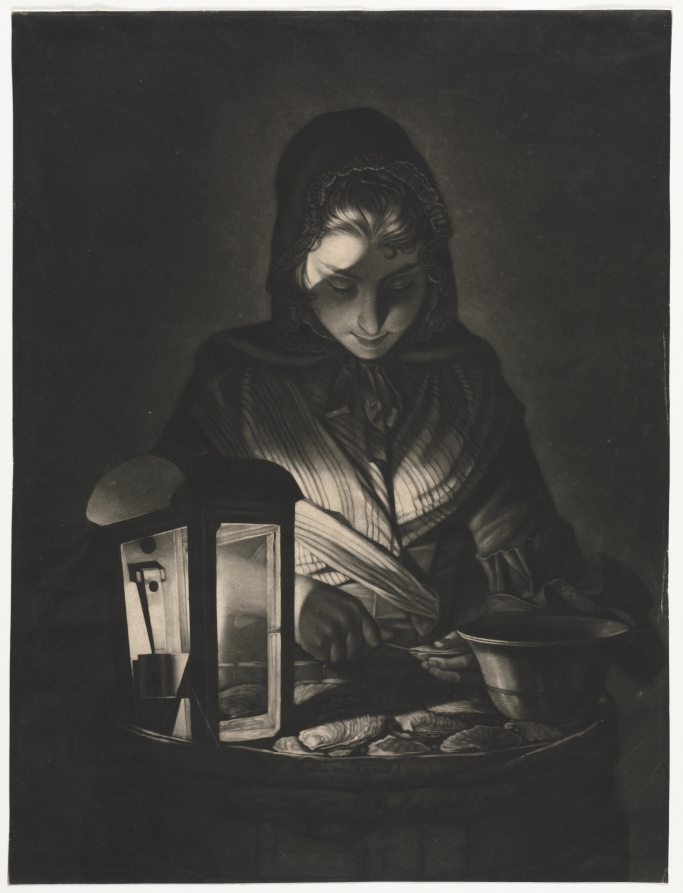
1769 · Não exposta · Museu de Arte de Cleveland

Female Lucubration: Étude Nocturne, Philip Dawe, 1772

Female Lucubration: Étude Nocturne

1772 · Não exposta · Art Institute of Chicago

Vizinhas de sala: Art Institute of Chicago

Página do museu
The Bedroom, Vincent van Gogh, 1889

Vincent van Gogh

The Bedroom, 1889

A Sunday on La Grande Jatte — 1884, Georges Seurat, 1884–86, border added 1888–89

Georges Seurat

Tarde de Domingo na Ilha de Grande Jatte, 1884–86, border added 1888–89

Paris Street; Rainy Day, Gustave Caillebotte, 1877

Gustave Caillebotte

Paris Street; Rainy Day, 1877

Two Sisters (On the Terrace), Pierre-Auguste Renoir, 1881

Pierre-Auguste Renoir

As Duas Irmãs, 1881

The Basket of Apples, Paul Cézanne, c. 1893

Paul Cézanne

A Cesta de Maçãs, c. 1893

Stacks of Wheat (End of Summer), Claude Monet, 1890–91

Claude Monet

Stacks of Wheat (End of Summer), 1890–91

American Gothic, Grant Wood, 1930

Grant Wood

Gótico Americano, 1930

Nighthawks, Edward Hopper, 1942

Edward Hopper

Nighthawks, 1942