 Jackson PollockEstados Unidos, 1912–1956
The Flame
Dá para ver?
Não está exposta no momento
Onde está “The Flame” hoje? Coleção: Museu de Arte Moderna, Nova Iorque. Não está exposta no momento. Verificado 10 de novembro de 2026.

Nova Iorque, Estados Unidos
Pertence à coleção, mas no momento não está exposta.
- Verificado
- Fonte
- O museu
Sobre a pintura
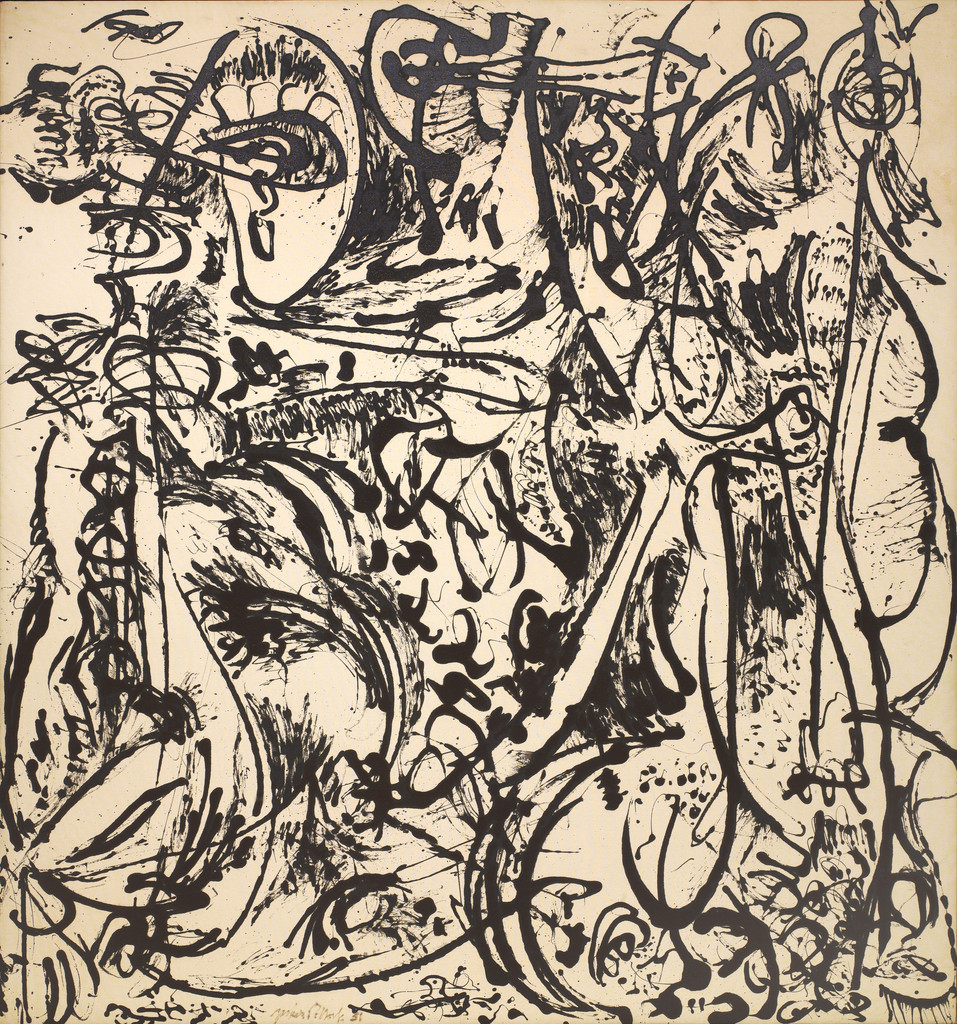
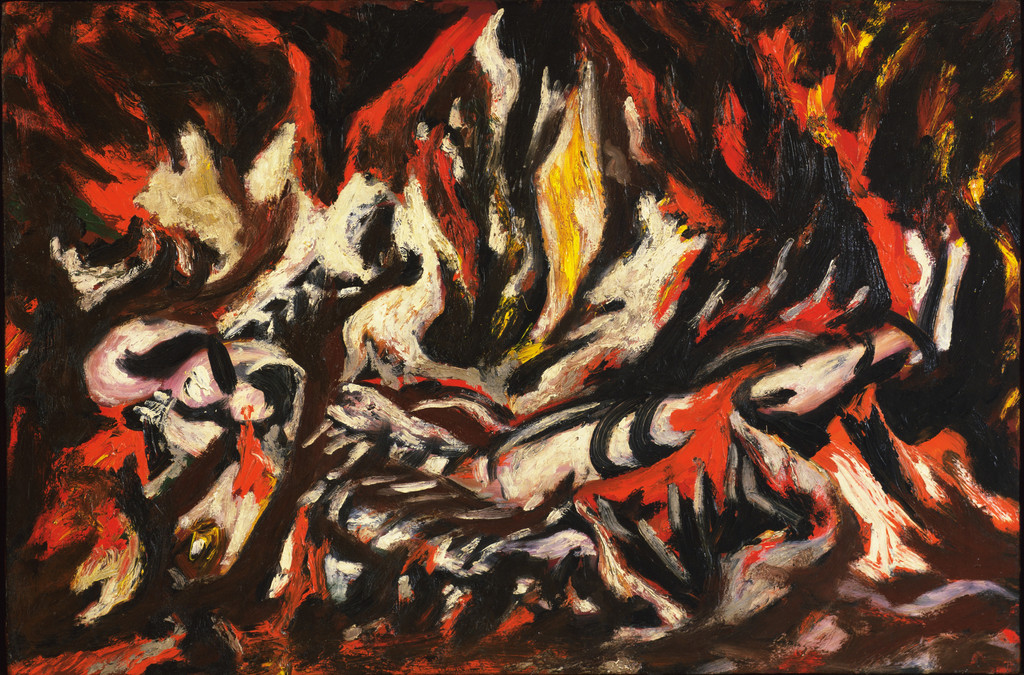
A chama, feita por Jackson Pollock por volta de 1934-1938, pertence ao acervo do Museum of Modern Art, em Nova York. Chamas escondem em parte o que parece ser um esqueleto perto do primeiro plano. A cena provavelmente se inspira nos murais de Orozco no Dartmouth College, que Pollock visitou em 1936. Tinta a óleo cobre uma tela montada sobre aglomerado de fibras, com formas entrelaçadas por toda a composição.
Detalhes
- Número de inventário
- 426.1980
No catálogo
Fontes
- Museu de Arte Moderna
- Imagem: Museu de Arte Moderna — © the artist or rights holder
Na vida de Jackson Pollock
A vida inteiraearly 1930s
A summer touring the American West with Benton
In the early 1930s Pollock spent a summer touring the Western United States with a fellow art student, Glen Rounds, and their teacher, Benton.
1934
Settles in New York
After travelling widely across the United States in the 1930s, Pollock settled in New York in 1934.
1936
Siqueiros's workshop and liquid paint
In 1936, at an experimental workshop run in New York City by the Mexican muralist David Alfaro Siqueiros, Pollock was introduced to liquid paint. Later, asked how the drip technique came about, he disavowed any link with Siqueiros on several occasions.
summer 1936
Summer at Dartmouth: Orozco's mural
In the summer of 1936 Pollock went to Dartmouth College to study José Clemente Orozco's 3,200-square-foot mural “The Epic of American Civilization”.
1938–1942
Jungian psychotherapy
From 1938 to 1941 Pollock underwent Jungian psychotherapy with Dr. Joseph L. Henderson, and from 1941 to 1942 with Dr. Violet Staub de Laszlo. Henderson engaged him through his art by encouraging him to draw, and Jungian concepts and archetypes found expression in his paintings.
1938–1942
Works for the WPA Federal Art Project
From 1938 to 1942 Pollock worked for the WPA Federal Art Project. During these years he was trying to deal with his long-established alcoholism.