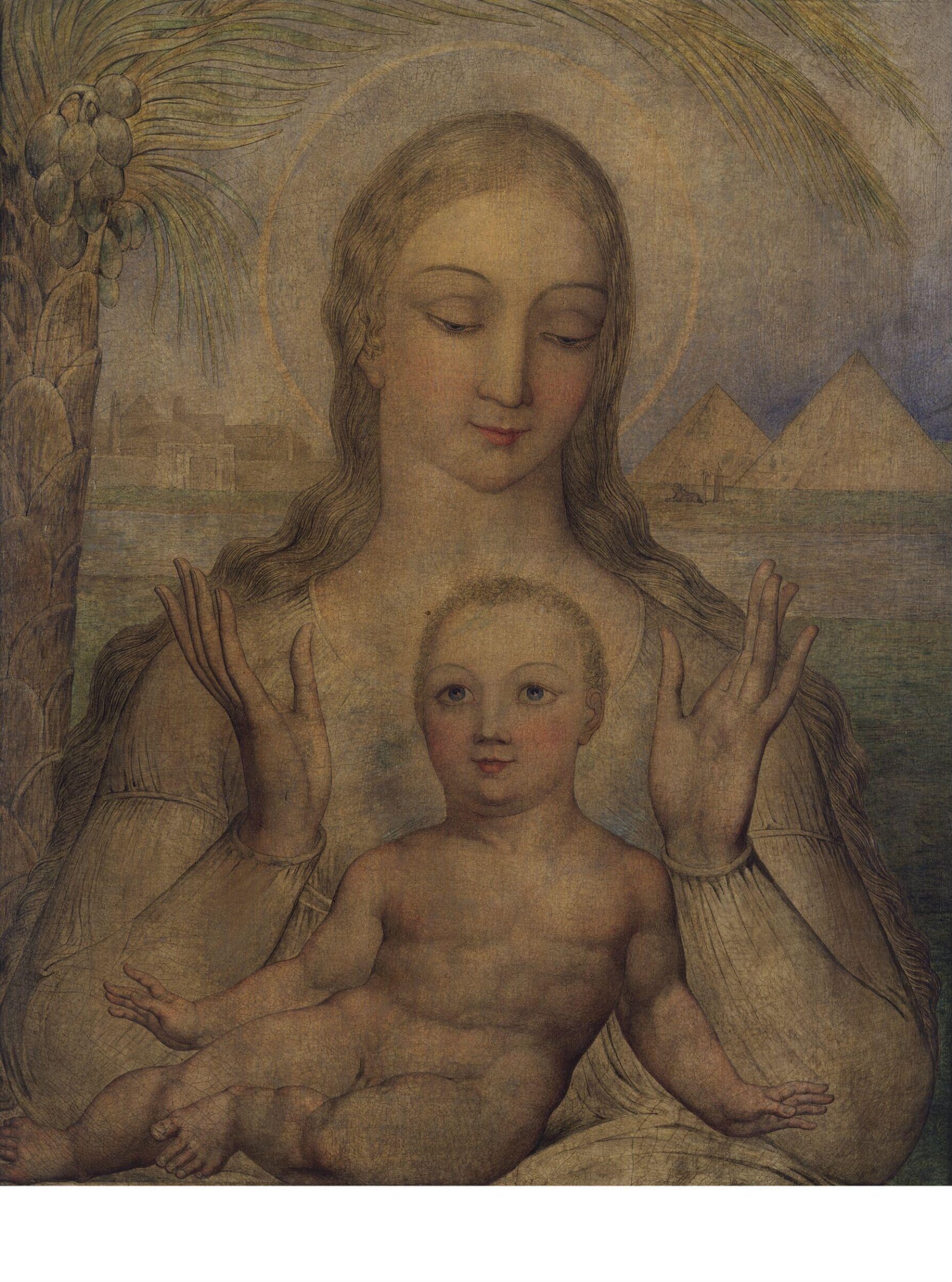
William BlakeReino Unido, 1757–1827
The Canterbury Pilgrims
Será possível contemplá-la?
De momento, não recebe

Art Institute of Chicago
Chicago, Estados Unidos
Pertence à coleção, mas de momento não está exposta.
- Verificado
- Neste estado desde
- Fonte
- O museu
Sobre a obra
Those with devout hearts set out on medieval pilgrimages, but these journeys could also be experienced in social fellowship. The visionary English artist William Blake’s enormous frieze contains all 29 of Geoffrey Chaucer’s boisterous Canterbury Tales pilgrims, as well as a portrait of the author himself. In Chaucer’s book, each character tells stories while passing time along the way from London to Canterbury Cathedral, a pilgrimage route that rivaled the Camino de Santiago in Spain. Blake devoted reams of paper to advertise this print, describing Chaucer’s Tales as “the physiognomy or elements of universal human life.”
Art Institute of ChicagoCC BY 4.0
Pormenores
- Número de inventário
- 1991.613
No catálogo
Fontes
- Art Institute of Chicago
- Imagem: Art Institute of Chicago — CC0
Entretanto, na vida de William Blake
A vida inteira1780–1808
Exhibits six times at the Royal Academy
Despite his antagonism towards Reynolds, Blake submitted works to the Royal Academy on six occasions between 1780 and 1808.
outubro de 1803 – 1820 · Residência
South Molton Street
c. 1808
Polemical annotations to Reynolds's “Discourses”
Around 1808 Blake gave vigorous expression to his views on art in an extensive series of polemical annotations to Sir Joshua Reynolds's “Discourses”, denouncing the Royal Academy as a fraud and proclaiming that to generalise is to be an idiot.
1809
An exhibition in his brother's shop: nothing sold
Blake set up an independent exhibition in his brother's haberdashery shop at 27 Broad Street in Soho to market his version of “The Canterbury Pilgrims” along with other works. It was very poorly attended, sold none of the temperas or watercolours, and its only review, in The Examiner, was hostile.
1809
The “Descriptive Catalogue”: an analysis of Chaucer
For the exhibition Blake wrote his “Descriptive Catalogue” (1809), which contains what Anthony Blunt called a “brilliant analysis” of Chaucer and is regularly anthologised as a classic of Chaucer criticism; it also contains detailed explanations of his other paintings.