ART WIKI33 040 em exposição
MapaColeçãoArtistasMuseusExposiçõesRevista
Entrar

ART WIKI

Onde está a obra-prima, e a que horas se abre a porta.

Coleções: Art Institute of Chicago, Galeria Nacional de Arte, Galeria Tretiakov, Getty Villa, Harvard Art Museums, Hermitage, Hirshhorn Museum and Sculpture Garden, Instituto de Artes de Minneapolis, Museu de Arte de Cleveland, Museu de Arte Moderna, Museu do Louvre, Museu Estatal de Amesterdão, Museu J. Paul Getty, Museu Metropolitano de Arte, Museu Nacional de Arte da Dinamarca, Museu Pushkin, Museu Russo, Museu Smithsoniano de Arte Americana, Museu Vitória e Alberto, Museu Whitney de Arte Americana, National Museum of Asian Art, National Portrait Gallery, Catálogo Estatal do Fundo Museológico da Rússia (274 museus), Europeana (19 museus), Wikidata (6 museus), Paris Musées (12 museus) e Joconde, a base de museus do Ministério da Cultura de França (495 museus). As imagens pertencem aos titulares dos direitos.

Secções

  • Mapa
  • Pesquisa
  • Coleção
  • Obras-primas
  • Em exposição agora
  • Artistas

Mais

  • Museus e galerias
  • Exposições
  • Revista
  • De onde vêm os dados
  • Privacidade e cookies
InícioMapaCatálogo
  1. Coleção/
  2. Museu das Belas Artes de Valenciennes/
  3. Térésa
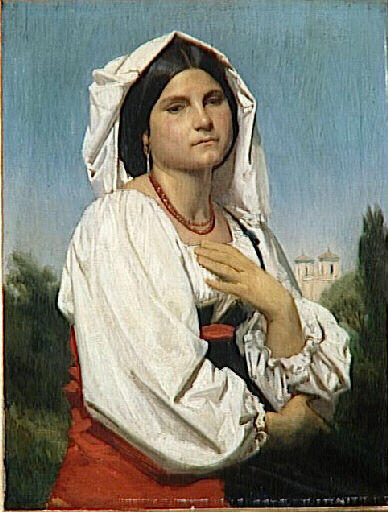
Térésa, William Adolphe Bouguereau, 1854
William-Adolphe Bouguereau, retratoWilliam-Adolphe BouguereauFrança, 1825–1905

Térésa

1854 · Painting · 41.9 × 32.2 cm

Será possível contemplá-la?

Desconhecido

MDB
Museu das Belas Artes de Valenciennes

Valenciennes, França

O proprietário é conhecido; não se sabe se hoje está exposta.

Neste estado desde
5 de out. de 2026
Fonte
O museu
No mapaPágina do museu

Pormenores

1854 · aos 29 anos
18251905
Número de inventário
P.46.1.475

Entretanto, na vida de William-Adolphe Bouguereau

A vida inteira
  1. 1851–1853 · Formação

    French Academy in Rome

  2. 1851–1854

    Through Italy with Curzon: copies of Raphael, Titian, Assisi

    At the French Academy in Rome Bouguereau meets G. Boulanger and J. Lenepveu, but becomes closest friends with the landscape painter P. Curzon; together they make many journeys through Italy — Naples, Pompeii, Siena, Perugia, Assisi, Florence, Pisa, Milan, Ravenna. Bouguereau visits almost all the museums and private collections, copies ancient Roman monuments, makes a replica of the complete cycle of frescoes in the basilica of San Francesco in Assisi, and copies Raphael’s “Triumph of Galatea” and Titian’s “Triumph of Flora”.

  3. 1851–1854

    His tastes and the “discovery” of Giotto

    In Italy Bouguereau’s tastes take shape: he names Michelangelo, Raphael and Leonardo as his chief authorities, finds Botticelli too “nervous”, counts Correggio among the geniuses but denies that status to Mantegna, whom he finds “soulless”. In Padua and Assisi he immerses himself in Giotto and discovers in his gestures and faces a link between Proto-Renaissance painting and French gallant painting of the eighteenth century — a “discovery” that will shape his work for the rest of his life and shows in two paintings called “Idyll” (1850 and 1851), reminiscent of Rococo pastorals.

  4. after 1854

    After Rome: decorating churches and mansions

    On finishing his stay in Rome Bouguereau receives commissions to decorate churches — the life of Saint Louis for a chapel, the lives of Saints Peter and Paul and of John the Baptist for the Parisian church of Saint-Augustin — and the mansions of A. Bartholoni and E. Pereire, for the first of which he paints “Arion on a Sea Horse” and “Bacchante”. These works demonstrate his undoubted ability for monumental painting.

Mais obras de William-Adolphe Bouguereau

Todas as obras

Da coleção: Museu das Belas Artes de Valenciennes

Página do museu
  • 1854

    Return to La Rochelle: “The Triumph of Martyrdom”

    In April 1854 Bouguereau leaves Rome and returns to La Rochelle. Before that, in Rome, he paints a number of large religious canvases, among them “The Triumph of Martyrdom” (1854), which draw the attention of the French secular and church authorities.

  • 1856

    Marie-Nelly Monchablon: a secret liaison with a model

    In 1856 Bouguereau begins living with one of his models, the 19-year-old Marie-Nelly Monchablon: the couple keep their liaison secret and live together unmarried, and their first child, Henriette, is born in April 1857. They will marry only on 24 May 1866, and quietly, since many assumed they were already married (other accounts say he married as early as 1856).

  • O que mostra

    Portrait (Teresa, femme, à mi-corps, modèle, Italien)

    No catálogo

    PinturasÓleoPintura francesaRealismoSéculo XIXFrança

    Fontes

    • Museu das Belas Artes de Valenciennes
    • Imagem: Museu das Belas Artes de Valenciennes — © Claude Thériez; Ministère de la Culture (France), base Joconde
    Breton Brother and Sister, William Bouguereau, 1871

    Breton Brother and Sister

    1871 · Museu Metropolitano de Arte

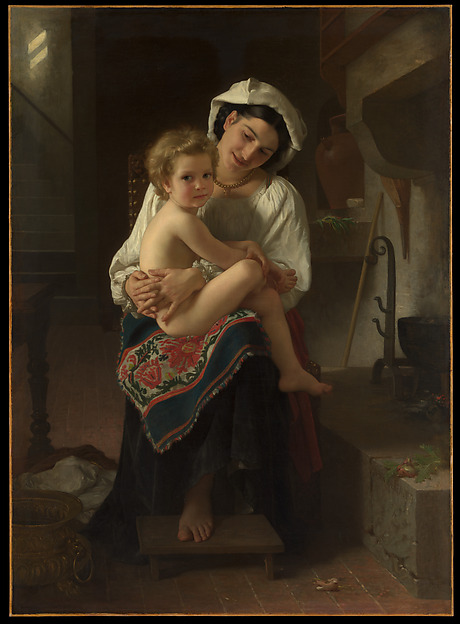
    Young Mother Gazing at Her Child, William Bouguereau, 1871

    Young Mother Gazing at Her Child

    1871 · Museu Metropolitano de Arte

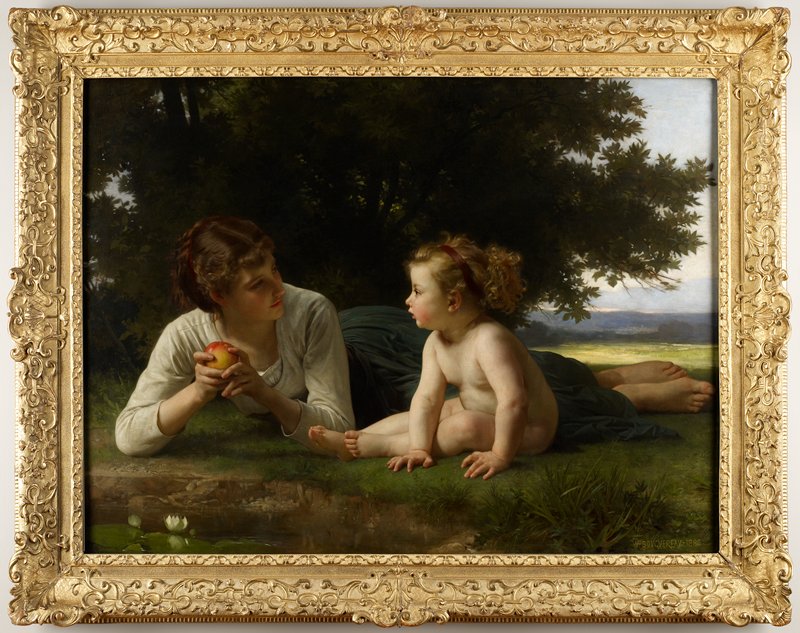
    Temptation, William-Adolphe Bouguereau, 1880

    Temptation

    1880 · Instituto de Artes de Minneapolis

    A Young Girl Defending Herself against Love, William-Adolphe Bouguereau, about 1880

    A Young Girl Defending Herself against Love

    about 1880 · Museu J. Paul Getty

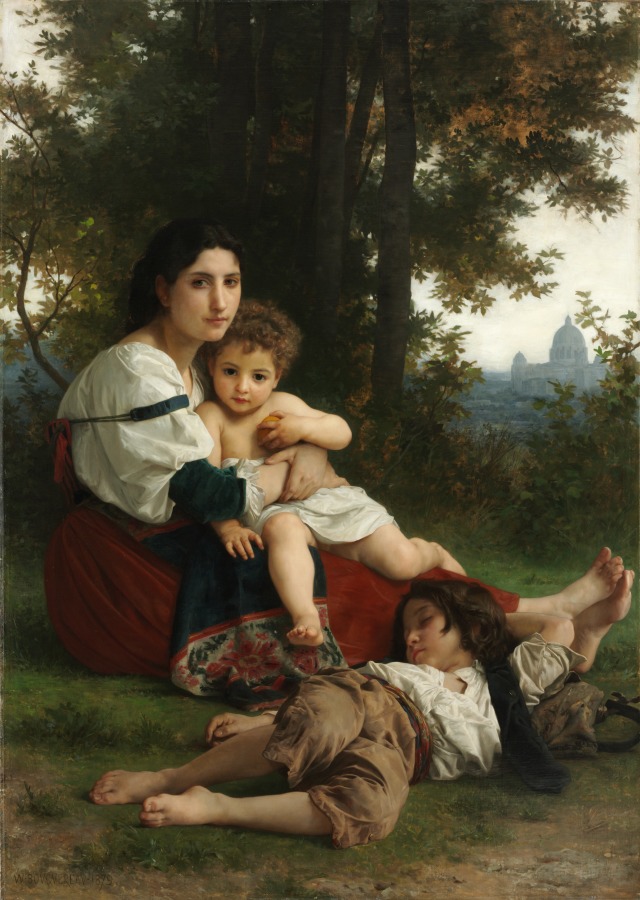
    Rest, William Adolphe Bouguereau, 1879

    Rest

    1879 · Museu de Arte de Cleveland

    The Bathers, William Adolphe Bouguereau, 1884

    The Bathers

    1884 · Art Institute of Chicago

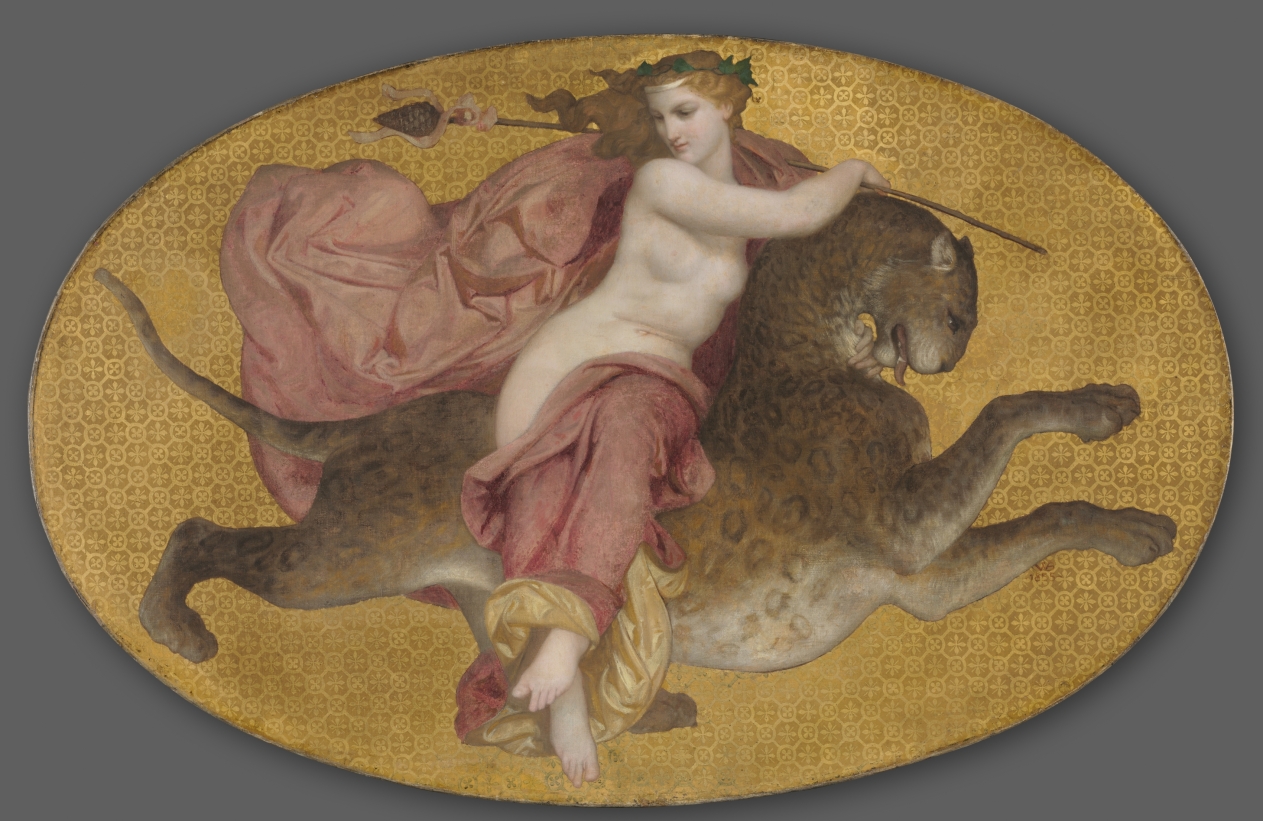
    Bacchante on a Panther, William Adolphe Bouguereau, 1855

    Bacchante on a Panther

    1855 · Museu de Arte de Cleveland

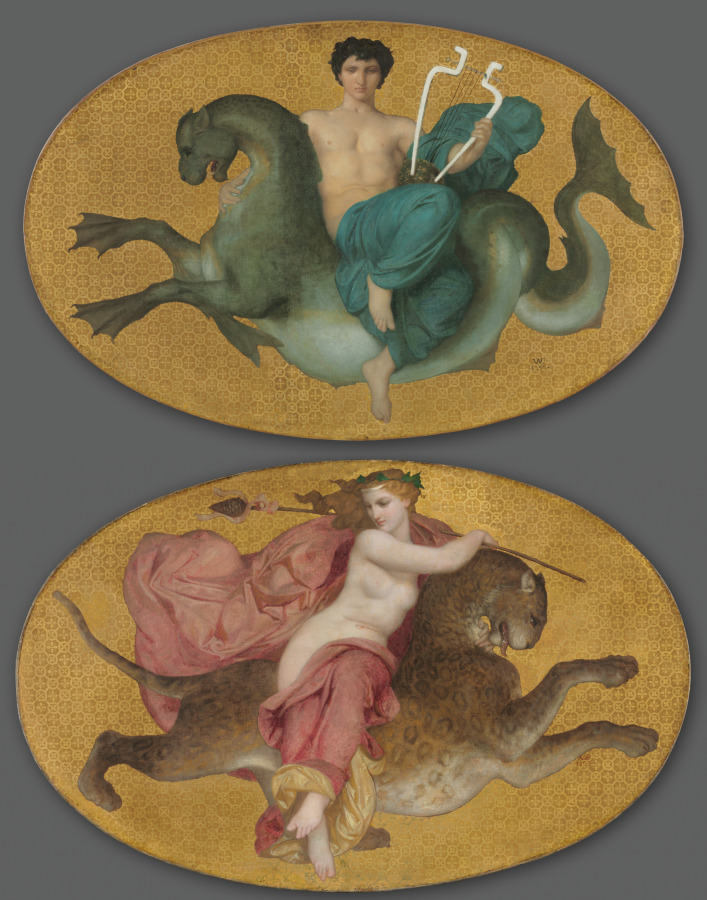
    Arion on a Sea Horse and Bacchante on a Panther (pair), William Adolphe Bouguereau, 1855

    Arion on a Sea Horse and Bacchante on a Panther (pair)

    1855 · Museu de Arte de Cleveland

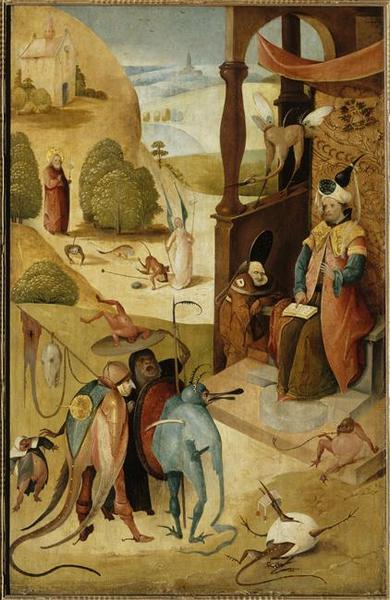
    Saint Jacques le Majeur et le magicien Hermogène ; Un prieuré antonin, Jérôme Bosch, 2e moitié 15e siècle

    Hieronymus Bosch

    Saint Jacques le Majeur et le magicien Hermogène ; Un prieuré antonin, 2e moitié 15e siècle

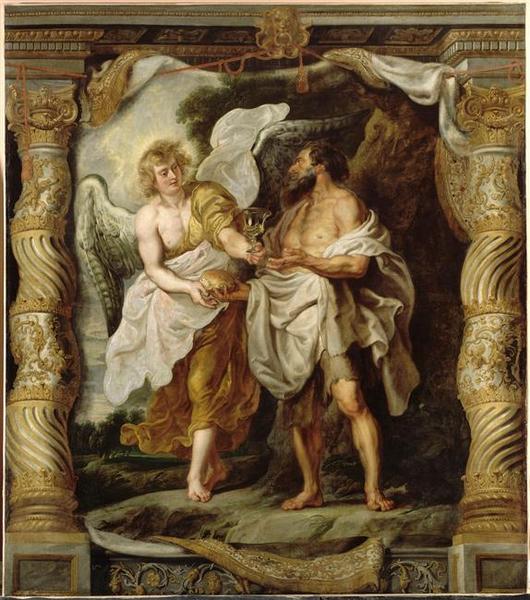
    Le prophète Elie et l'Ange dans le désert, Petrus Paulus Rubens, 1627 vers

    Peter Paul Rubens

    Le prophète Elie et l'Ange dans le désert, 1627 vers

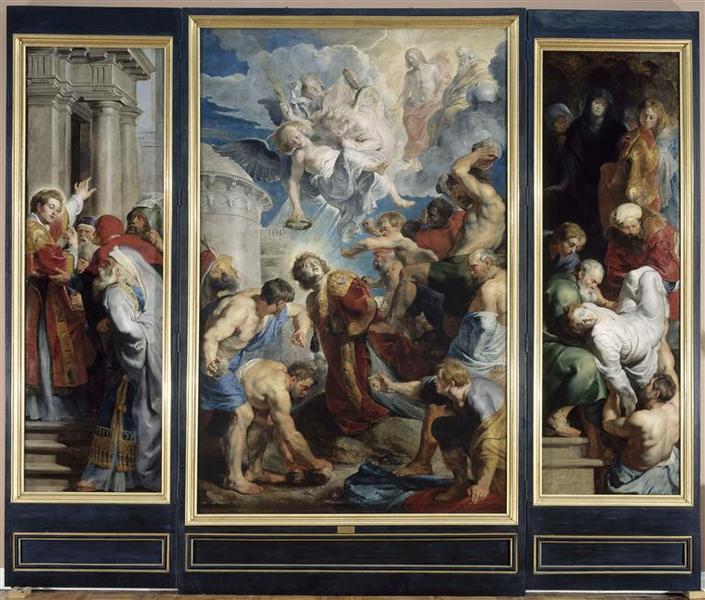
    Le Martyre de saint Etienne ; Lapidation de saint Etienne ; Prédication de saint Etienne ; La Mise au tombeau de saint Etienne ; Annonciation ; Ange de l'Annonciation, Petrus Paulus Rubens, 1ère moitié 17e siècle

    Peter Paul Rubens

    Le Martyre de saint Etienne ; Lapidation de saint Etienne ; Prédication de saint Etienne ; La Mise au tombeau de saint Etienne ; Annonciation ; Ange de l'Annonciation, 1ère moitié 17e siècle

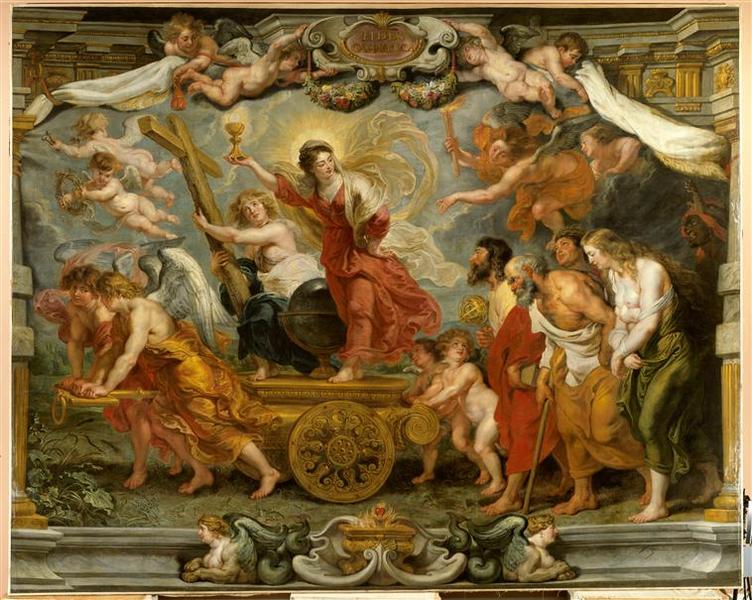
    Le triomphe de l'Eucharistie, Petrus Paulus Rubens, 1ère moitié 17e siècle

    Peter Paul Rubens

    Le triomphe de l'Eucharistie, 1ère moitié 17e siècle

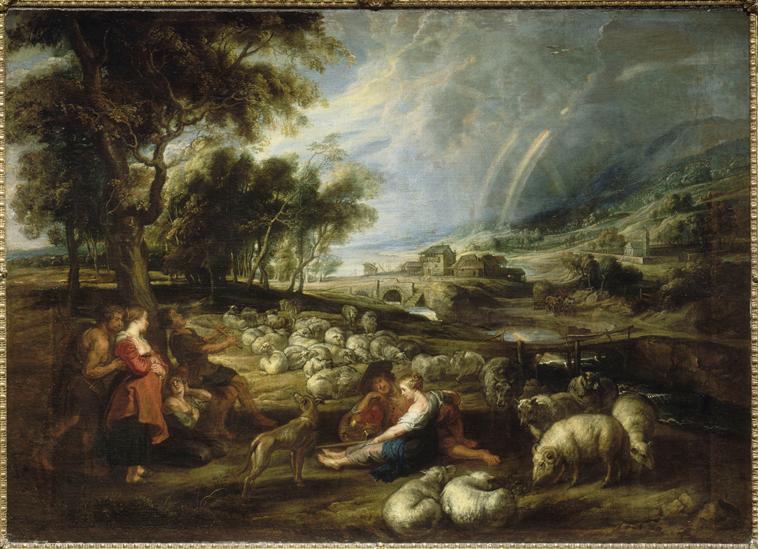
    Paysage à l'arc-en-ciel, Petrus Paulus Rubens, 17e siècle

    Peter Paul Rubens

    Paysage à l'arc-en-ciel, 17e siècle

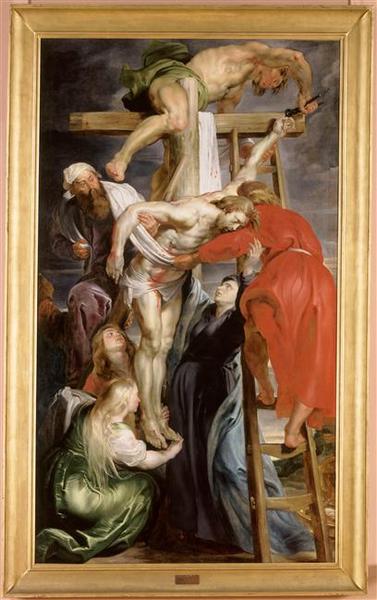
    La Descente de Croix, Petrus Paulus Rubens, 17e siècle

    Peter Paul Rubens

    La Descente de Croix, 17e siècle

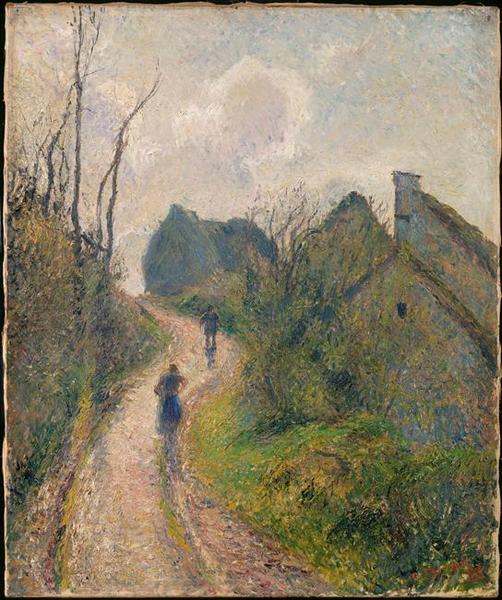
    Chemin montant à Osny (Val d'oise), Camille Pissarro, 1883

    Camille Jacob Pissarro

    Chemin montant à Osny (Val d'oise), 1883

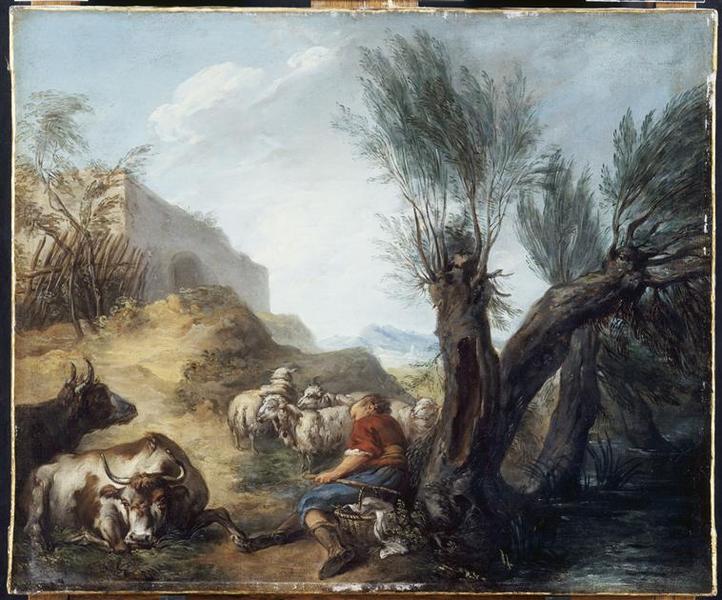
    Pastorale, François Boucher, 18e siècle

    Francois Boucher

    Pastorale, 18e siècle