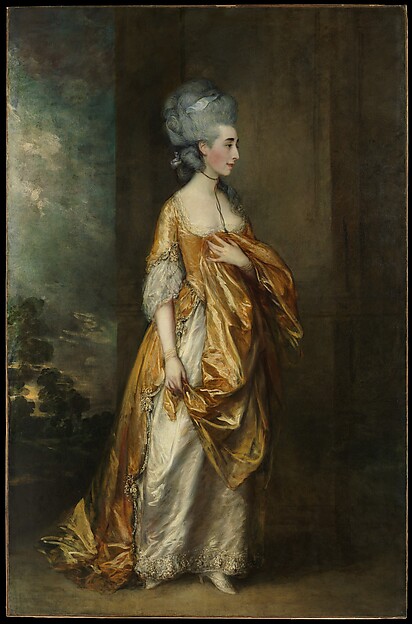
Thomas GainsboroughReino Unido, 1727–1788
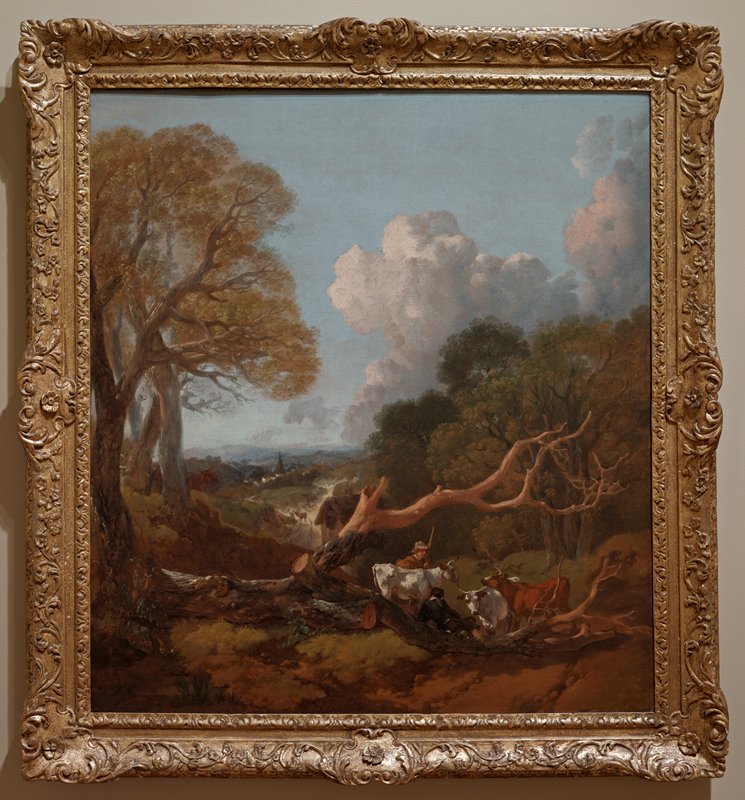
Sunset: Carthorses Drinking at a Stream
Será possível contemplá-la?
Desconhecido

National Gallery
Londres, Reino Unido
O proprietário é conhecido; não se sabe se hoje está exposta.
- Neste estado desde
- Fonte
- O museu
Pormenores
- Número de inventário
- NG310
No catálogo
Fontes
- Wikidata
- Imagem: National Gallery — Thomas Gainsborough · Public domain · Wikimedia Commons
Entretanto, na vida de Thomas Gainsborough
A vida inteirac. 1752 – 1759
The Ipswich Music Club
In Ipswich Gainsborough becomes a member of the Music Club, where he meets fellow music lovers and professional musicians; later he will paint portraits of some of them, and a group portrait of the club's members.
December 1758
A commission for portraits of the Earl of Jersey and his son
In December 1758 Gainsborough receives a commission for portraits of the Earl of Jersey and his son Lord Villiers. The portraits meet with approval and the painter's fame grows.
1759
The move to fashionable Bath
Having made his name as a portraitist in Ipswich, Gainsborough decides to move to the fashionable spa town of Bath, where two of his sisters live. There are so many portrait commissions there that they outstrip what he can handle.
1759–1774
Bath: Van Dyck and Rubens in the houses of the local aristocracy
Of great importance to Gainsborough is his acquaintance with paintings by Anthony van Dyck and Peter Paul Rubens owned by local aristocrats; he copies some of them. The study of the old masters is linked to the appearance in his landscapes of luminous distances that he had not been able to achieve before.
1760s
“Sick of portraits”
In a letter to a friend Gainsborough confesses that he is sick of portraits and longs to take his viola da gamba and walk off to some quiet village to paint landscapes. He has little regard for his gentleman patrons, whose only part worth looking at, he says, is their purse; by now he owns five viols — three by Henry Jaye and two by Barak Norman.
1761
The Society of Artists exhibitions
From the exhibition of 1761 Gainsborough sends work to the annual exhibitions of the Society of Artists of Great Britain at Spring Gardens in London, of which he was one of the earliest members.