ART WIKI32 979 em exposição
MapaColeçãoArtistasMuseusExposiçõesRevista
Entrar

ART WIKI

Onde está a obra-prima, e a que horas se abre a porta.

Coleções: Art Institute of Chicago, Galeria Nacional de Arte, Galeria Tretiakov, Getty Villa, Harvard Art Museums, Hermitage, Hirshhorn Museum and Sculpture Garden, Instituto de Artes de Minneapolis, Museu de Arte de Cleveland, Museu de Arte Moderna, Museu do Louvre, Museu Estatal de Amesterdão, Museu J. Paul Getty, Museu Metropolitano de Arte, Museu Nacional de Arte da Dinamarca, Museu Pushkin, Museu Russo, Museu Smithsoniano de Arte Americana, Museu Vitória e Alberto, Museu Whitney de Arte Americana, National Museum of Asian Art, National Portrait Gallery, Catálogo Estatal do Fundo Museológico da Rússia (274 museus), Europeana (19 museus), Wikidata (6 museus), Paris Musées (12 museus) e Joconde, a base de museus do Ministério da Cultura de França (495 museus). As imagens pertencem aos titulares dos direitos.

Secções

  • Mapa
  • Pesquisa
  • Coleção
  • Obras-primas
  • Em exposição agora
  • Artistas

Mais

  • Museus e galerias
  • Exposições
  • Revista
  • De onde vêm os dados
  • Privacidade e cookies
InícioMapaCatálogo
  1. Coleção/
  2. Albertina/
  3. Studien zu weidenden Schafen
Studien zu weidenden Schafen, Max Liebermann, 1888
Max Liebermann, retratoMax LiebermannAlemanha, 1847–1935

Studien zu weidenden Schafen

1888 · Drawing

Será possível contemplá-la?

Desconhecido

Albertina

Viena, Áustria

O proprietário é conhecido; não se sabe se hoje está exposta.

Neste estado desde
27 de set. de 2026
Fonte
O museu
No mapaPágina do museu

Pormenores

1888 · aos 41 anos
18471935

No catálogo

Desenhos e aguarelasImpressionismoSéculo XIX

Fontes

  • Albertina
  • Imagem: Albertina — Public Domain Mark 1.0

Entretanto, na vida de Max Liebermann

A vida inteira
  1. 1886

    Back at the Academy's exhibition after eight years

    Liebermann showed “Recreation Time in the Orphanage”, “Old Men's Home in Amsterdam” and “The Grace” — a painting of a Dutch peasant family at prayer, made at Israëls's suggestion during the honeymoon. The influential critic Ludwig Pietsch called him a great talent and an outstanding representative of modernism.

  2. May 1887

    Salon of 1887: muted applause and Menzel's praise

    The Laren painting was received in Paris with muted applause, while Adolph Menzel called Liebermann the only painter “who paints people, not models”. Around the same time the critic Emil Heilbut, in his “Study on Naturalism and Max Liebermann”, called him “the boldest forerunner of the new art in Germany”.

  3. 1888

    Year of the Three Emperors: a memorial to Friedrich III

    Liebermann spent the spring of 1888 in Bad Kösen and, shaken by the death of Friedrich III, painted an invented scene, “Memorial Service for Emperor Friedrich III in Bad Kösen”. Despite his left-wing views he felt a bond with the Hohenzollern monarchy.

  4. 1889

    World's Fair in Paris: Liebermann on the jury

    Invited with Gotthardt Kuehl and Karl Köpping to the jury of the exhibition marking the centenary of the French Revolution, he obtained the consent of the Prussian minister Goßler and proposed presenting German painting through Menzel, Leibl, Trübner and von Uhde; the press accused him of serving the idea of revolution, but Menzel took his side. Liebermann received a medal of honour and was admitted to the Société des Beaux-Arts, but declined the Legion of Honour on the Prussian government's recommendation.

  5. 1890

    A first commissioned portrait: Mayor Petersen

    Thanks to Alfred Lichtwark, Liebermann received commissions from Hamburg: a pastel, “Kirchenallee in St. Georg”, and his first portrait commission, Mayor Carl Friedrich Petersen, painted in the manner of Frans Hals. The mayor was furious at the naturalism and the apparent carelessness in the rendering of his official robes; Lichtwark, too, thought the portrait a failure.

Mais obras de Max Liebermann

Todas as obras
The Ropewalk in Edam, Max Liebermann, 1904

The Ropewalk in Edam

1904 · Museu Metropolitano de Arte

Dutch Village Scene with Hanging Laundry, Max Liebermann, 1890

Dutch Village Scene with Hanging Laundry

1890 · Harvard Art Museums

Self-Portrait, Max Liebermann

Self-Portrait

Não exposta · Galeria Nacional de Arte

Hyman Marzynski, Max Liebermann

Hyman Marzynski

Não exposta · Galeria Nacional de Arte

Cafe, Max Liebermann

Cafe

Não exposta · Galeria Nacional de Arte

Portrait of a Man, Max Liebermann

Portrait of a Man

Não exposta · Galeria Nacional de Arte

Karl Legien, Max Liebermann

Karl Legien

Não exposta · Galeria Nacional de Arte

Portrait, Max Liebermann

Portrait

Não exposta · Galeria Nacional de Arte

Da coleção: Albertina

Página do museu
Zwei groteske Köpfe im Profil, Leonardo da Vinci

Leonardo da Vinci

Zwei groteske Köpfe im Profil

Landschaft mit Haus und Bäumen, Vincent van Gogh

Vincent van Gogh

Landschaft mit Haus und Bäumen

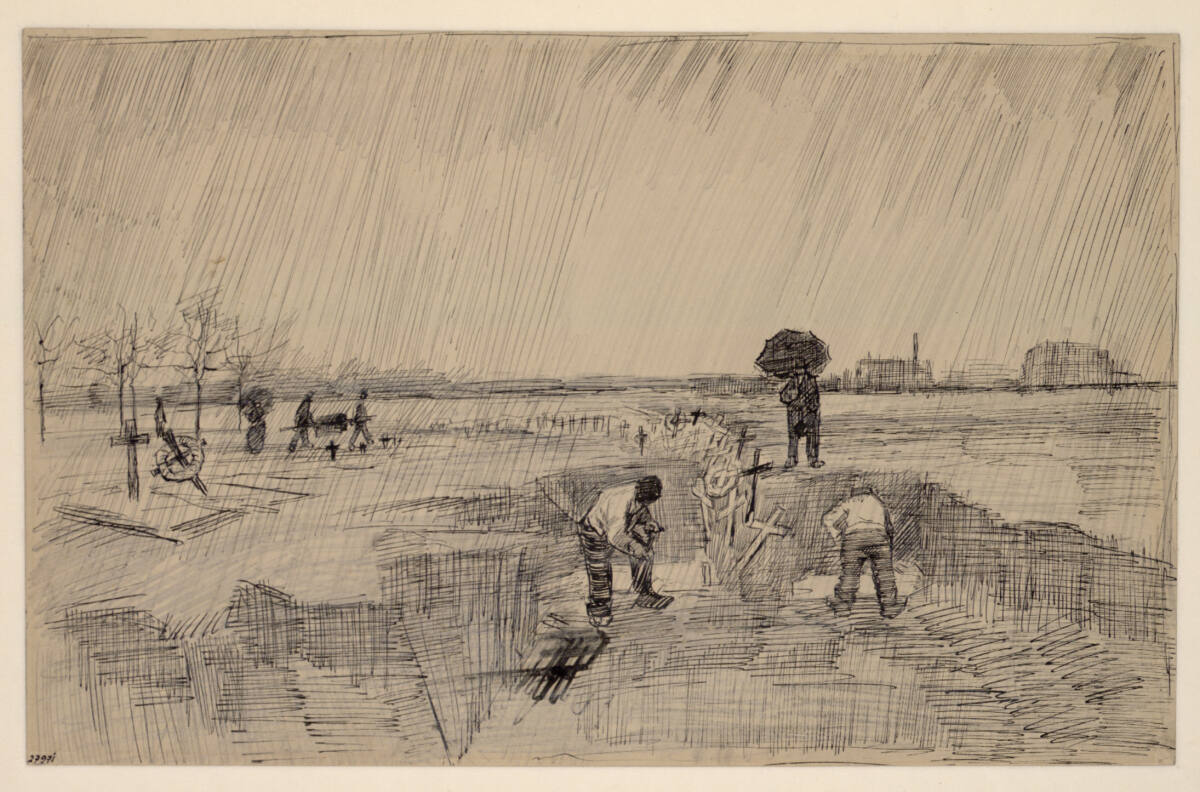
Friedhof im Regen, Vincent van Gogh

Vincent van Gogh

Friedhof im Regen

Studien eines erhobenen Armes mit Schultergelenk, Michelangelo

Michelangelo

Studien eines erhobenen Armes mit Schultergelenk

Studien eines weiblichen sitzenden Rückenakts, Michelangelo

Michelangelo

Studien eines weiblichen sitzenden Rückenakts

Männlicher Oberkörper mit gefalteten Händen sowie Handstudien, Michelangelo

Michelangelo

Männlicher Oberkörper mit gefalteten Händen sowie Handstudien

Männlicher Rückenakt (Studie zu dem eine Lanze tragenden Soldaten des geplanten Wandgemäldes "Schlacht von Cascina"), Michelangelo

Michelangelo

Männlicher Rückenakt (Studie zu dem eine Lanze tragenden Soldaten des geplanten Wandgemäldes "Schlacht von Cascina")

Beweinung Christi, Michelangelo

Michelangelo

Beweinung Christi