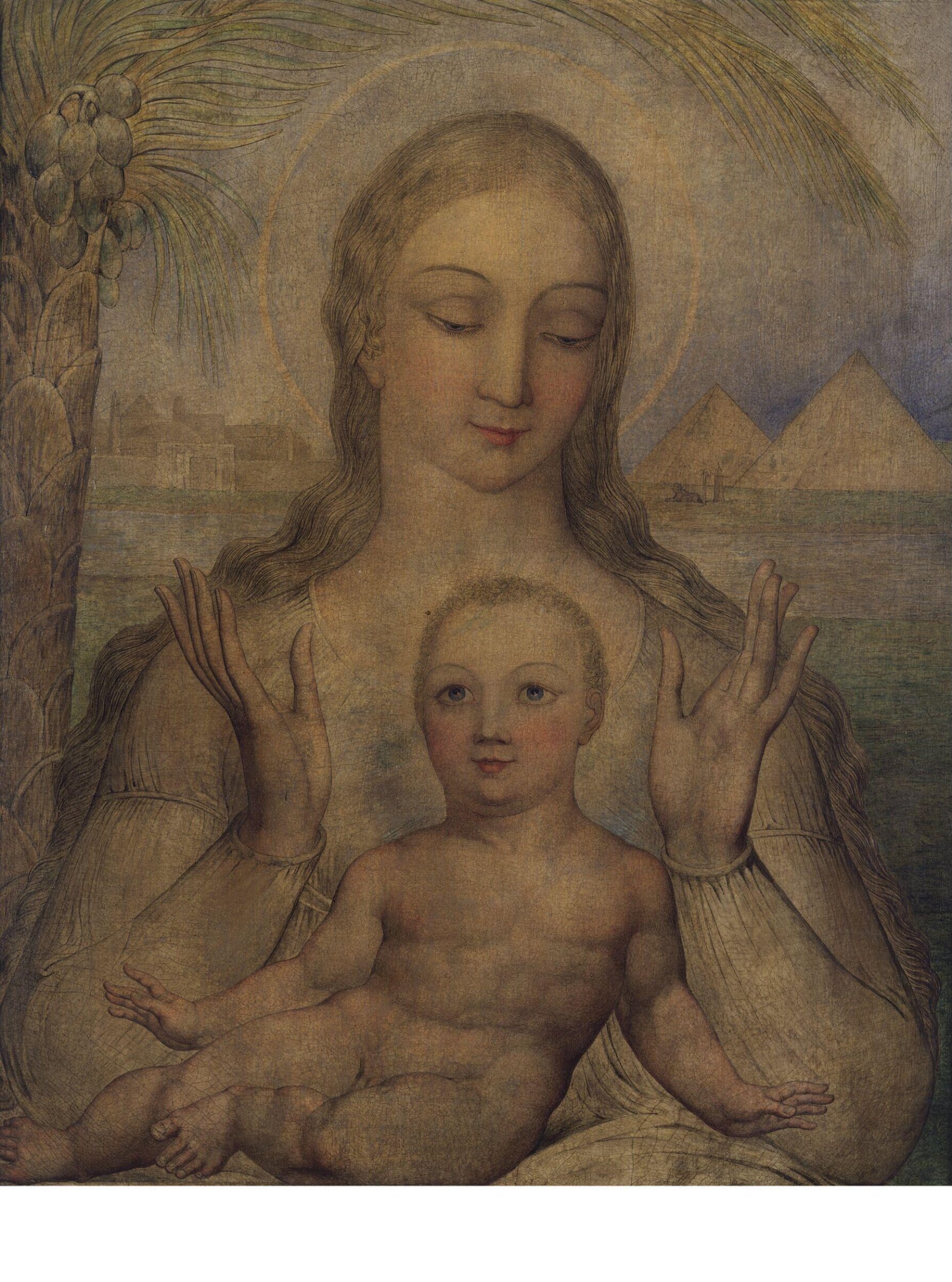
William BlakeReino Unido, 1757–1827
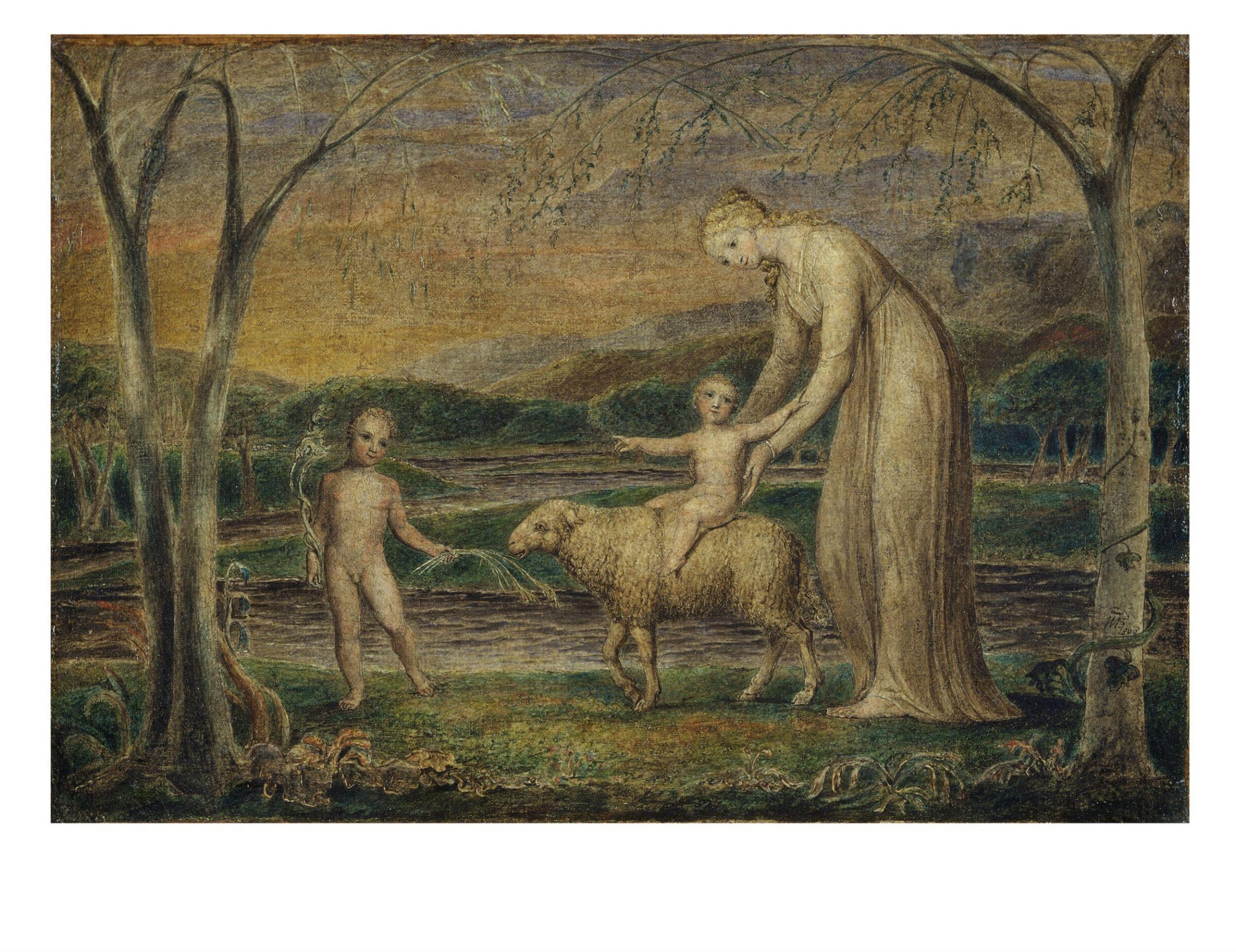
Spring (Plate 26)
Dá para ver?
Desconhecido
Onde está “Spring (Plate 26)” hoje? Coleção: Centro de Arte Britânico de Yale, New Haven. Se está exposta hoje, não se sabe.
New Haven, Estados Unidos
O proprietário é conhecido; não se sabe se hoje está exposta.
- Com este status desde
- Fonte
- O museu
Detalhes
- Número de inventário
- B1992.8.12(15)
No catálogo
Fontes
- Centro de Arte Britânico de Yale
- Imagem: Centro de Arte Britânico de Yale — Digital Image: Yale Center for British Art
Na vida de William Blake
A vida inteira1780–1808
Exhibits six times at the Royal Academy
Despite his antagonism towards Reynolds, Blake submitted works to the Royal Academy on six occasions between 1780 and 1808.
1785–1791 · Residência
Poland Street
1788
Invents relief etching
In 1788, aged 31, Blake invented relief etching, or “illuminated printing”: text and designs are drawn on a copper plate in acid-resistant ink and etched so that the protected areas stand in relief, and the printed pages are coloured by hand in watercolours. He used it for most of his well-known works, including “Songs of Innocence and of Experience”, “The Book of Thel”, “The Marriage of Heaven and Hell” and “Jerusalem”.
1791 · Residência
Hercules Buildings
1791
Illustrates Mary Wollstonecraft's “Original Stories from Real Life”
Blake illustrated Mary Wollstonecraft's “Original Stories from Real Life” (2nd edition, 1791). They seem to have shared some views on sexual equality and the institution of marriage, but no evidence is known that they ever met.