Max ErnstFrança, 1891–1976
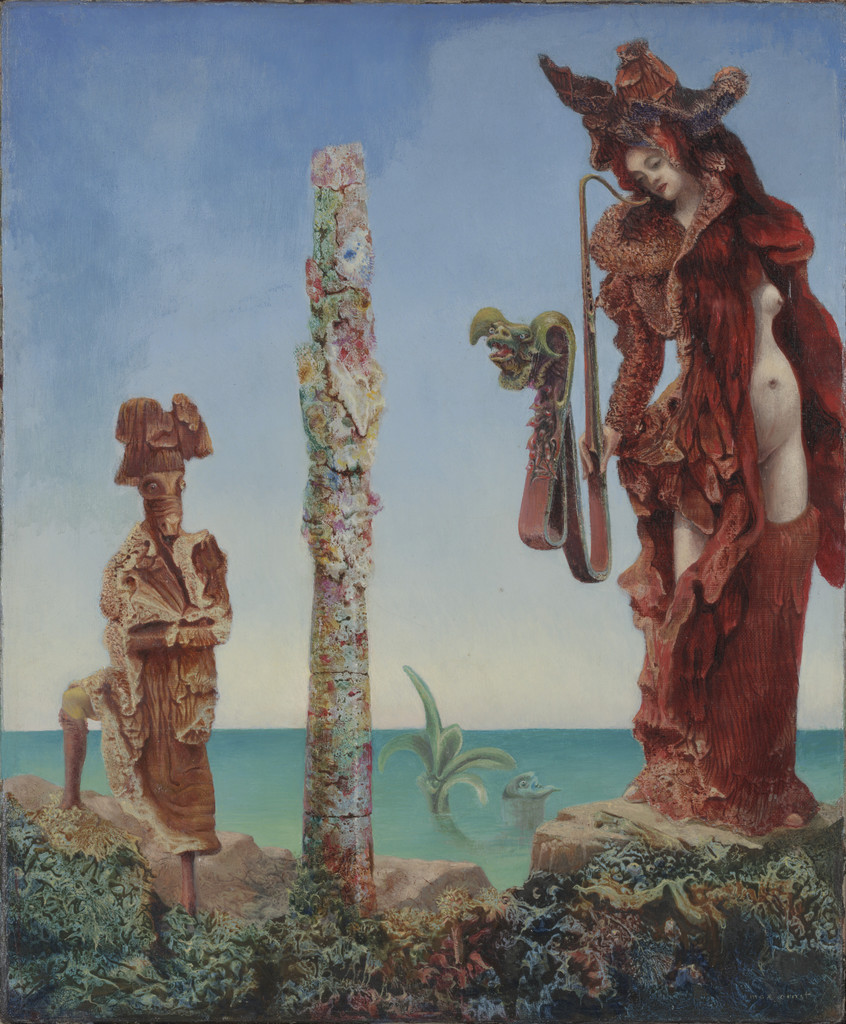
Spanish Physician
Será possível contemplá-la?
De momento, não recebe

Art Institute of Chicago
Chicago, Estados Unidos
Pertence à coleção, mas de momento não está exposta.
- Verificado
- Neste estado desde
- Fonte
- Os dados da própria coleção do museu
Pormenores
- Número de inventário
- 1996.392
No catálogo
Fontes
- Art Institute of Chicago: the museum's own open data · obtido há 7 dias
- Imagem: Art Institute of Chicago — © the artist or rights holder
Entretanto, na vida de Max Ernst
A vida inteira1938
Peggy Guggenheim buys his work
In 1938 Peggy Guggenheim acquired a significant part of Max Ernst’s works and displayed them in her new gallery in London.
1939
Interned as an “undesirable foreigner”
When the Second World War broke out Ernst was arrested as a national of an enemy country: six weeks in a remand house at Largentière (Leonora Carrington followed him there), then the Camp des Milles near Aix-en-Provence, where he shared a room with Hans Bellmer, who painted his portrait with his face as a brick wall. At the end of the year he was released with the help of the Interior Minister Albert Sarraut, whom Paul Éluard had enlisted.
1940
The house is sold and Leonora is in Spain
Returning to Saint-Martin, Ernst found the house sold and Leonora, who had suffered a breakdown after his arrest, taken to Spain by a friend. He lived on help from his friend Joë Bousquet, who bought his paintings, and began a second version of Europe after the Rain.
May – July 1940
Arrested again: Saint-Nicolas camp and two escapes
In May 1940 Ernst was sent back to Les Milles on a denunciation that he had signalled to the enemy with lights; as the German army approached, the internees were put on a train south to the Saint-Nicolas camp near Nîmes. Ernst escaped from it twice and in July obtained release thanks to his marriage to the French citizen Marie-Berthe, concealing, with her consent, that they were divorced.
1940–1941
Escape from Europe: Marseille, Madrid, Lisbon
In December 1940 Ernst reached Marseille, where Varian Fry handed him the papers obtained by Alfred Barr; there he met Breton and met Peggy Guggenheim, who bought a dozen of his works and resolved to help him leave. Via Madrid, where customs officers, admiring his paintings, let him through despite problems with his papers, he reached Lisbon and waited several weeks for a seat on a plane.
late 1942
Dorothea Tanning and “Birthday”
Selecting pictures for an exhibition of women artists at Peggy’s gallery, Ernst noticed Dorothea Tanning’s Birthday. Julien Levy introduced him to the painter, and a few meetings were enough for him to fall in love.