ART WIKI32 963 em exposição
MapaColeçãoArtistasMuseusExposiçõesRevista
Entrar

ART WIKI

Onde está a obra-prima, e a que horas se abre a porta.

Coleções: Art Institute of Chicago, Galeria Nacional de Arte, Galeria Tretiakov, Getty Villa, Harvard Art Museums, Hermitage, Hirshhorn Museum and Sculpture Garden, Instituto de Artes de Minneapolis, Museu de Arte de Cleveland, Museu de Arte Moderna, Museu do Louvre, Museu Estatal de Amesterdão, Museu J. Paul Getty, Museu Metropolitano de Arte, Museu Nacional de Arte da Dinamarca, Museu Pushkin, Museu Russo, Museu Smithsoniano de Arte Americana, Museu Vitória e Alberto, Museu Whitney de Arte Americana, National Museum of Asian Art, National Portrait Gallery, Catálogo Estatal do Fundo Museológico da Rússia (274 museus), Europeana (19 museus), Wikidata (6 museus), Paris Musées (12 museus) e Joconde, a base de museus do Ministério da Cultura de França (495 museus). As imagens pertencem aos titulares dos direitos.

Secções

  • Mapa
  • Pesquisa
  • Coleção
  • Obras-primas
  • Em exposição agora
  • Artistas

Mais

  • Museus e galerias
  • Exposições
  • Revista
  • De onde vêm os dados
  • Privacidade e cookies
InícioMapaCatálogo
  1. Coleção/
  2. Instituto de Artes de Minneapolis/
  3. Shiva Ardhanarisvara
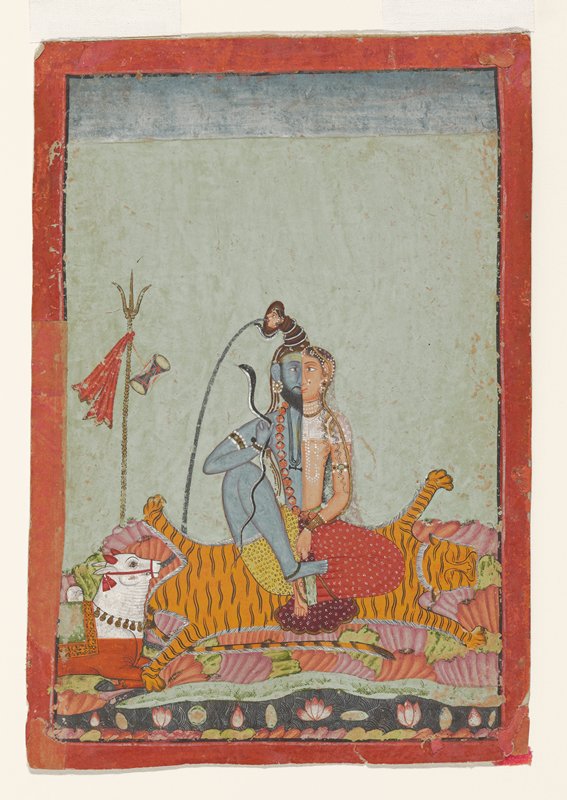
Shiva Ardhanarisvara, c. 1700–1750

Shiva Ardhanarisvara

c. 1700–1750 · Paintings, Works on Paper

Sobre a pintura

In this hypnotic image, the Hindu god Shiva and his wife Parvati share one body, in the form known as Ardhanarisvara, ‘lord whose half is woman.’ It reveals Shiva as a symbol of his omnipotence, the seed and womb of all creation and destruction. Here, a razor-sharp vertical divides and unites the image, with the artist depicting the respective halves with individualized dimensionality. Shiva assumes the role of bearded ascetic, wearing a garland of skulls, with his attributes, the trident, kettle-drum, and bull vehicle, Nandi, at his side. His right hand tames a snake while another serpent wraps Shiva’s topknot, which in turn, catches the river goddess Ganga on her decent from heaven to the earth. Parvati, herself a manifestation of Devi (The Great Goddess), and embodiment of Shakti (female energy), is princess and daughter of the Himalaya—the source of the Ganges River and abode of the loving holy family. The mauve mountain and exuberant, lotus-filled pool are typical of the Bundi school in Rajasthan, and respectively represent Lake Manasarovar and Mt. Kailash in Tibet.

Instituto de Artes de Minneapolis

Pormenores

Número de inventário
2020.40.3

Na mesma sala · G212, Instituto de Artes de Minneapolis

Página do museu

Será possível contemplá-la?

Sim, recebe visitas

Instituto de Artes de Minneapolis

Minneapolis, Estados Unidos

SalaG212

Exposta ao público. Quem o garante vem indicado abaixo.

Verificado
há 3 dias
Neste estado desde
25 de set. de 2026
Fonte
O museu
No mapaPágina do museu

No catálogo

PinturasGuacheBarrocoSéculo XVIIIÍndia

Fontes

  • Instituto de Artes de Minneapolis
  • Imagem: Instituto de Artes de Minneapolis — public domain
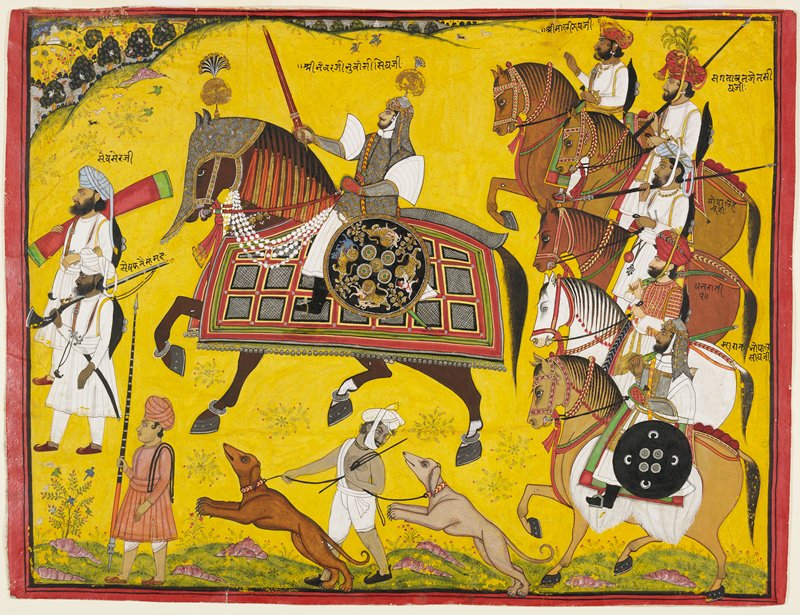
Processional Portrait of Prince Bhawani Singh of Sitamau, Attributed to Pyara Singh, 1855

Attributed to Pyara Singh

Processional Portrait of Prince Bhawani Singh of Sitamau, 1855

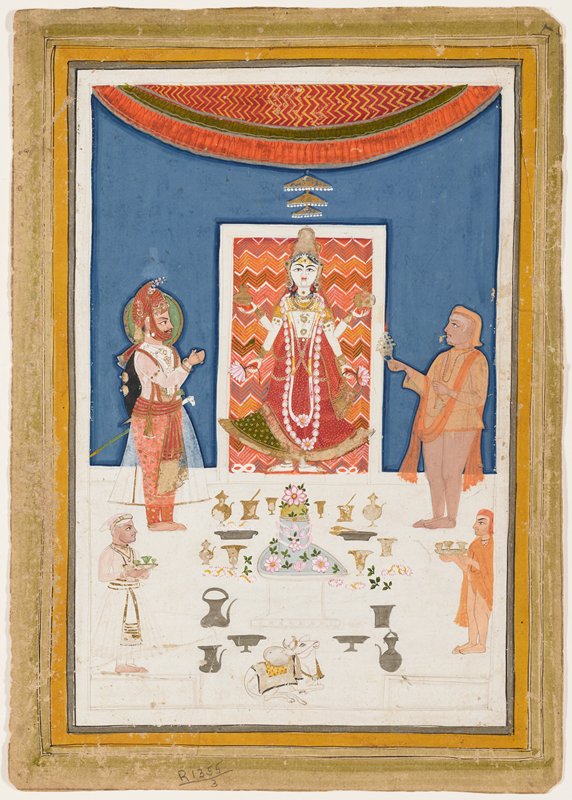
A Maharana of Mewar Worshipping an Icon, c. 1850

A Maharana of Mewar Worshipping an Icon, c. 1850

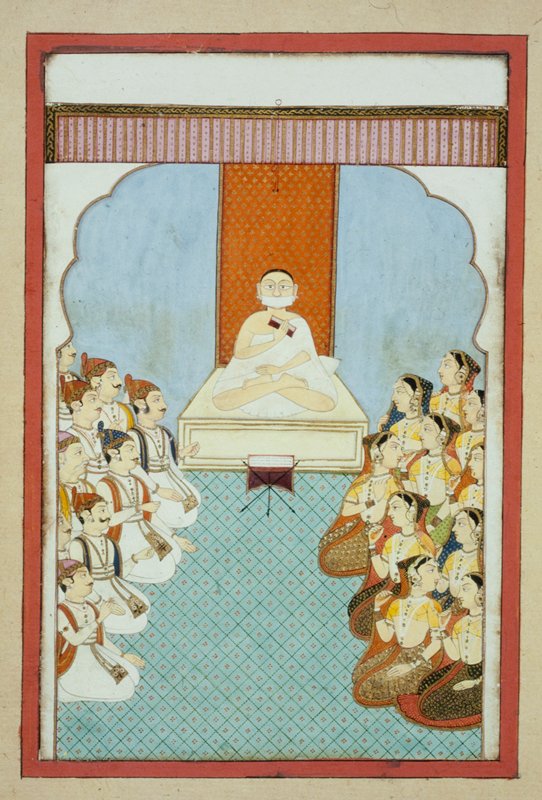
A Jain Guru Gives a Sermon, c. 1810

A Jain Guru Gives a Sermon, c. 1810

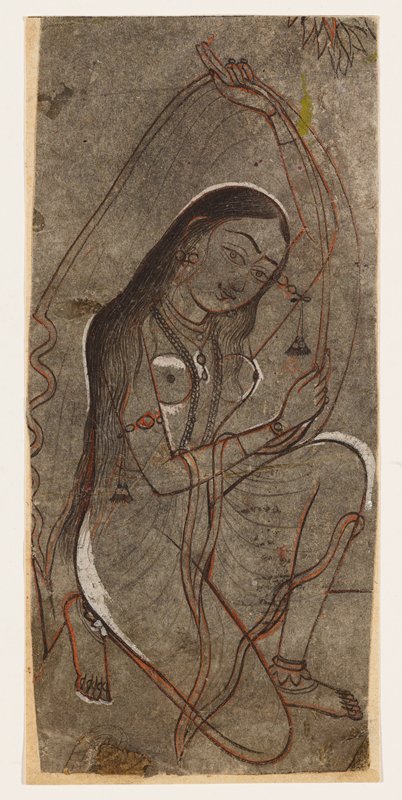
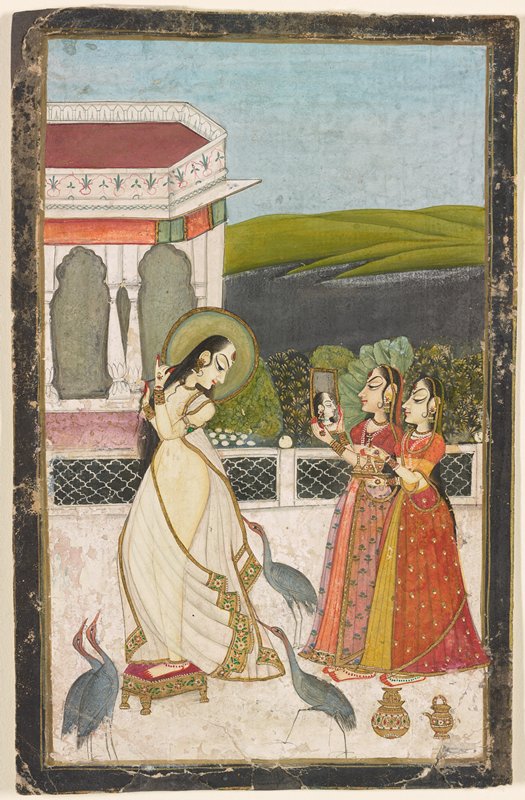
Girl at Her Toilet, c. 1810

Girl at Her Toilet, c. 1810

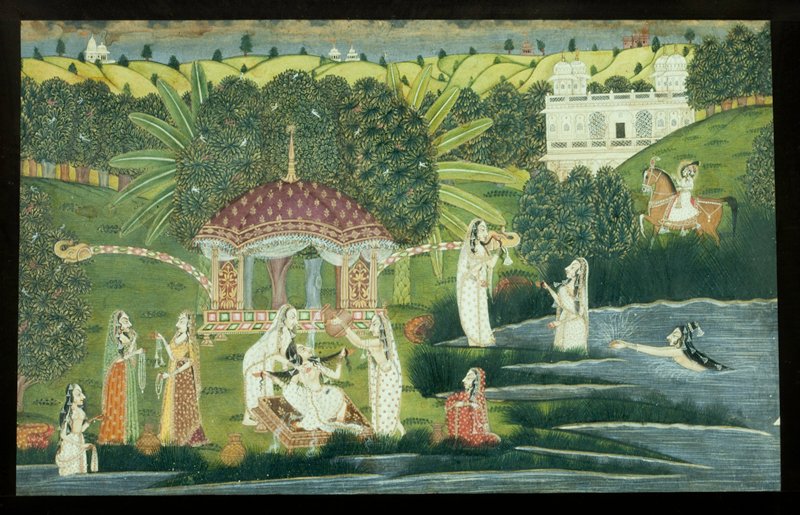
Bani Thani Bathing at Pholl Sagar Palace, Kishangarh school, 1810–20

Kishangarh school

Bani Thani Bathing at Pholl Sagar Palace, 1810–20

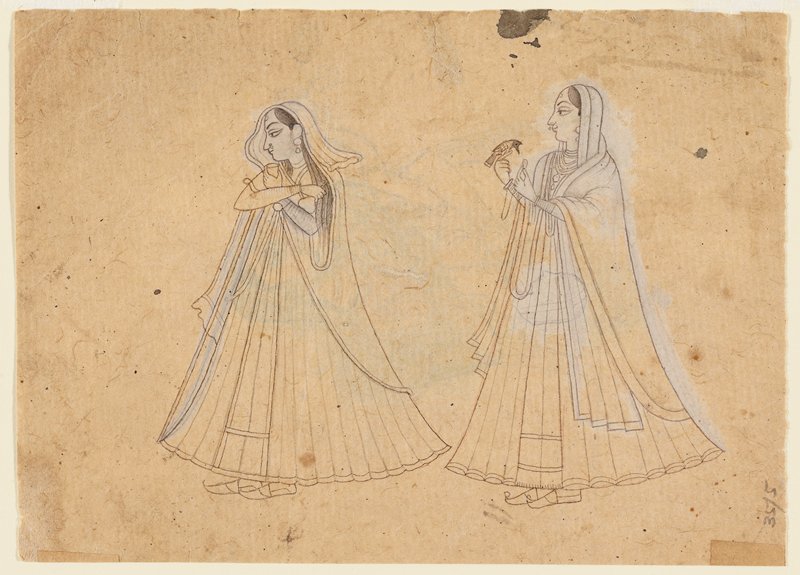
Two Court Ladies, Mother and Child (reverse), c. 1810

Two Court Ladies, Mother and Child (reverse), c. 1810

The Vilaval Ragini, c. 1780

The Vilaval Ragini, c. 1780

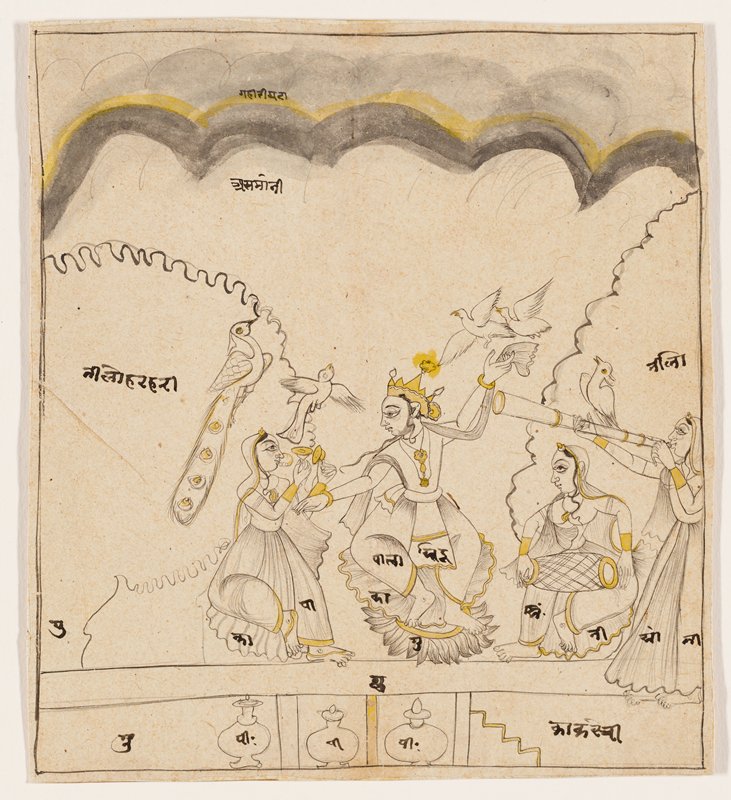
Megha Raga, c. 1780

Megha Raga, c. 1780