
 Rembrandt van RijnPaíses Baixos, 1606–1669
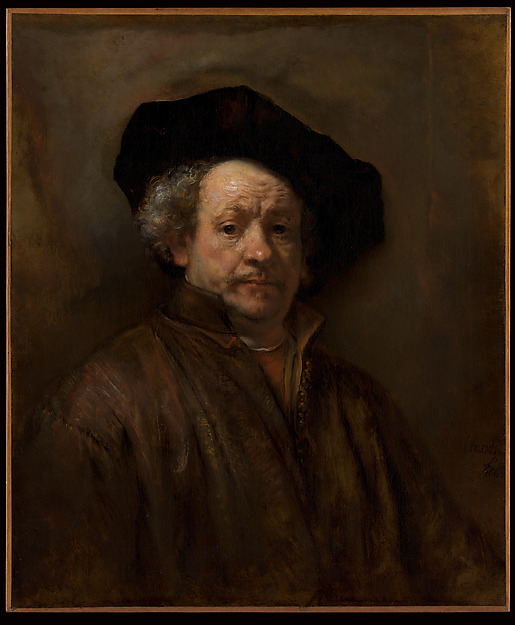
Self-portrait, Bare-headed
Será possível contemplá-la?
Desconhecido

Amesterdão, Países Baixos
O proprietário é conhecido; não se sabe se hoje está exposta.
- Fonte
- O museu
Sobre a obra
This self-portrait of 1629, one of Rembrandt’s first, reveals his ambition and urge to experiment. He drew the image on the etching ground with coarse strokes of a two-pronged instrument, doubtless a quill pen. That he approached the copperplate as a drawing board was highly unusual. The result, incidentally, is not entirely successful, nor is the large format as yet convincing. But Rembrandt was a quick learner.
Museu Estatal de Amesterdão
Pormenores
- Número de inventário
- RP-P-OB-723
O que mostra
No catálogo
Fontes
- Museu Estatal de Amesterdão
- Imagem: Museu Estatal de Amesterdão — public domain
Entretanto, na vida de Rembrandt van Rijn
A vida inteira1625–1631 · Local de trabalho
Leiden
1627
Own Studio with Jan Lievens
Returning to Leiden in 1627, Rembrandt opened his own studio together with Jan Lievens and began taking on pupils. Within a few years he had gained wide renown.
14 de janeiro de 1628 – 1631
Pupil: Gerrit Dou
1629
Meeting Constantijn Huygens
In 1629 the artist was noticed by the poet and patron Constantijn Huygens, secretary to the Prince of Orange. He helped Rembrandt connect with wealthy clients and commissioned religious paintings for the Prince of Orange.
1629–1631
Pupil: Isaac de Jouderville
1631–1669 · Local de trabalho
Amsterdam


