ART WIKI32 963 em exposição
MapaColeçãoArtistasMuseusExposiçõesRevista
Entrar

ART WIKI

Onde está a obra-prima, e a que horas se abre a porta.

Coleções: Art Institute of Chicago, Galeria Nacional de Arte, Galeria Tretiakov, Getty Villa, Harvard Art Museums, Hermitage, Hirshhorn Museum and Sculpture Garden, Instituto de Artes de Minneapolis, Museu de Arte de Cleveland, Museu de Arte Moderna, Museu do Louvre, Museu Estatal de Amesterdão, Museu J. Paul Getty, Museu Metropolitano de Arte, Museu Nacional de Arte da Dinamarca, Museu Pushkin, Museu Russo, Museu Smithsoniano de Arte Americana, Museu Vitória e Alberto, Museu Whitney de Arte Americana, National Museum of Asian Art, National Portrait Gallery, Catálogo Estatal do Fundo Museológico da Rússia (274 museus), Europeana (19 museus), Wikidata (6 museus), Paris Musées (12 museus) e Joconde, a base de museus do Ministério da Cultura de França (495 museus). As imagens pertencem aos titulares dos direitos.

Secções

  • Mapa
  • Pesquisa
  • Coleção
  • Obras-primas
  • Em exposição agora
  • Artistas

Mais

  • Museus e galerias
  • Exposições
  • Revista
  • De onde vêm os dados
  • Privacidade e cookies
InícioMapaCatálogo
  1. Coleção/
  2. Museu Estatal de Amesterdão/
  3. Schets van een schouder
Schets van een schouder, Giulio Romano, 1510 - 1546
Giulio Romano, retratoGiulio RomanoItália, 1499–1546

Schets van een schouder

1510 - 1546 · Drawing

Será possível contemplá-la?

Desconhecido

Museu Estatal de Amesterdão

Amesterdão, Países Baixos

O proprietário é conhecido; não se sabe se hoje está exposta.

Fonte
O museu
No mapaPágina do museu

Pormenores

1510 - 1546
14991546
Número de inventário
RP-T-1940-626(V)

No catálogo

Desenhos e aguarelasGizRenascimentoSéculo XVI

Fontes

  • Museu Estatal de Amesterdão
  • Imagem: Museu Estatal de Amesterdão — public domain

Entretanto, na vida de Giulio Romano

A vida inteira
  1. c. 1515

    Joins Raphael's workshop

    The young Giulio became the most gifted pupil and one of the chief assistants in Raphael's crowded workshop, working with him on the frescoes of the Villa Farnesina and the Vatican Loggias and Stanze; his hand is recognised, for example, in the monochrome herms beneath the Expulsion of Heliodorus and the Fire in the Borgo. The start of the collaboration is placed around 1515.

  2. 1520

    Inherits Raphael's workshop

    After Raphael's early death, Giulio, under his master's will, inherited the workshop and its commissions together with his long-time collaborator Giovan Francesco Penni — the start of his independent career. He was entrusted with finishing the master's unfinished work, including the frescoes of the Hall of Constantine in the Vatican.

  3. late 1524

    Moves to Mantua

    Having finished his Roman commissions, Giulio agreed in late 1524 to move to Mantua, where he stayed for the rest of his life. There, as a non-native artist, he came to be called after his origin, Giulio Romano, 'the Roman' (the name is also linked to his fame as a connoisseur of Roman antiquities).

  4. 1526

    Appointed prefect of Mantua's building works

    The post of prefect of building works and 'superintendent of the city streets' put him in charge of all the court's architecture and art — from frescoes to the fanciful inventions fashionable at the Mannerist courts of Europe.

  5. 1546

    Set to lead the building of St. Peter's

    Giulio was to return to Rome to become chief architect of the building of St. Peter's, but death prevented it.

  6. 1 de novembro de 1546

    Died

Mais obras de Giulio Romano

Todas as obras
La Vierge à l'Enfant avec le petit saint Jean Baptiste, Giulio Romano, 1e quart du XVIe siècle (vers 1515 - 1516)

La Vierge à l'Enfant avec le petit saint Jean Baptiste

1e quart du XVIe siècle (vers 1515 - 1516) · Museu do Louvre

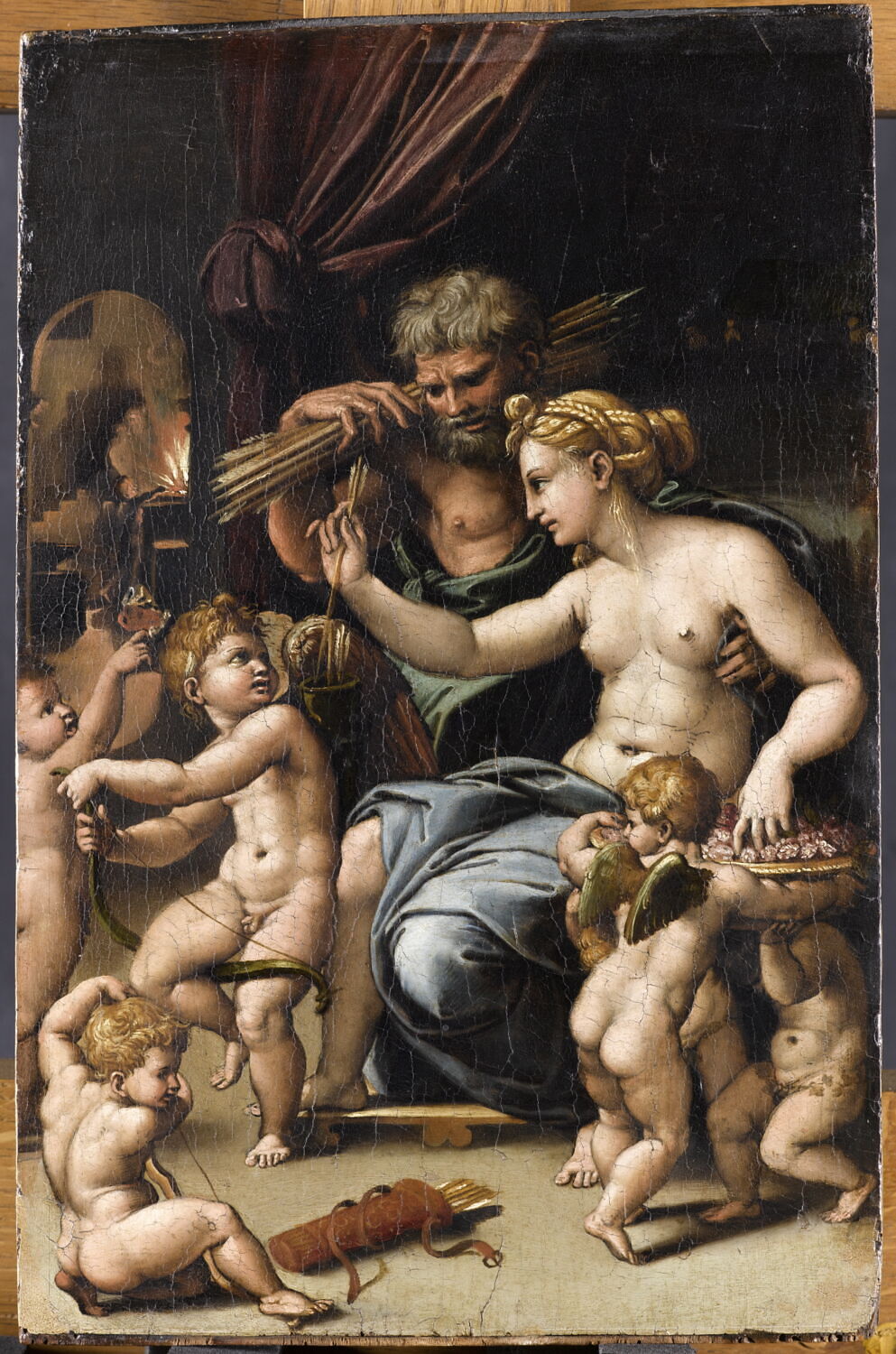
Vénus, Vulcain et l'Amour avec cinq putti, Giulio Romano, 1e moitié du XVIe siècle (vers 1520 - 1530)

Vénus, Vulcain et l'Amour avec cinq putti

1e moitié du XVIe siècle (vers 1520 - 1530) · Museu do Louvre

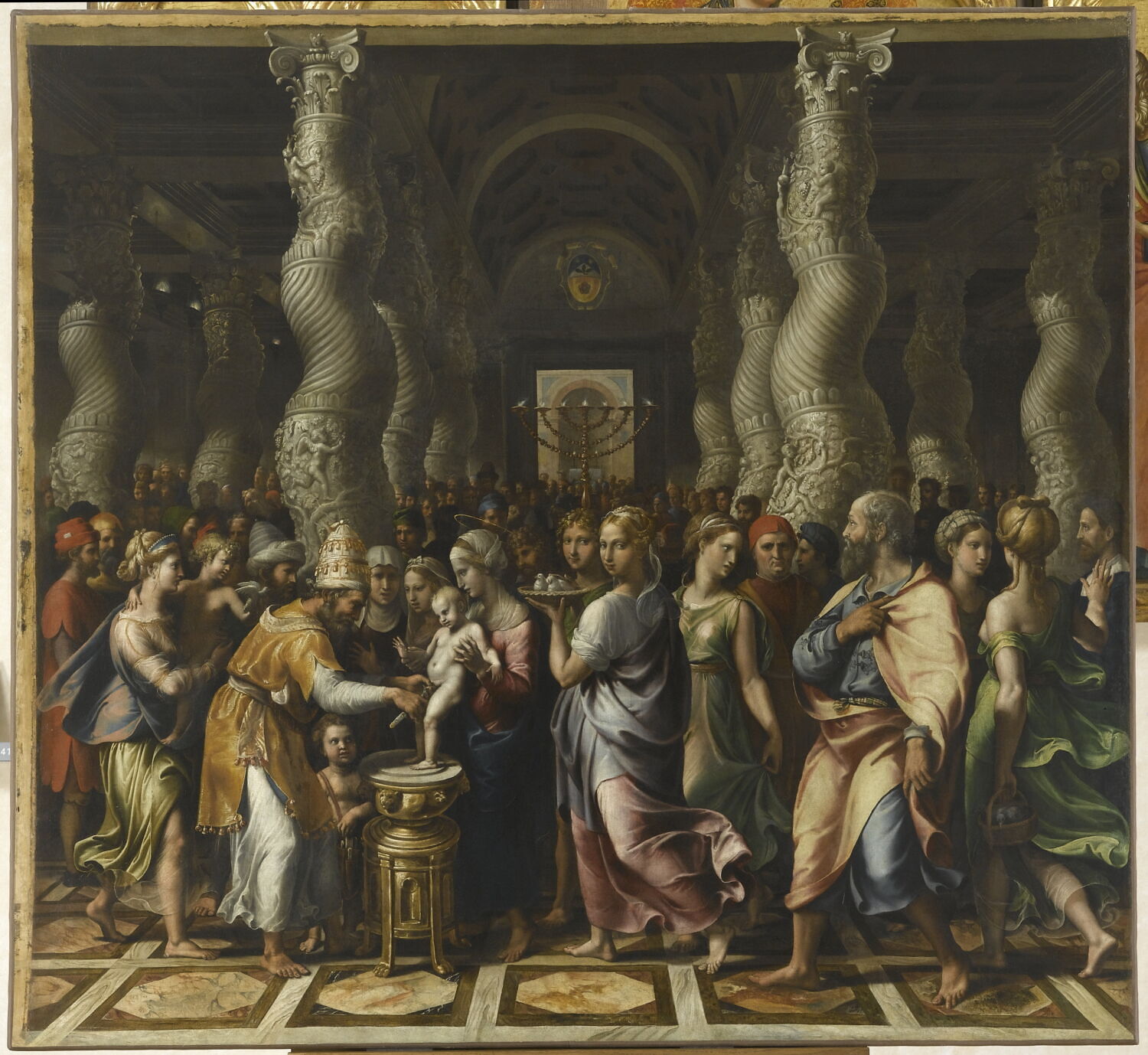
La Circoncision, Giulio Romano, 1e quart du XVIe siècle (vers 1520 - 1524)

La Circoncision

1e quart du XVIe siècle (vers 1520 - 1524) · Museu do Louvre

Love Scene, Giulio Romano, c. 1525

Love Scene

c. 1525 · Hermitage

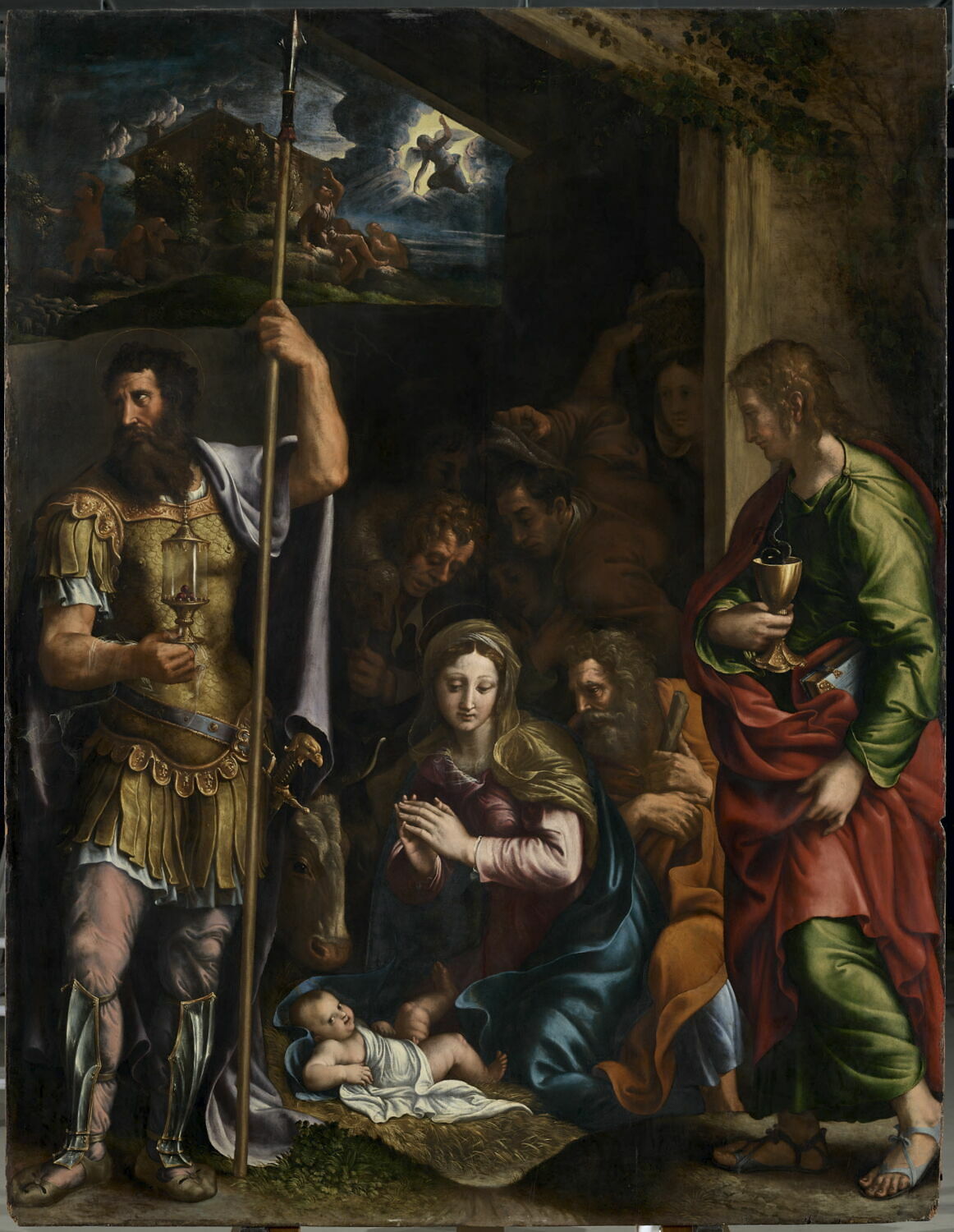
L'Adoration des bergers entre saint Jean l'Évangéliste et saint Longin (dans la partie supérieure, l'Annonce aux bergers), Giulio Romano, 1e moitié du XVIe siècle (vers 1536 - 1537)

L'Adoration des bergers entre saint Jean l'Évangéliste et saint Longin (dans la partie supérieure, l'Annonce aux bergers)

1e moitié du XVIe siècle (vers 1536 - 1537) · Museu do Louvre

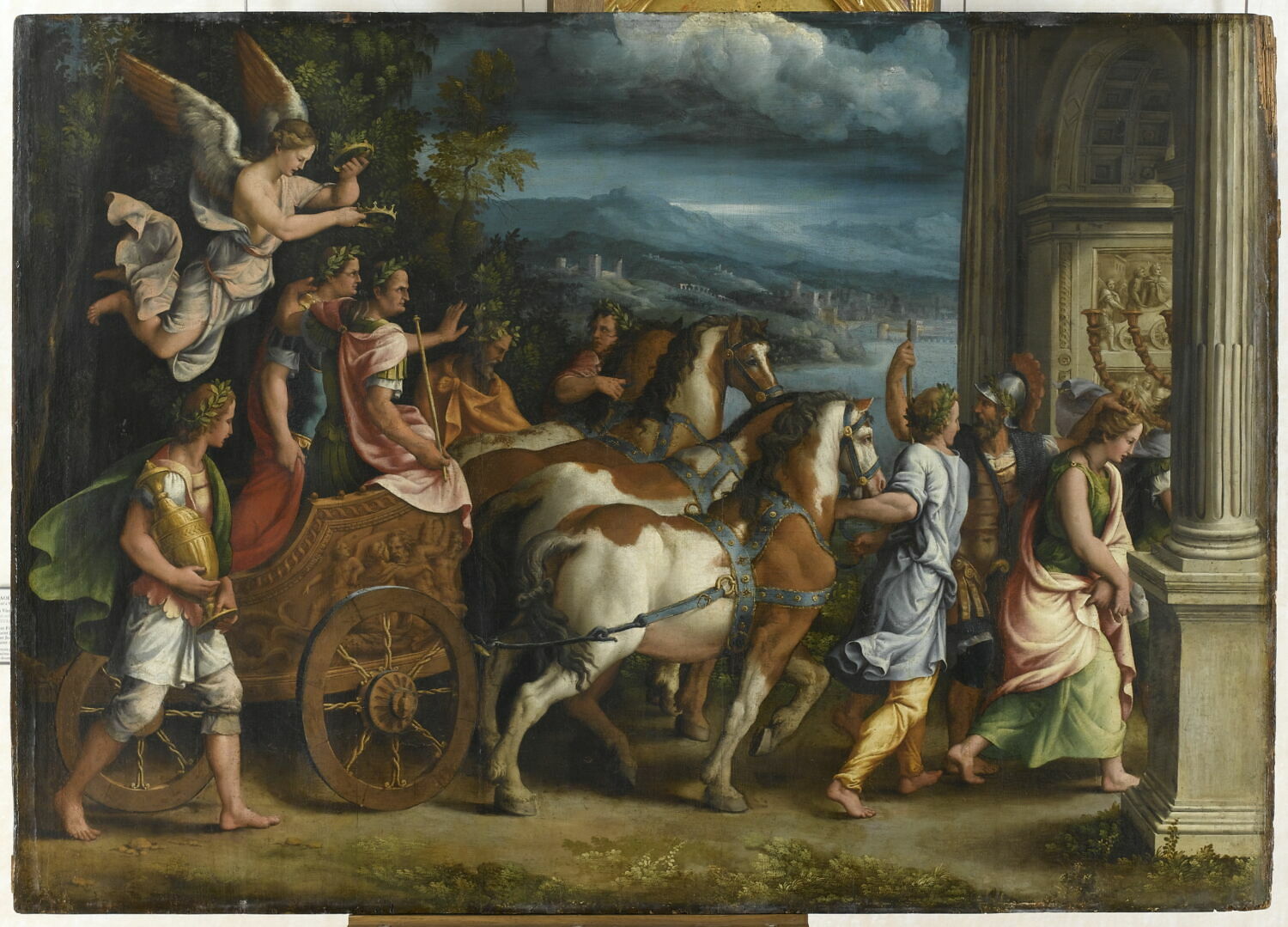
Le Triomphe de Titus et de Vespasien, Giulio Romano, 2e quart du XVIe siècle (vers 1537)

Le Triomphe de Titus et de Vespasien

2e quart du XVIe siècle (vers 1537) · Museu do Louvre

Allegorical Figure Holding a Sphere, Giorgio Ghisi possibly after Giulio Romano, mid 1560s

Allegorical Figure Holding a Sphere

mid 1560s · Não exposta · Galeria Nacional de Arte

Flight of Meriones, with Dead Coeranos Being Dragged from the Chariot, after Giulio Romano

Flight of Meriones, with Dead Coeranos Being Dragged from the Chariot

Não exposta · Galeria Nacional de Arte

Vizinhas de sala: Museu Estatal de Amesterdão

Página do museu
Self-portrait, Vincent van Gogh, 1887

Vincent van Gogh

Self-portrait, 1887

La Corniche near Monaco, Claude Monet, 1884

Claude Monet

La Corniche bij Monaco, 1884

De Nachtwacht, Rembrandt van Rijn, 1642

Rembrandt van Rijn

A Ronda Nocturna, 1642

Portrait of a Woman, Probably Maria Trip (1619-1683), Rembrandt van Rijn, 1639

Rembrandt van Rijn

Portrait of a Woman, Probably Maria Trip (1619-1683), 1639

Still Life with Peacocks, Rembrandt van Rijn, c. 1639

Rembrandt van Rijn

Still Life with Peacocks, c. 1639

Landscape with a Stone Bridge, Rembrandt van Rijn, c. 1638

Rembrandt van Rijn

Ponte de Pedra, c. 1638

Man in Oriental Dress, Rembrandt van Rijn, 1635

Rembrandt van Rijn

Man in Oriental Dress, 1635

Portrait of Haesje Jacobsdr van Cleyburg, Rembrandt van Rijn, 1634

Rembrandt van Rijn

Portrait of Haesje Jacobsdr van Cleyburg, 1634