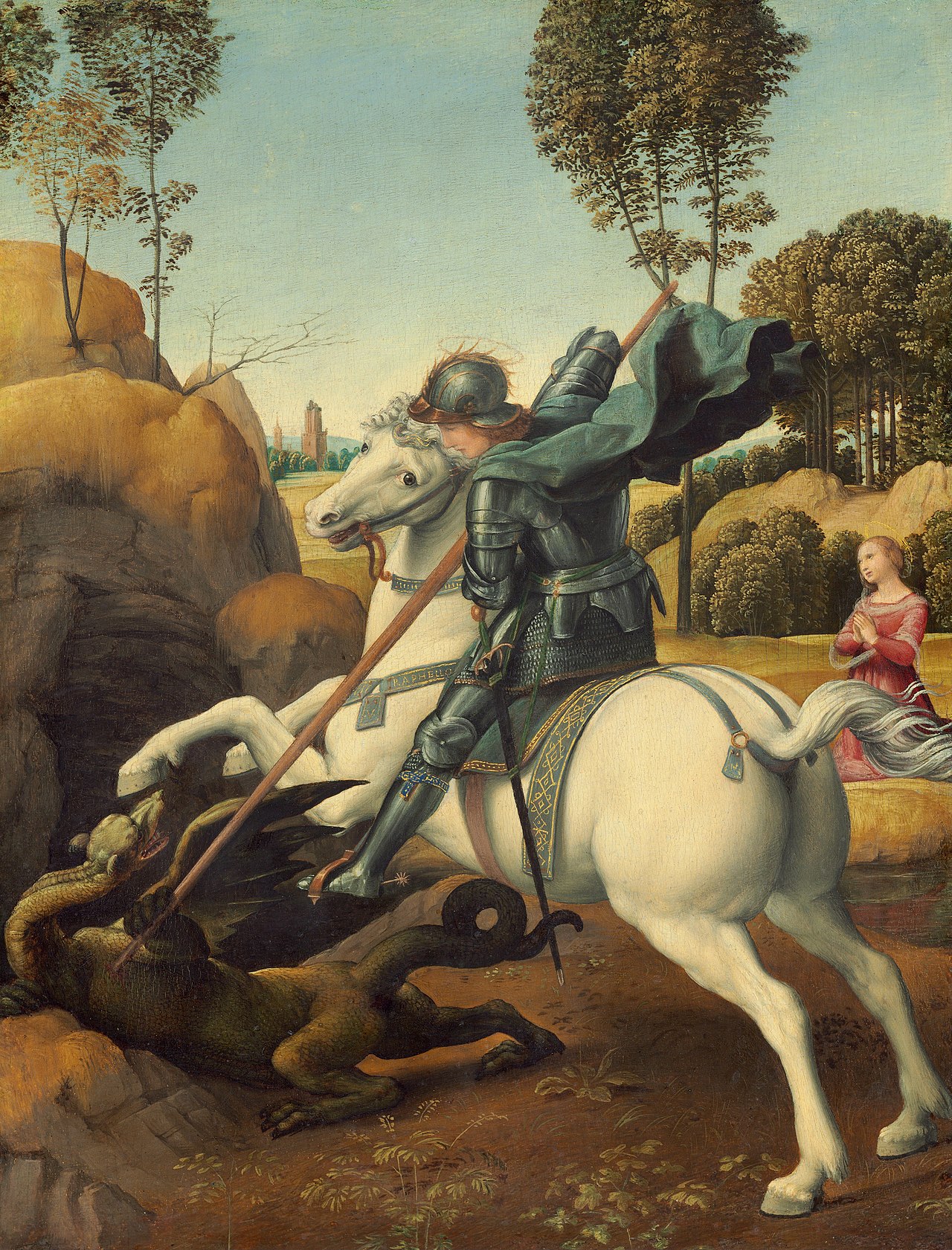
Edward Burne-JonesReino Unido, 1833–1898
Saint Barbara
Posso vê-la?
Não exposta de momento
Onde está «Saint Barbara» hoje? Coleção: Galeria Nacional de Arte, Washington, D.C. Não exposta de momento. Verificado 29 de setembro de 2026.

Washington, D.C., Estados Unidos
Pertence à coleção, mas de momento não está exposta.
- Verificado
- Neste estado desde
- Fonte
- O museu
Pormenores
- Número de inventário
- 1989.58.1
O que mostra
No catálogo
Fontes
- Galeria Nacional de Arte
- Imagem: Galeria Nacional de Arte — Museum open access
Na vida de Edward Burne-Jones
A vida inteira1864
“The Merciful Knight” at the Old Water-Colour Society
Elected an associate of the Society of Painters in Water-Colours (the “Old Water-Colour Society”), he exhibited there, among other works, “The Merciful Knight”, the first picture that fully revealed his ripened personality as an artist. The next six years saw a series of fine watercolours at the same gallery.
winter 1864
Death of his newborn son Christopher
In the winter of 1864 Georgiana fell gravely ill with scarlet fever and gave birth to a second son, Christopher, who died soon afterwards. The family then moved to 41 Kensington Square, where their daughter Margaret was born in 1866.
1864
Son born: Christopher Burne-Jones
1866
Meets Maria Zambaco
Mrs Cassavetti commissioned him to paint her daughter, Maria Zambaco, in “Cupid Finding Psyche”; the introduction led to a passionate affair, described as the “emotional climax of his life”. It ended with Maria trying to kill herself by throwing herself into Regent’s Canal.
1870
The “Phyllis and Demophoön” scandal: he quits the Society
Maria Zambaco’s features were clearly recognisable in the barely draped Phyllis, and Demophoön’s nakedness offended Victorian sensibilities. Asked to make a slight alteration, Burne-Jones instead withdrew not only the picture from the walls but himself from the Society.
1870–1877
Seven years away from exhibitions: turning to oils
After bitterly hostile attacks in the press he exhibited only two works in these years, yet worked unremittingly: he turned from watercolour to oils and planned the first “Briar Rose” series, “Laus Veneris”, “The Golden Stairs”, the “Pygmalion” series and “The Mirror of Venus”. His partnership with the photographer Frederick Hollyer, whose reproductions brought his work to a wide audience, also began then.
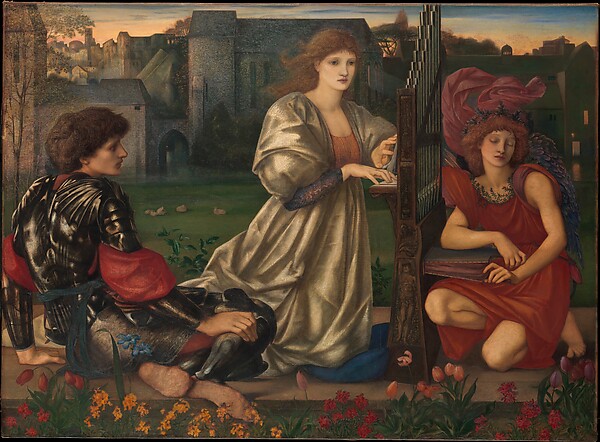


![Ginevra de' Benci [obverse], Leonardo da Vinci, c. 1474/1478](https://api.nga.gov/iiif/8f29e3c9-a289-4d53-abf0-31a66e9e98fa/full/!2400,2400/0/default.jpg)
![Wreath of Laurel, Palm, and Juniper with a Scroll inscribed Virtutem Forma Decorat [reverse], Leonardo da Vinci, c. 1474/1478](https://api.nga.gov/iiif/ff62e8d0-45c4-498f-ad36-6358de827e04/full/!2400,2400/0/default.jpg)