ART WIKI32 963 em exposição
MapaColeçãoArtistasMuseusExposiçõesRevista
Entrar

ART WIKI

Onde está a obra-prima, e a que horas se abre a porta.

Coleções: Art Institute of Chicago, Galeria Nacional de Arte, Galeria Tretiakov, Getty Villa, Harvard Art Museums, Hermitage, Hirshhorn Museum and Sculpture Garden, Instituto de Artes de Minneapolis, Museu de Arte de Cleveland, Museu de Arte Moderna, Museu do Louvre, Museu Estatal de Amesterdão, Museu J. Paul Getty, Museu Metropolitano de Arte, Museu Nacional de Arte da Dinamarca, Museu Pushkin, Museu Russo, Museu Smithsoniano de Arte Americana, Museu Vitória e Alberto, Museu Whitney de Arte Americana, National Museum of Asian Art, National Portrait Gallery, Catálogo Estatal do Fundo Museológico da Rússia (274 museus), Europeana (19 museus), Wikidata (6 museus), Paris Musées (12 museus) e Joconde, a base de museus do Ministério da Cultura de França (495 museus). As imagens pertencem aos titulares dos direitos.

Secções

  • Mapa
  • Pesquisa
  • Coleção
  • Obras-primas
  • Em exposição agora
  • Artistas

Mais

  • Museus e galerias
  • Exposições
  • Revista
  • De onde vêm os dados
  • Privacidade e cookies
InícioMapaCatálogo
  1. Coleção/
  2. Harvard Art Museums/
  3. Red Painting
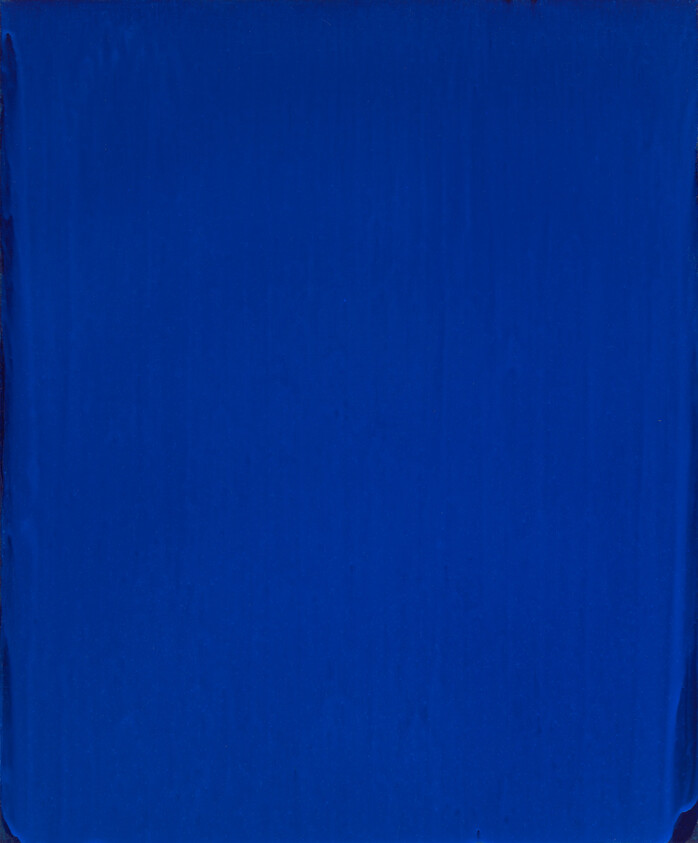
Red Painting, Joseph Marioni, 1999
JJoseph MarioniEstados Unidos, 1943–2024

Red Painting

1999 · Painting

Será possível contemplá-la?

De momento, não recebe

Harvard Art Museums

Cambridge, Estados Unidos

Pertence à coleção, mas de momento não está exposta.

Verificado
há 3 dias
Neste estado desde
27 de set. de 2026
Fonte
O museu
No mapaPágina do museu

Sobre a pintura

As a monochrome painting by an artist who has consciously predicated his painterly project in response to Michael Fried’s "Footnote #6," in his celebrated essay, "Art and Objecthood -- "[T]he task of the modernist painter is to discover those conventions that, at a given moment, alone are capable of establishing his work’s identity as painting" -- "Red Painting 1999 No. 4", 1999 adds both to the Fogg Art Museum's collection and to the particular formalist gauntlet laid down by Michael Fried during his years as a graduate student at Harvard. This connection is underscored by the donors’ decision to dedicate the painting to Fried. Marioni self-consciously responds to the painting of a number of artists in our collections, especially to Pollock; Rothko; Noland; Louis; Stella and Marden; even more specifically to Robert Ryman.

Continuar a ler

During the 1980’s, Marioni also instigated a series of dialogues and exhibition projects with the German painter Gunter Umberg, around the European concept of "concrete" painting. Like Ryman, who, in his mostly white paintings, has extracted seemingly unlimited outcomes by varying the organization and manner of his strokes; the type and density of his pigments, and the nature of his support surface and attachments of support to wall, Marioni has adapted a Minimalist reliance on permutations of a set of pre-determined variables, in his case, sticking to monochrome acrylic on canvas, but introducing a broad range of color. Marioni, however, paints with a roller, eliminating the constructive element of the stroke. In this, his project is at once more phenomenological, more iconic, and more anthropomorphic than his Abstract Expressionist or Minimalist predecessors.

Marioni’s preference for an unmediated application of paint echoes Pollock, but toward different ends: he is interested in allowing the paint "to be what it naturally is, liquid color," and he aims to avoid any intimation of drawing. At the same time, his layered pigments incorporate stain, but are not about staining; he relishes the corporeal association of paint with skin. Marioni has referred repeatedly to his Catholic interest in the fundamentally iconic essence of painting, citing both Veronica’s veil – the painting as relic – and Malevich as inspiration, toward this end. His paintings alternate between square, or iconic, formats and more vertical, larger scale planes. In both cases, Marioni treats the entire painting as image and works to inspire a private dialogue between the painting and its viewer.

(Linda Norden)

Harvard Art Museums

Pormenores

1999 · aos 56 anos
19432024
Número de inventário
1999.249

No catálogo

PinturasAcrílicoPintura norte-americanaArte contemporâneaSéculo XXEstados Unidos

Fontes

  • Harvard Art Museums
  • Imagem: Harvard Art Museums — © President and Fellows of Harvard College

Mais obras de Joseph Marioni

Todas as obras
Helios II, Joseph Marioni, 2020

Helios II

2020 · Não exposta · Galeria Nacional de Arte

#23-74, Joseph Marioni, 1974

#23-74

1974 · Não exposta · Museu Whitney de Arte Americana

Blue Painting, Joseph Marioni, 1999

Blue Painting

1999 · Não exposta · Museu Whitney de Arte Americana

Yellow Painting, Joseph Marioni, 2007

Yellow Painting

2007 · Não exposta · Art Institute of Chicago

Vizinhas de sala: Harvard Art Museums

Página do museu
Glück auf in Deutschland (N:4), Pınar Öğrenci, 2024

Pınar Öğrenci

Glück auf in Deutschland (N:4), 2024

Glück auf in Deutschland (N:10), Pınar Öğrenci, 2024

Pınar Öğrenci

Glück auf in Deutschland (N:10), 2024

Glück auf in Deutschland (N:7b), Pınar Öğrenci, 2024

Pınar Öğrenci

Glück auf in Deutschland (N:7b), 2024

Glück auf in Deutschland (N:6), Pınar Öğrenci, 2024

Pınar Öğrenci

Glück auf in Deutschland (N:6), 2024

Glück auf in Deutschland (N:11), Pınar Öğrenci, 2024

Pınar Öğrenci

Glück auf in Deutschland (N:11), 2024

Dwarpalika (Temple Guardian), Sneha Shrestha, 2023

Sneha Shrestha

Dwarpalika (Temple Guardian), 2023

The Eternal Pond of the Universe, Bingyi 冰逸, 2022-2024

Bingyi 冰逸

The Eternal Pond of the Universe, 2022-2024

Head from a Statue of Ur-Ningirsu, Ruler of Lagash, c. 2113 BCE-2017 BCE

Head from a Statue of Ur-Ningirsu, Ruler of Lagash, c. 2113 BCE-2017 BCE