 El LissitzkyRússia, 1890–1941
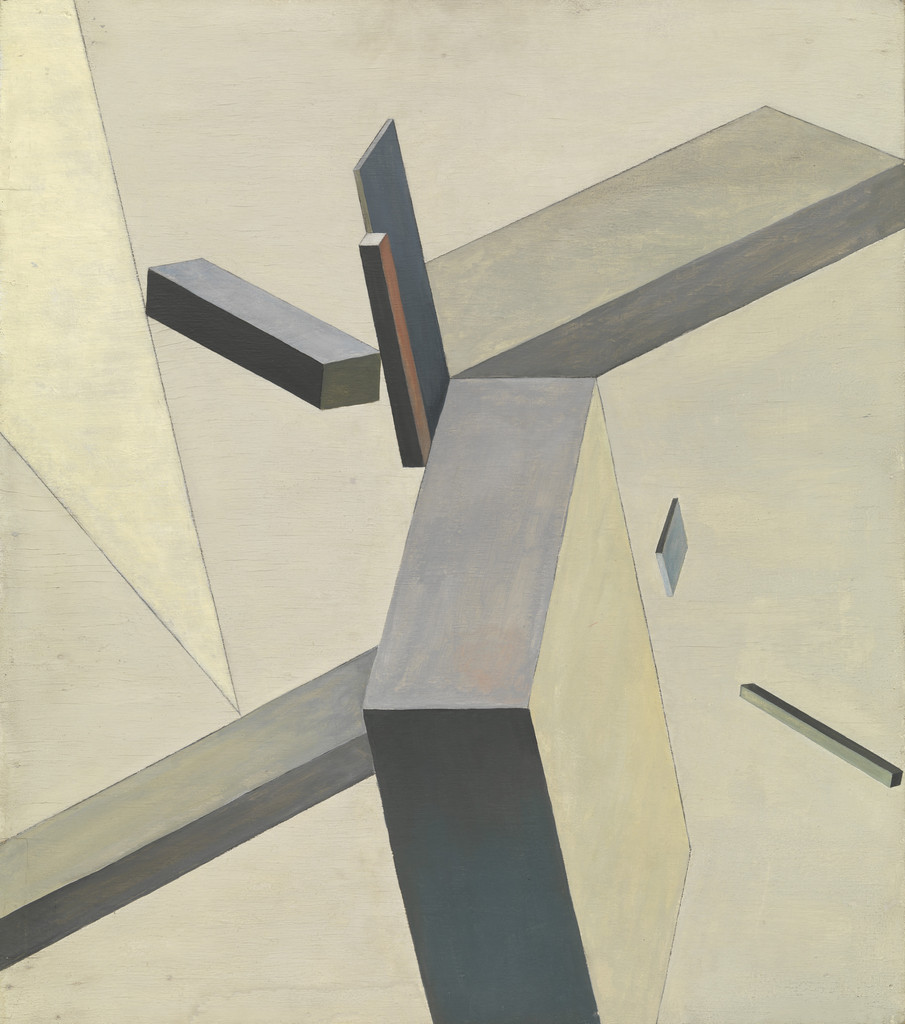
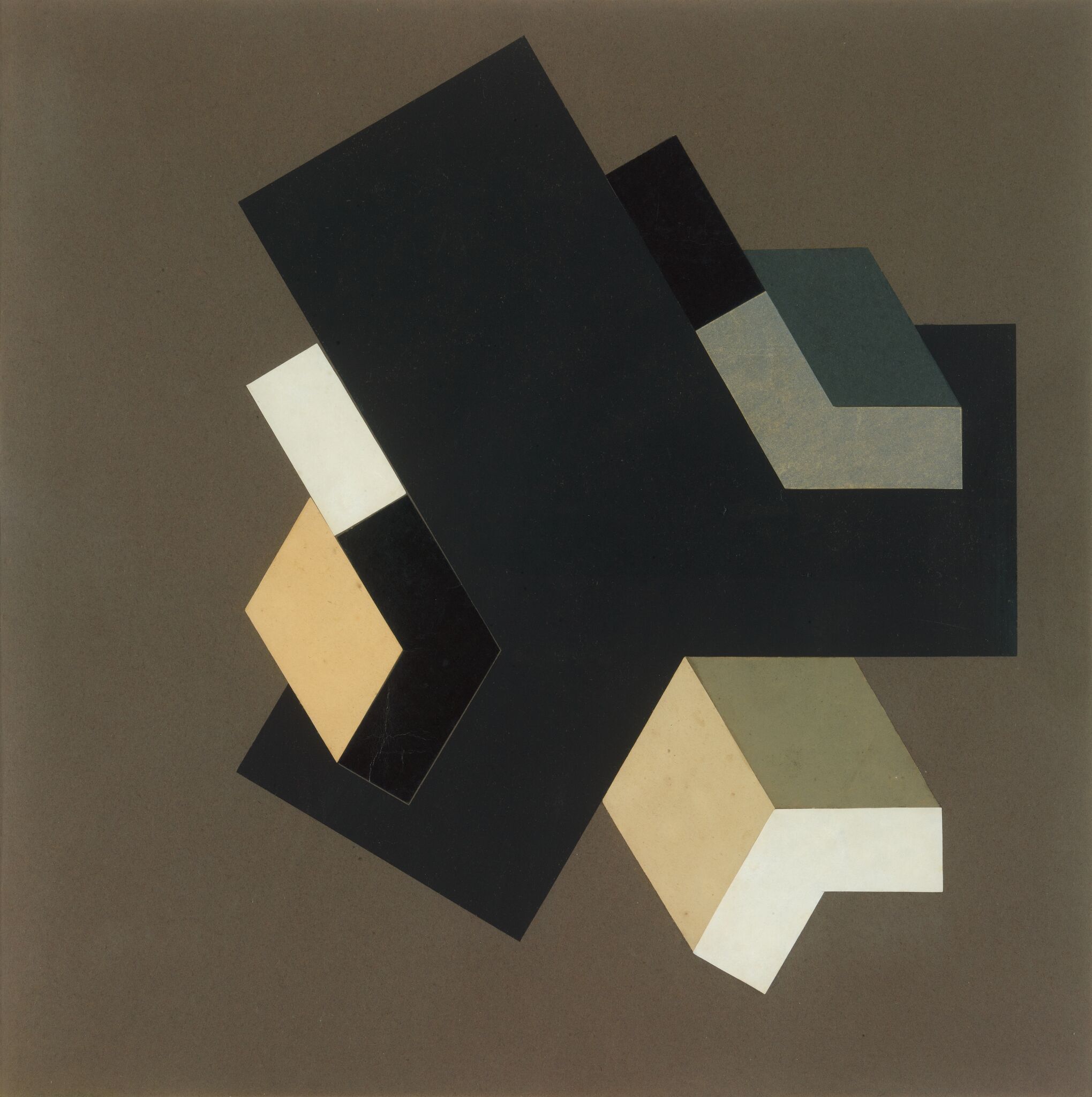
Проун № 84
Será possível contemplá-la?
Desconhecido

Galeria Tretiakov
Moscovo, Rússia
O proprietário é conhecido; não se sabe se hoje está exposta.
- Neste estado desde
- Fonte
- O museu
Sobre a obra
Nas palavras do museu — em russo
В 1919 году Лисицкий изобрел новое направление в искусстве ‒ «Проун» (Проект утверждения нового). Название относилось как к направлению в целом, так и к отдельным произведениям, которым Лисицкий давал буквенно-цифровые обозначения. Проуны стали одним из самых известных направлений геометрической абстракции, соединив в себе принципы малевичевского супрематизма и приемы конструктивизма. Эта комбинация предопределила и один из основных пластических приемов Лисицкого ‒ чередование плоскостных и объемных элементов.
Continuar a ler
Однако Лисицкий считал проуны «экскартиной» и декларировал их в качестве универсального метода построения формы в пространстве ‒ «пересадочной станции на пути в архитектуру». «Проун начинает свои установки на поверхности, переходит к пространственным модельным сооружениям и идет дальше к построению всех форм жизни. через проуны мы выйдем к сооружению единого мирового города жизни людей земного шара», ‒ писал он.
На протяжении нескольких лет Лисицкий экспериментировал с пластическими возможностями проунов, создавая то сложные многомерные и многофигурные композиции, то плотно сбитые монолитные конструкции. Проуны пользовались на Западе громадным успехом, их покупали музеи и коллекционеры. В 1925 году в Дрездене состоялась персональная выставка Лисицкого, на которой был экспонирован большой эффектный «Проун H 333». «Проун 84», находящийся в коллекции Третьяковской галереи, служил эскизом для этой картины, однако, судя по надписи на обороте, был сделан и как самостоятельное произведение, предназначенное для продажи. Картина не сохранилась, а коллаж «Проун 84» так и не был продан и попал в музейную коллекцию вместе с остальным наследием Лисицкого, купленным у его вдовы.
Изначальное обоснование проунов как прообраза новой архитектуры актуализировалось в использовании композиционных мотивов проунов в реальных архитектурных проектах. В 1926 году, работая над проектом дома-коммуны для поселка текстильного комбината в Иваново-Вознесенске, Лисицкий частично воспроизвел в плане здания композиционный принцип «Проуна 84». Посылая в письме жене в Германию рисунок этого плана, он написал: «Помнишь мой черный Проун…»
Galeria Tretiakov
Pormenores
- Número de inventário
- РС-1873
No catálogo
Fontes
- Galeria Tretiakov
- Imagem: Galeria Tretiakov — © State Tretyakov Gallery
Entretanto, na vida de El Lissitzky
A vida inteira1920–1921
Moscow: INKhUK, a lecture on the Prouns, VKhUTEMAS
In 1920 Lissitzky leaves Vitebsk for Moscow and becomes a member of INKhUK (the Institute of Artistic Culture, also referred to as GINKhUK); on 23 September 1921 he gives a lecture there about his Prouns. In 1921 he also starts to teach at VKhUTEMAS but soon leaves Moscow for Germany.
1921
Leaving for Germany as a “cultural emissary”
In 1921, as UNOVIS declines and suprematism begins to fracture into a utopian, spiritual half and a utilitarian one, Lissitzky aligns with neither and leaves Vitebsk: he takes a job as a “cultural emissary” of Soviet Russia and moves to Weimar Berlin to establish contacts between Russian and German artists — what exactly he did in this role remains unclear. In 1921–1925 he lives in Germany and Switzerland.
1922
First solo exhibition in Hanover
The year after the publication of his first Proun series in 1921, Kurt Schwitters introduces Lissitzky to the Hanover gallery Kestnergesellschaft, where he holds his first solo exhibition. The second Proun series, printed in Hanover in 1923, is a success.
1923
The Proun Room at the Great Berlin Art Exhibition
In 1923, for the Great Berlin Art Exhibition, Lissitzky transforms a small room (about 3 by 3 by 2.5 m) into a single work of art, the Proun Room, which lets viewers “walk into an image” and become active participants. He violates the unwritten rule of rejecting the commercialization of art by putting price tags on three elements of the room; the price tags, together with his “half-dance” during the demonstration of the room, alienate his friend Theo van Doesburg.
1923–1924
Tuberculosis and a Swiss hospital
In 1923–1924 Lissitzky is severely ill with tuberculosis and stays in a Swiss hospital; at this time he is reported even to have considered suicide. He will die of tuberculosis in 1941.
1925
Return to the USSR
Lissitzky's years in Germany and Switzerland run from 1921 to 1925; it appears that in 1925 he returns to the Soviet Union.