 Alessandro AlgardiItália, 1595–1654
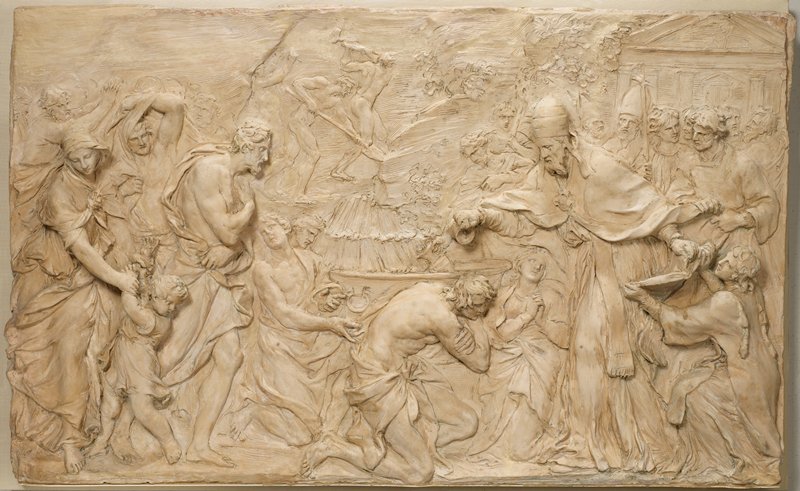
Pope Liberius Baptizing the Neophytes
Posso vê-la?
Sim, exposta agora
Onde está «Pope Liberius Baptizing the Neophytes» hoje? Instituto de Artes de Minneapolis, G313, Minneapolis. Sim, exposta agora. Verificado 29 de setembro de 2026.

Minneapolis, Estados Unidos
Aberto agora· até às 17:00
Exposta ao público.
- Verificado
- Neste estado desde
- Fonte
- O museu
Sobre a escultura
This terra-cotta relief is the only known study in clay for a sculpture decorating the marble fountain of Saint Damasus in the Vatican. The fountain was erected in the 17th century by Pope Innocent X to mark his restoration of aqueducts built for Pope Damasus in the 4th century. The relief shows Damasus’ predecessor, Liberius, baptizing new converts to Christianity. Damasus stands behind him, lifting his mantle.
The easily worked medium of clay allowed Algardi to experiment and refine his ideas before carving the relief in marble. By sculpting the foreground figures almost fully in the round and those more distant in ever shallower relief, he achieved an illusion of depth and volume. Over time, weather and abrasive cleaning have taken a toll on the marble version, but the clay model remains evidence of the artist’s intent.
Instituto de Artes de Minneapolis
Pormenores
- Número de inventário
- 59.17
No catálogo
Fontes
- Instituto de Artes de Minneapolis
- Imagem: Instituto de Artes de Minneapolis — public domain
Na vida de Alessandro Algardi
A vida inteira1625–1654 · Local de trabalho
Rome
1650
Conhece Velázquez e recebe encomendas de Espanha
Conhece Diego Velázquez, que lhe consegue encomendas de Espanha: surgem no Palácio Real de Aranjuez quatro guarnições de lareira e as figuras da fonte de Neptuno nos jardins, e no mosteiro agostinho de Salamanca o túmulo do conde e da condessa de Monterey.
in later years
Uma grande oficina, fortuna e discípulos
Nos últimos anos, dirige uma grande oficina e acumula uma fortuna considerável. Os discípulos Ercole Ferrata e Domenico Guidi dão continuidade à sua maneira classicizante, e Antonio Raggi começa por estudar com ele, embora, segundo outros relatos, os três tenham depois passado para Bernini; entre os ajudantes menos conhecidos contam-se Francesco Barrata, Girolamo Lucenti e Giuseppe Peroni.