Jasper JohnsEstados Unidos, 1930
Perilous Night
Dá para ver?
Não está exposta no momento
Onde está “Perilous Night” hoje? Coleção: Art Institute of Chicago, Chicago. Não está exposta no momento. Verificado 23 de novembro de 2026.

Chicago, Estados Unidos
Pertence à coleção, mas no momento não está exposta.
- Verificado
- Com este status desde
- Fonte
- O museu
Sobre a obra
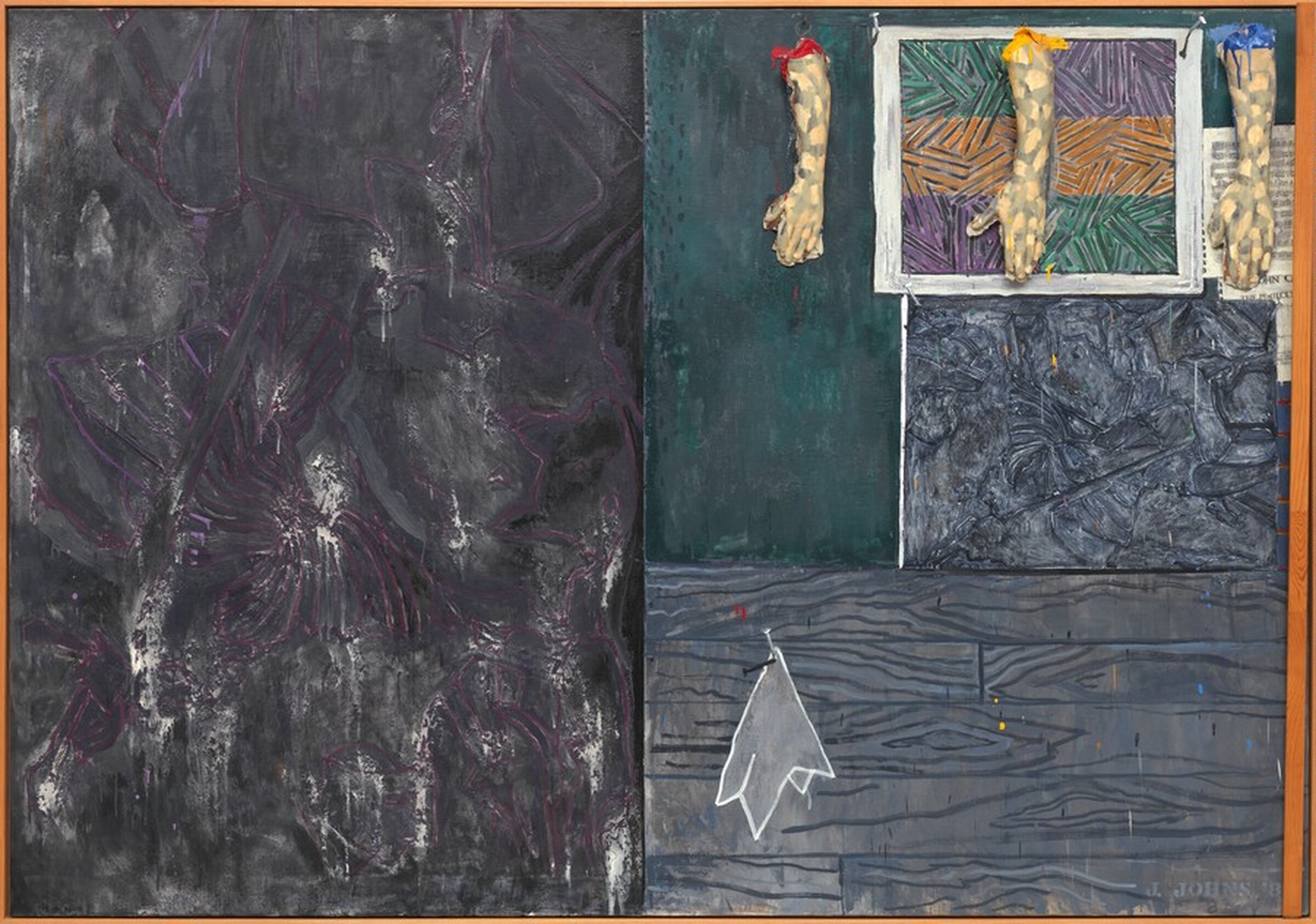
Jasper Johns began his career in the mid-1950s by re-creating, with great precision, such familiar images as targets, letters, numbers, and flags. Although his subject matter has become less commonplace, he continues to “borrow” from the public domain. Perilous Night, for instance, owes its title to a pivotal and expressive piece of music written by the American composer John Cage (1912–1992) in 1945. Both score and cover sheet are rendered on the right-hand side of the drawing with Johns’s characteristically fluid handling of ink. On the sheet’s left side is a freehand rendition—abstracted, reversed, and turned ninety degrees—of a single, terror-stricken soldier from the Resurrection panel of Matthias Grünewald’s sixteenth-century masterwork the Isenheim Altarpiece (Unterlinden Museum, Colmar).
Ler mais
Between the soldier and the musical score is a black imprint of Johns’s right arm, evidence perhaps of the creative power that can merge two disparate images into a cogent statement. The overcome soldier witnessing the Resurrection of Christ and a piece of music marking a key transition in a composer’s career both point to “perilous nights” that can change the course of a human life. Characteristically, Johns also explored the same subject in different media. This somberly colored drawing derives from a painting of the same name (1982; National Gallery of Art, Washington, DC).
Art Institute of ChicagoCC BY 4.0
Detalhes
- Número de inventário
- 1989.82
O que mostra
No catálogo
Fontes
- Art Institute of Chicago
- Imagem: Art Institute of Chicago — © the artist or rights holder
Na vida de Jasper Johns
A vida inteira1967–1980
Conselheiro artístico da Merce Cunningham Dance Company
Johns apoiava havia muito a Merce Cunningham Dance Company, ajudando a levantar fundos e atenção e auxiliando Rauschenberg nos cenários e figurinos na década de 1950, e de 1967 a 1980 foi seu conselheiro artístico.
1973–1987
Uma casa de fazenda com ateliê de paredes de vidro em Stony Point
De 1973 a 1987, Johns manteve uma casa de fazenda rústica da década de 1930 com um ateliê de paredes de vidro em Stony Point, Nova York.
1980
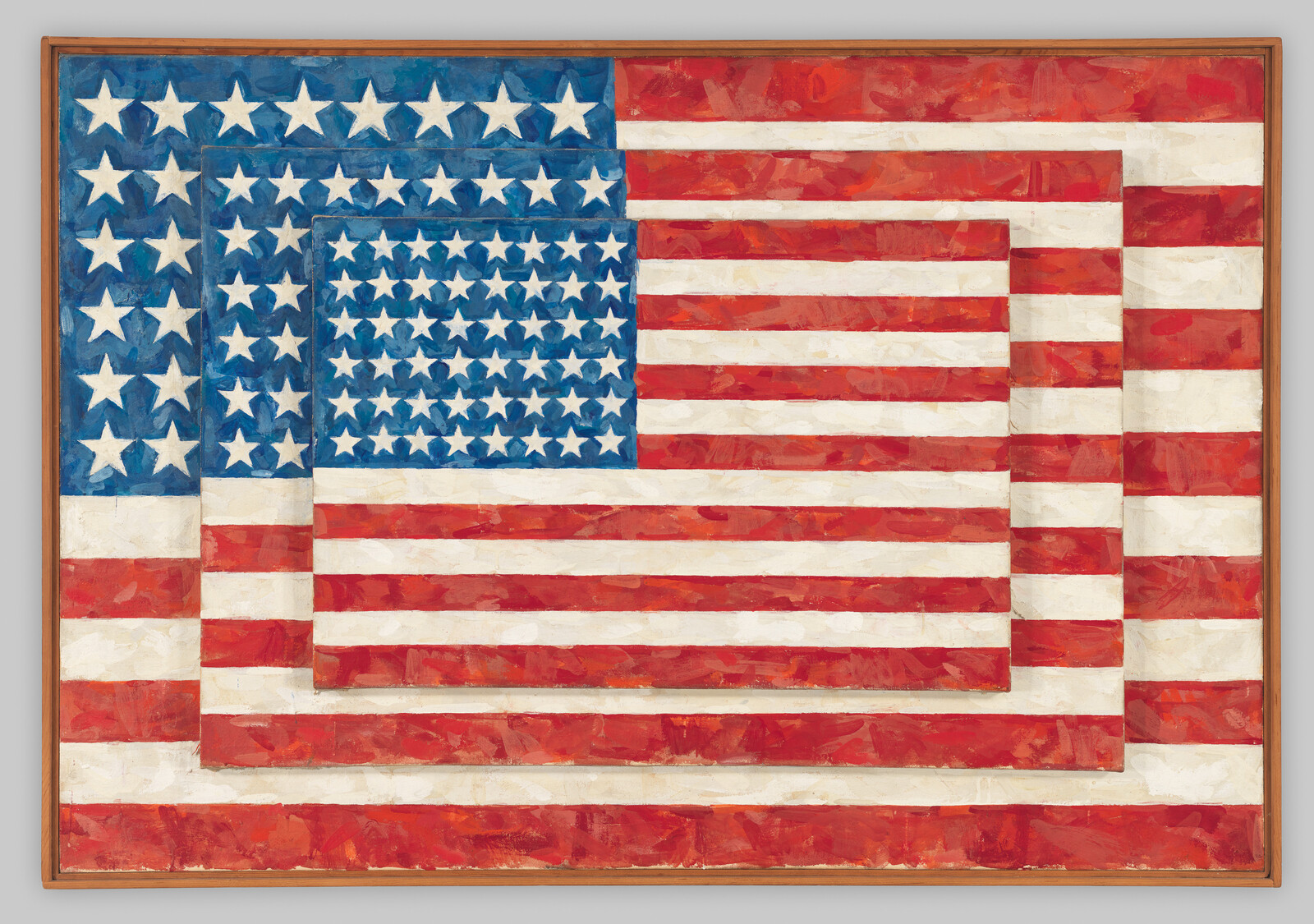
O Whitney compra “Três Bandeiras” por 1 milhão de dólares
Em 1980 o Whitney Museum of American Art pagou 1 milhão de dólares por Three Flags (1958), então o maior preço já pago pela obra de um artista vivo.