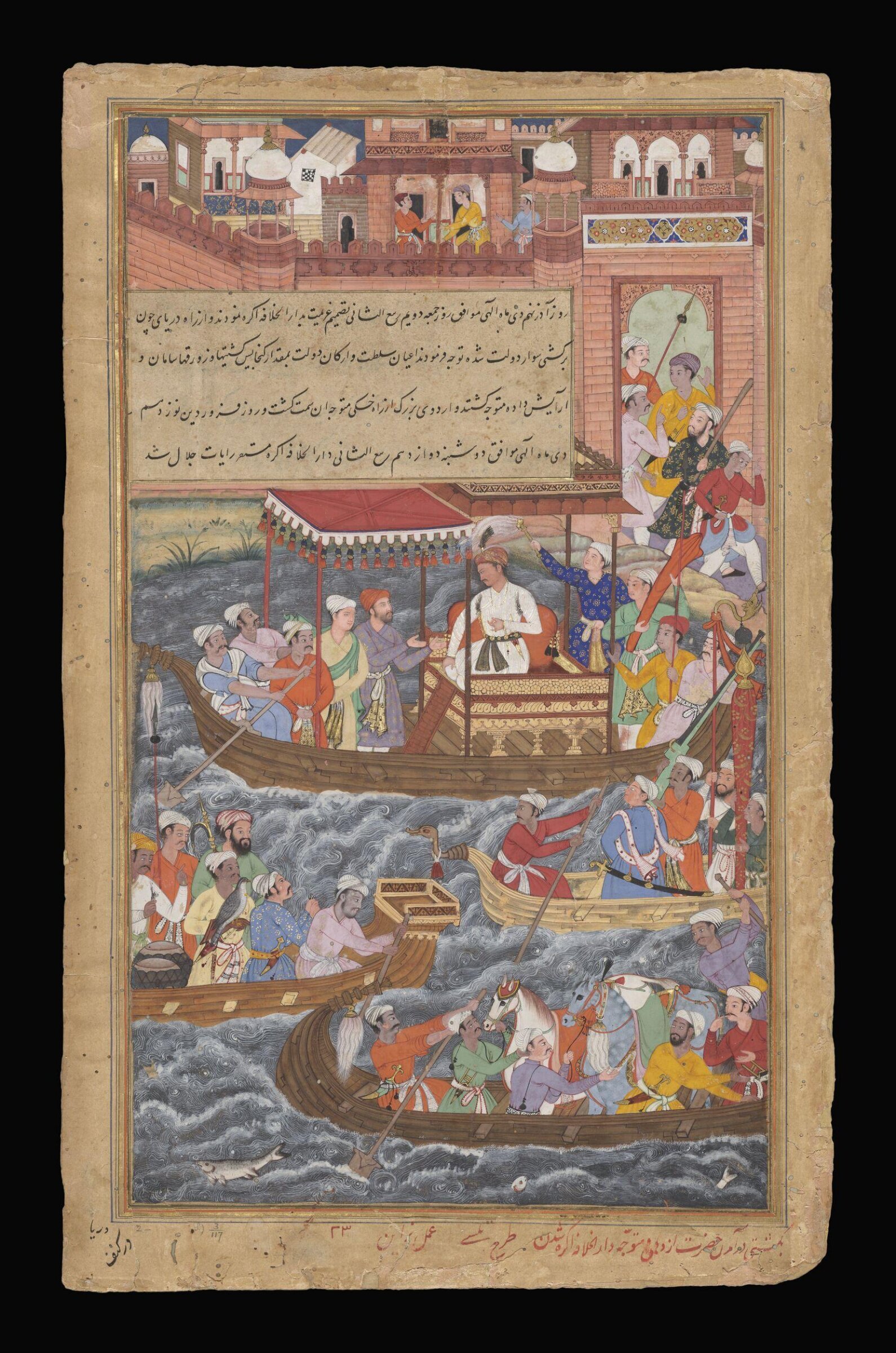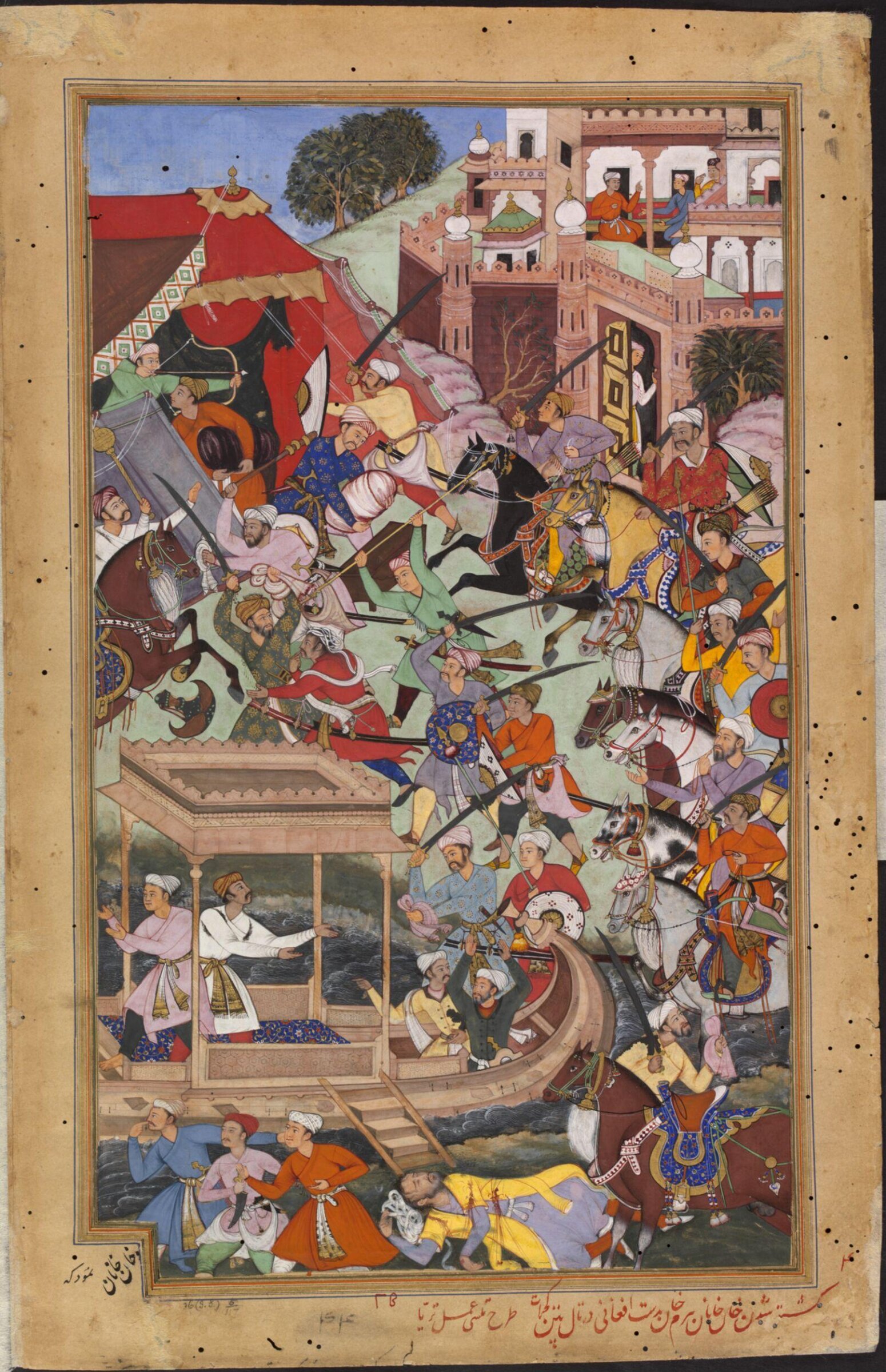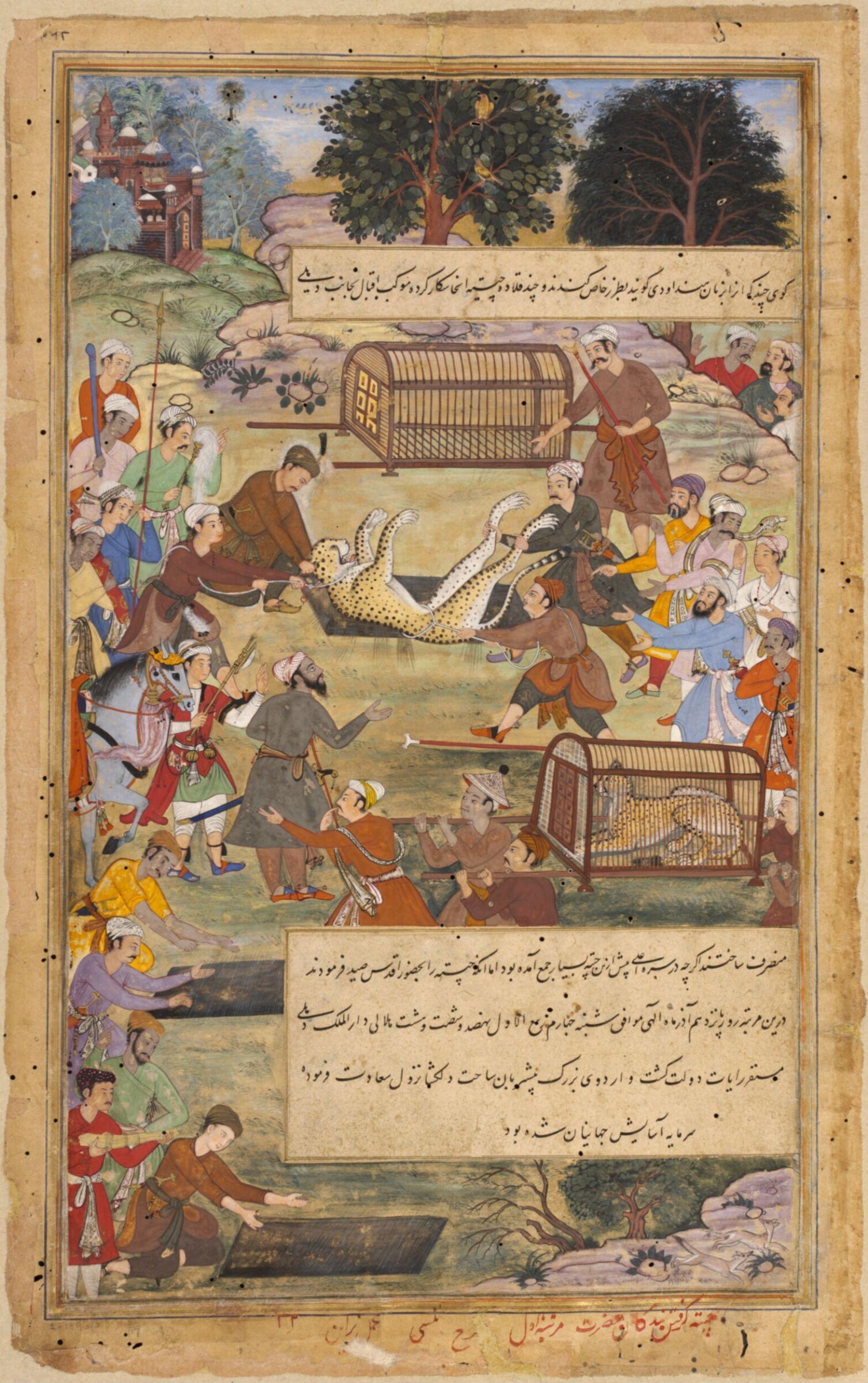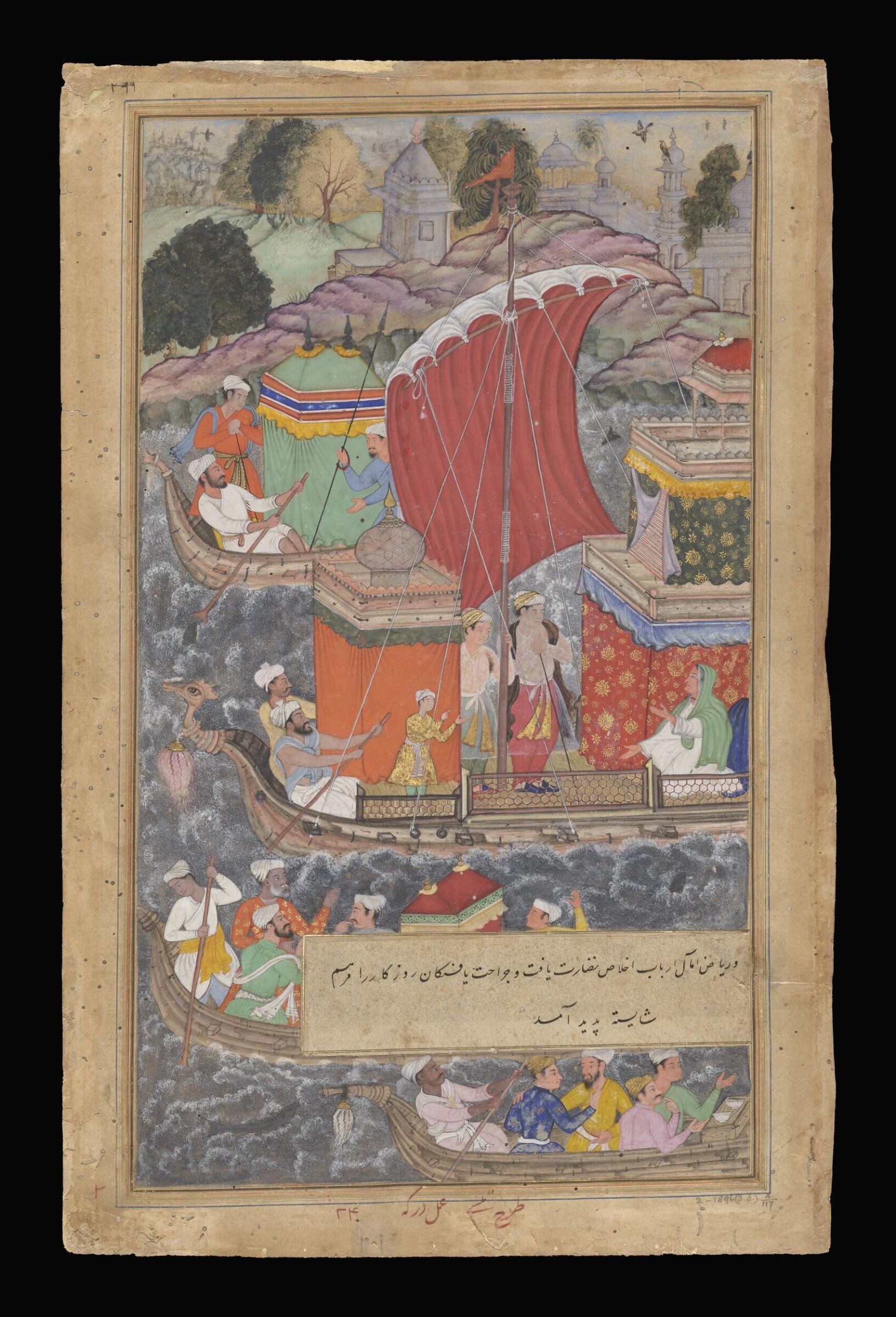
Painting
Dá para ver?
Não está exposta no momento
Onde está “Painting” hoje? Coleção: Museu Vitória e Alberto, Londres. Não está exposta no momento. Verificado 25 de setembro de 2026.

Londres, Reino Unido
Pertence à coleção, mas no momento não está exposta.
- Verificado
- Com este status desde
- Fonte
- O museu
Sobre a pintura
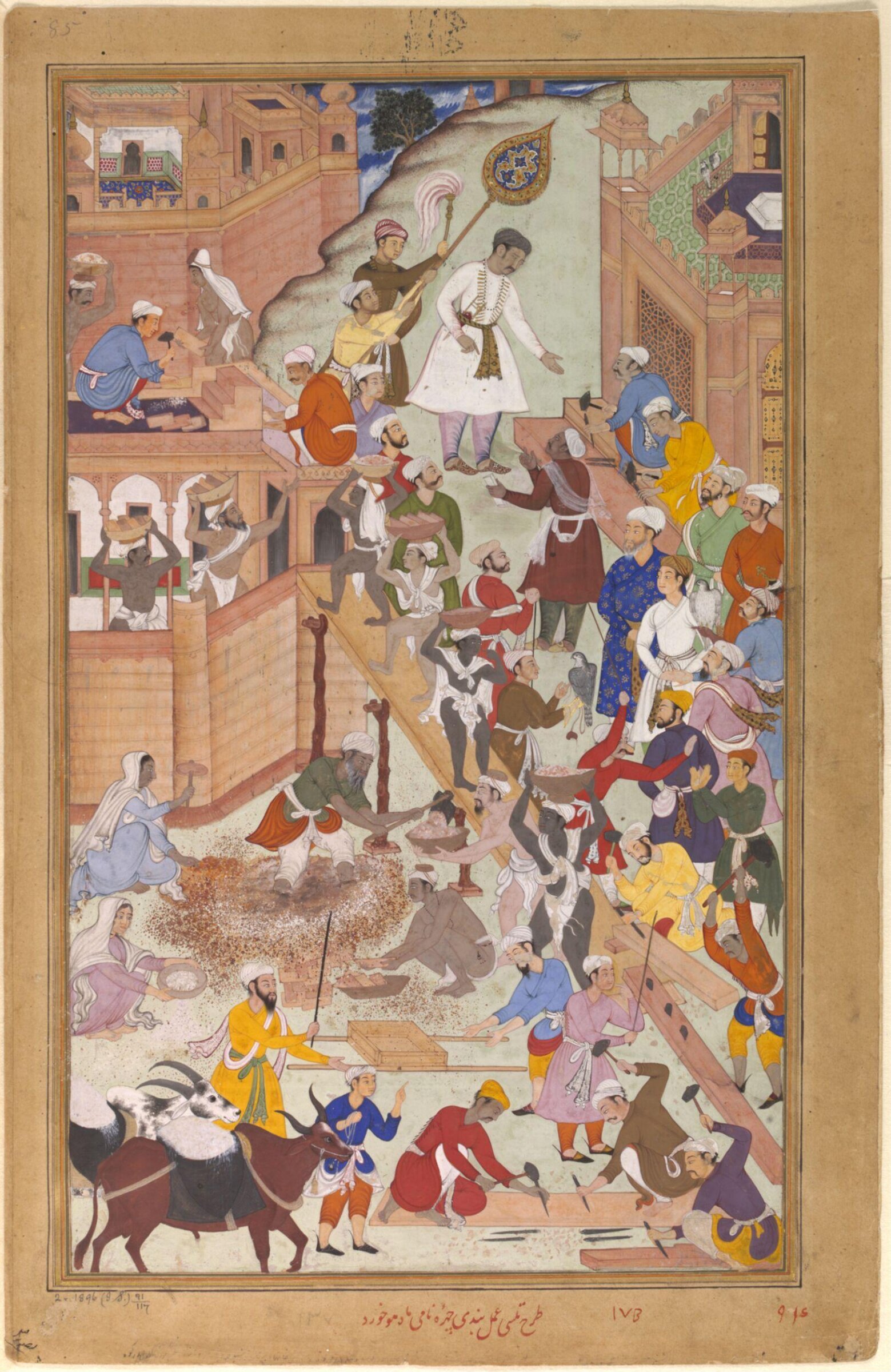
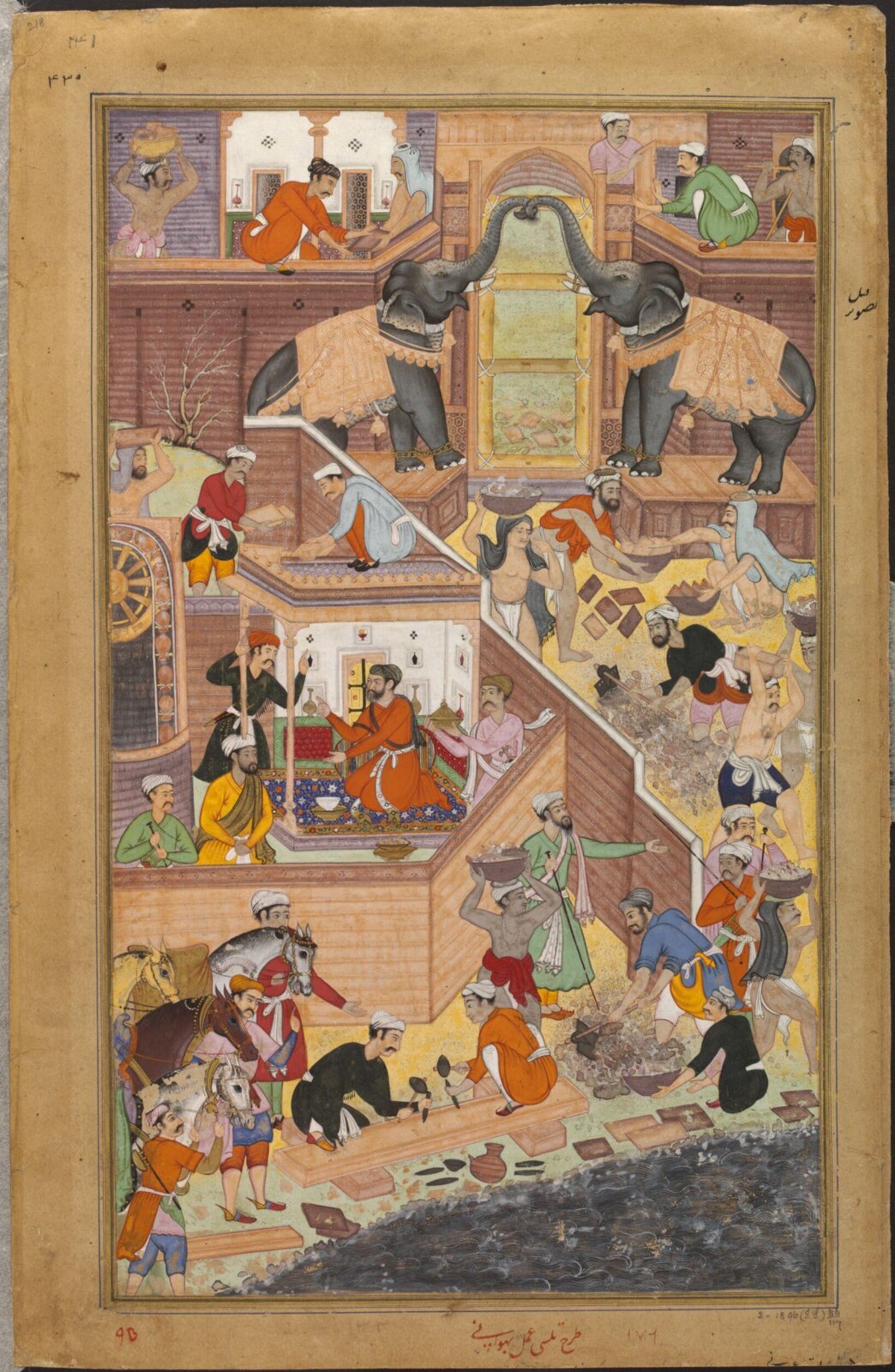
This illustration from the Akbarnama depicts a stage in the construction of the new royal city of Fathpur ('City of Victory', and later known as Fathpur Sikri) in 1571. In 1571, after the births of his sons Salim and Murad, Akbar issued an order for a great city to be constructed at Sikri, 38 kilometers east of Agra. A palace, houses, a bazaar, mosques, schools, baths and gardens, were all contained within 11 kilometers of high fortified walls. Initially called Fathabad, the city was soon renamed Fatehpur, both meaning ‘City of Victory’ in reference to Akbar’s successful campaign in Gujarat in 1573. It was the capital until 1585 when Akbar transferred it to Lahore.
Ler mais
The construction work is directed by an aristocratic figure seated within a pavilion whose rich interior includes a fine carpet and tiled walls. To the left is a water wheel (saqiya), the device borrowed from Iranian tradition and widely used to draw water from deep wells.
The elephants flanking the gateway are clearly real animals and may have been used to help lift heavy materials, but two elephants were also carved into the stone in high relief on the Hathiya Pol (‘Elephant gate’) at Fathpur, as Father Monserrate recorded when he arrived at the city with the first Jesuit mission from Goa in 1580. [Akbarnama, English translation: Beveridge, vol. II, pp. 530-1; vol. III, pp. 157-160]
The composition (tarh) of this painting is by Tulsi, the "work" ('amal) of applying the colours is by Bandi, and the faces of the most important personages are by Madhav Khord , as the inscription in red in the lower margin specifies.
The Akbarnama was commissioned by the emperor Akbar as the official chronicle of his reign. It was written by his court historian and biographer Abu'l Fazl between 1590 and 1596 and is thought to have been illustrated between about 1592 and 1594 by at least 49 different artists from Akbar's studio. After Akbar's death in 1605, the manuscript remained in the library of his son, Jahangir (r. 1605-1627) and later Shah Jahan (r.1628-1658). The Victoria and Albert Museum purchased it in 1896 from Mrs Frances Clarke, the widow of Major-General John Clarke, who bought it in India while serving as Commissioner of Oudh between 1858 and 1862.
Museu Vitória e Alberto
Detalhes
- Número de inventário
- IS.2:86-1896
O que mostra
No catálogo
Fontes
- Museu Vitória e Alberto
- Imagem: Museu Vitória e Alberto — © Victoria and Albert Museum, London