ART WIKI33 040 em exposição
MapaColeçãoArtistasMuseusExposiçõesRevista
Entrar

ART WIKI

Onde está a obra-prima, e a que horas se abre a porta.

Coleções: Art Institute of Chicago, Galeria Nacional de Arte, Galeria Tretiakov, Getty Villa, Harvard Art Museums, Hermitage, Hirshhorn Museum and Sculpture Garden, Instituto de Artes de Minneapolis, Museu de Arte de Cleveland, Museu de Arte Moderna, Museu do Louvre, Museu Estatal de Amesterdão, Museu J. Paul Getty, Museu Metropolitano de Arte, Museu Nacional de Arte da Dinamarca, Museu Pushkin, Museu Russo, Museu Smithsoniano de Arte Americana, Museu Vitória e Alberto, Museu Whitney de Arte Americana, National Museum of Asian Art, National Portrait Gallery, Catálogo Estatal do Fundo Museológico da Rússia (274 museus), Europeana (19 museus), Wikidata (6 museus), Paris Musées (12 museus) e Joconde, a base de museus do Ministério da Cultura de França (495 museus). As imagens pertencem aos titulares dos direitos.

Secções

  • Mapa
  • Pesquisa
  • Coleção
  • Obras-primas
  • Em exposição agora
  • Artistas

Mais

  • Museus e galerias
  • Exposições
  • Revista
  • De onde vêm os dados
  • Privacidade e cookies
InícioMapaCatálogo
  1. Coleção/
  2. Museu Estatal de Amesterdão/
  3. Omnia vincit Amor
Omnia vincit Amor, Agostino Carracci, 1599

Omnia vincit Amor

1599 · Print

Sobre a obra

Nas palavras do museu — em holandês

Amor in gevecht met Pan in een landschap. Rechts zitten twee nimfen.

Museu Estatal de Amesterdão

Pormenores

1599 · aos 42 anos
15571602
Número de inventário
RP-P-OB-66.196

Entretanto, na vida de Agostino Carracci

A vida inteira
  1. 1597 · Local de trabalho

    Parma

  2. 1597–1600 · Local de trabalho

    Rome

  3. 1598

    Work in the Palazzo Farnese with Annibale

    He joined his brother Annibale in Rome to paint the gallery of the Palazzo Farnese; he executed the compositions the Triumph of the Sea and the panel of Aurora and Cephalus.

  4. 1600 · Local de trabalho

    Bologna

  5. c. 1600

    Quarrel with His Brother Annibale

    Agostino's Roman period ended rather abruptly because of a quarrel with his brother, the causes of which are still not entirely clear.

  6. 1600–1602 · Local de trabalho

    Parma
Mais obras de Agostino Carracci

Todas as obras

Vizinhas de sala: Museu Estatal de Amesterdão

Página do museu

Sobre o mesmo tema · Nymphs (in general)

Todas as obras sobre o tema
Agostino Carracci, retratoAgostino CarracciItália, 1557–1602

Será possível contemplá-la?

Desconhecido

Museu Estatal de Amesterdão

Amesterdão, Países Baixos

O proprietário é conhecido; não se sabe se hoje está exposta.

Fonte
O museu
No mapaPágina do museu

O que mostra

Nymphs (in general)Ninfe in commune' (Ripa)(story of) Pan(story of) Cupid, Amor (Eros)

No catálogo

GravurasRenascimentoSéculo XVI

Fontes

  • Museu Estatal de Amesterdão
  • Imagem: Museu Estatal de Amesterdão — public domain
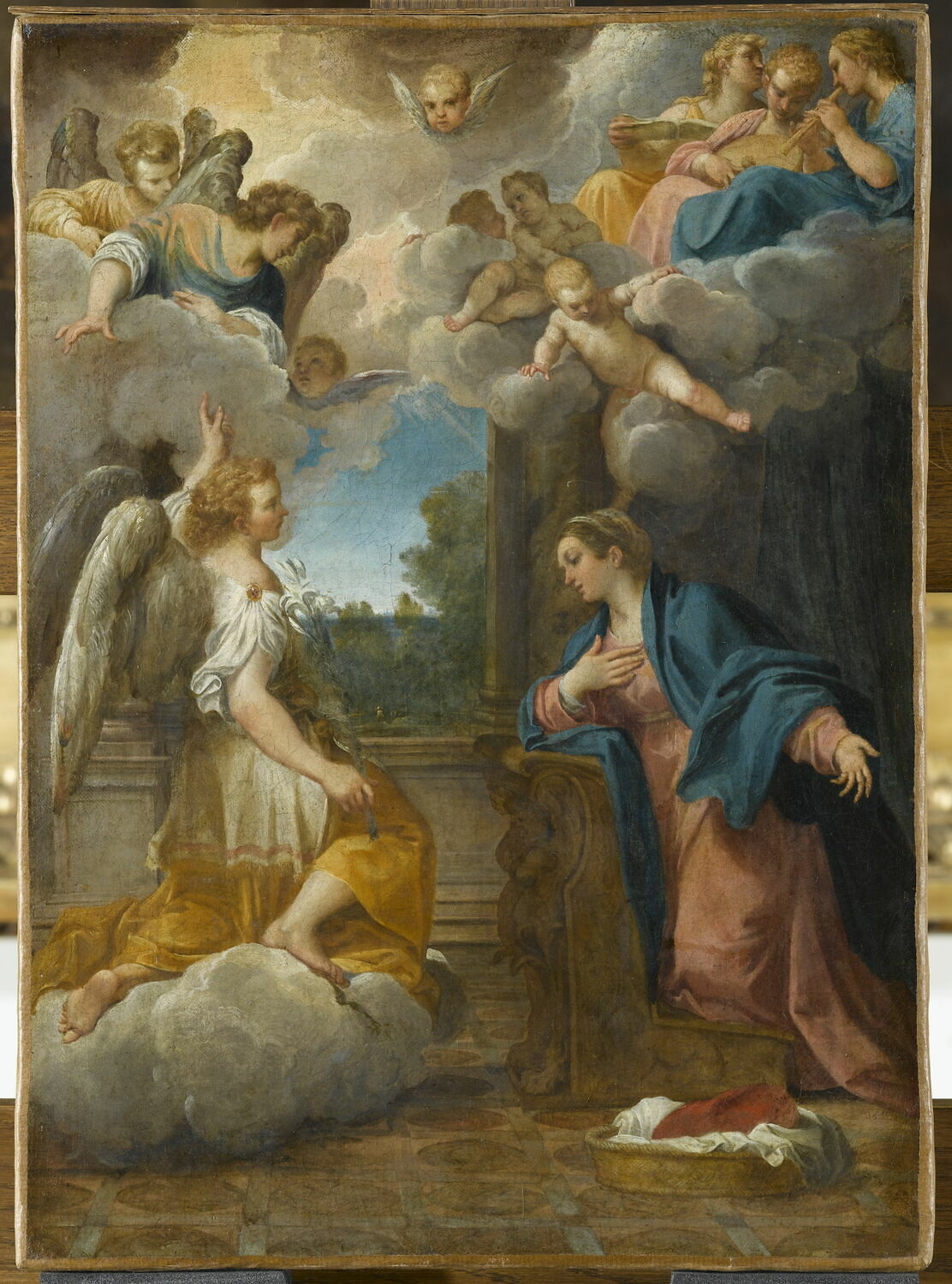
L'Annonciation, Carrache, Augustin, 4e quart du XVIe siècle (1575 - 1600)

L'Annonciation

4e quart du XVIe siècle (1575 - 1600) · Museu do Louvre

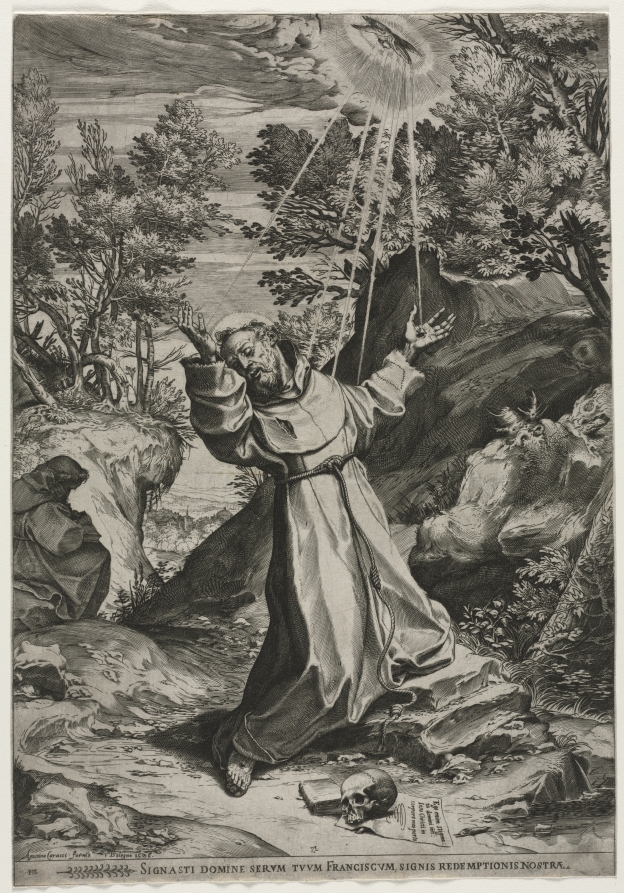
St. Francis Receiving the Stigmata, Agostino Carracci, 1586

St. Francis Receiving the Stigmata

1586 · Museu de Arte de Cleveland

Saint Paul Preaching, Attributed to Agostino Carracci

Saint Paul Preaching

Não exposta · Galeria Nacional de Arte

The Last Supper, Agostino Carracci, 16th century

The Last Supper

16th century · Não exposta · Hermitage

Maria met kind zittend in wolken met twee engelenhoofdjes, Agostino Carracci, 1515 - 1565

Maria met kind zittend in wolken met twee engelenhoofdjes

1515 - 1565 · Museu Estatal de Amesterdão

Sater bedrijft de liefde met een nimf, Agostino Carracci, 1559

Sater bedrijft de liefde met een nimf

1559 · Museu Estatal de Amesterdão

Aanbidding door de koningen, Agostino Carracci, 1567 - 1602

Aanbidding door de koningen

1567 - 1602 · Museu Estatal de Amesterdão

Heilige Hieronymus, Agostino Carracci, 1567 - 1602

Heilige Hieronymus

1567 - 1602 · Museu Estatal de Amesterdão

Self-portrait, Vincent van Gogh, 1887

Vincent van Gogh

Self-portrait, 1887

La Corniche near Monaco, Claude Monet, 1884

Claude Monet

La Corniche bij Monaco, 1884

De Nachtwacht, Rembrandt van Rijn, 1642

Rembrandt van Rijn

A Ronda Nocturna, 1642

Portrait of a Woman, Probably Maria Trip (1619-1683), Rembrandt van Rijn, 1639

Rembrandt van Rijn

Portrait of a Woman, Probably Maria Trip (1619-1683), 1639

Landscape with a Stone Bridge, Rembrandt van Rijn, c. 1638

Rembrandt van Rijn

Ponte de Pedra, c. 1638

Man in Oriental Dress, Rembrandt van Rijn, 1635

Rembrandt van Rijn

Man in Oriental Dress, 1635

Portrait of Haesje Jacobsdr van Cleyburg, Rembrandt van Rijn, 1634

Rembrandt van Rijn

Portrait of Haesje Jacobsdr van Cleyburg, 1634

Jonge vrouw in gefantaseerde kleding, Rembrandt van Rijn, 1633

Rembrandt van Rijn

Jonge vrouw in gefantaseerde kleding, 1633

Nimfen, saters en putti bij een boom met druivenranken, Madame de Pompadour, 1752

Madame de Pompadour

Nimfen, saters en putti bij een boom met druivenranken, 1752

Museu Estatal de Amesterdão

Sater bespiedt zes slapende nimfen in een bos, Gustave Doré, 1862

Gustave Doré

Sater bespiedt zes slapende nimfen in een bos, 1862

Museu Estatal de Amesterdão

Jonge vrouw op de rug van een sater, Jean Honoré Fragonard, 1763

Jean-Honoré Fragonard

Jonge vrouw op de rug van een sater, 1763

Museu Estatal de Amesterdão

Sater en nimf met twee kinderen, Jean Honoré Fragonard, 1763

Jean-Honoré Fragonard

Sater en nimf met twee kinderen, 1763

Museu Estatal de Amesterdão

Dans van saters, Jean Honoré Fragonard, 1763

Jean-Honoré Fragonard

Dans van saters, 1763

Museu Estatal de Amesterdão

Nimf met twee putti, Henri Fantin-Latour, 1903 - 1906

Henri Fantin-Latour

Nimf met twee putti, 1903 - 1906

Museu Estatal de Amesterdão

Het kind Jupiter wordt gevoed door de geit Amalthea, Jacques Jordaens, 1652 - 1690

Jacques Jordaens

Het kind Jupiter wordt gevoed door de geit Amalthea, 1652 - 1690

Museu Estatal de Amesterdão

Beeldengroep te Versailles, voorstellend het bad van Apollo, anonymous, c. 1875 - c. 1900

anonymous

Beeldengroep te Versailles, voorstellend het bad van Apollo, c. 1875 - c. 1900

Museu Estatal de Amesterdão