ART WIKI33 040 em exposição
MapaColeçãoArtistasMuseusExposiçõesRevista
Entrar

ART WIKI

Onde está a obra-prima, e a que horas se abre a porta.

Coleções: Art Institute of Chicago, Galeria Nacional de Arte, Galeria Tretiakov, Getty Villa, Harvard Art Museums, Hermitage, Hirshhorn Museum and Sculpture Garden, Instituto de Artes de Minneapolis, Museu de Arte de Cleveland, Museu de Arte Moderna, Museu do Louvre, Museu Estatal de Amesterdão, Museu J. Paul Getty, Museu Metropolitano de Arte, Museu Nacional de Arte da Dinamarca, Museu Pushkin, Museu Russo, Museu Smithsoniano de Arte Americana, Museu Vitória e Alberto, Museu Whitney de Arte Americana, National Museum of Asian Art, National Portrait Gallery, Catálogo Estatal do Fundo Museológico da Rússia (274 museus), Europeana (19 museus), Wikidata (6 museus), Paris Musées (12 museus) e Joconde, a base de museus do Ministério da Cultura de França (495 museus). As imagens pertencem aos titulares dos direitos.

Secções

  • Mapa
  • Pesquisa
  • Coleção
  • Obras-primas
  • Em exposição agora
  • Artistas

Mais

  • Museus e galerias
  • Exposições
  • Revista
  • De onde vêm os dados
  • Privacidade e cookies
InícioMapaCatálogo
  1. Coleção/
  2. Art Institute of Chicago/
  3. Oak Branch
Oak Branch, Henri Rousseau, 1907/08
Henri Rousseau, retratoHenri RousseauFrança, 1844–1910

Oak Branch

1907/08 · Drawing and Watercolor

Será possível contemplá-la?

De momento, não recebe

Art Institute of Chicago

Chicago, Estados Unidos

Pertence à coleção, mas de momento não está exposta.

Verificado
há 9 dias
Neste estado desde
19 de ago. de 2026
Fonte
O museu
No mapaPágina do museu

Sobre a obra

According to his close friend, artist Robert Delaunay, all of Rousseau’s drawings were destroyed after his death. However, as the inscription indicates, this rare drawing was a gift from the artist to a certain “Mademoiselle Herminie,” and it survived as a result. Rousseau often used flowers in his work for their symbolic meanings. He was particularly fond of daisies, which traditionally represent innocence and purity. Perhaps a more heartfelt message was intended here, as the petals of daisies are often plucked, one by one, to find out if one is loved: “she loves me, she loves me not.”

Art Institute of Chicago · CC BY 4.0

Pormenores

1907/08 · aos 63 anos
18441910
Número de inventário
2013.1019

No catálogo

Desenhos e aguarelasPenaModernismoSéculo XXFrança

Fontes

  • Art Institute of Chicago
  • Imagem: Art Institute of Chicago — CC0

Entretanto, na vida de Henri Rousseau

A vida inteira
  1. 1893–1910

    A studio in Montparnasse

    In 1893 Rousseau moved to a studio in Montparnasse, where he lived and worked until his death in 1910.

  2. 1905

    “The Hungry Lion” beside the Fauves

    In 1905 “The Hungry Lion” was shown at the Salon d’Automne beside paintings by the Fauves Matisse, Vlaminck and Derain; this is when the attitude of the mass of critics to Rousseau’s work turned.

  3. after 1905

    Vollard buys his works

    After “The Hungry Lion” was shown, Ambroise Vollard, France’s leading dealer in modern art, bought several of Rousseau’s works.

  4. after 1905

    Exotic scenes without travel: the Botanical Garden

    Rousseau never left France, yet his exotic canvases became especially prominent after 1905: to render foliage accurately he studied plants in the Paris Botanical Garden, and he often copied figures from magazine illustrations and postcards.

  5. 1907

    A commission from Countess Delaunay: “The Snake Charmer”

    In 1907 Berthe, Countess Delaunay, mother of the painter Robert Delaunay, commissioned “The Snake Charmer” from Rousseau.

  6. 1908

    Picasso’s banquet in Rousseau’s honour

    Picasso came across a Rousseau painting being sold on the street as a canvas to be painted over, instantly recognised his genius and went to meet him; in 1908 he gave a half-serious, half-burlesque banquet for Rousseau in his Bateau-Lavoir studio, attended by Apollinaire, Gertrude Stein, Max Jacob, Marie Laurencin, Juan Gris and others.
Mais obras de Henri Rousseau

Todas as obras
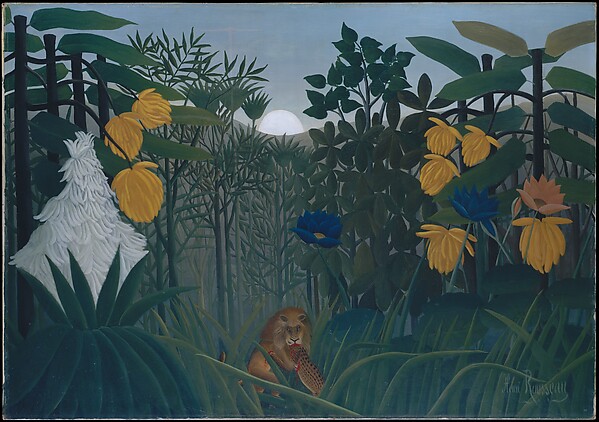
The Repast of the Lion, Henri Rousseau, ca. 1907

The Repast of the Lion

ca. 1907 · Museu Metropolitano de Arte

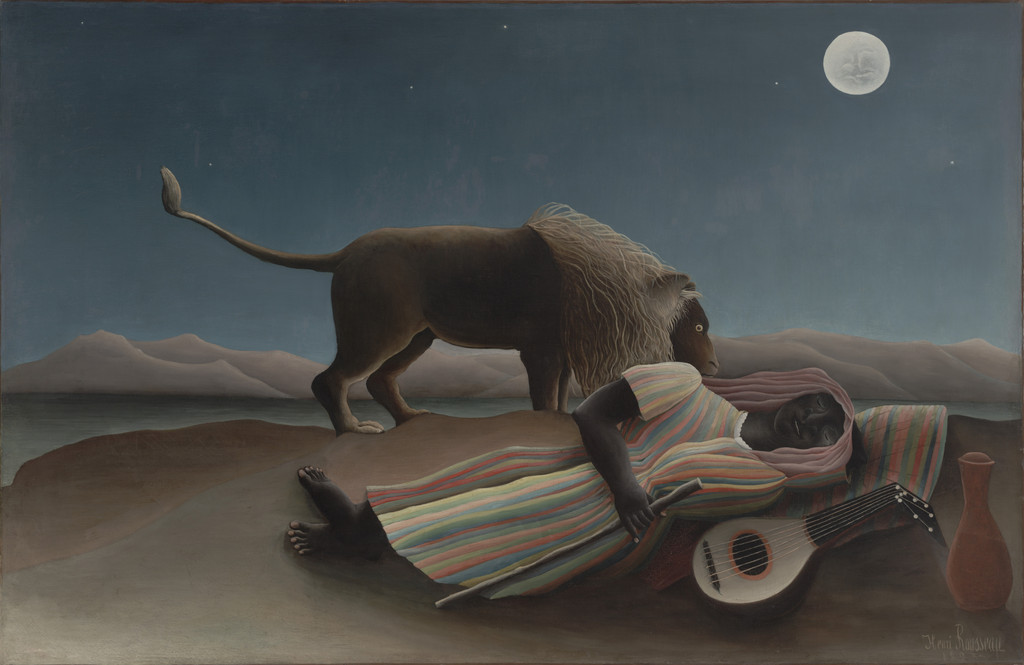
The Sleeping Gypsy, Henri Rousseau, 1897

A Cigana adormecida

1897 · Museu de Arte Moderna

In a Tropical Forest. Struggle between Tiger and Bull, Henri Rousseau, c. 1908

In a Tropical Forest. Struggle between Tiger and Bull

c. 1908 · Hermitage

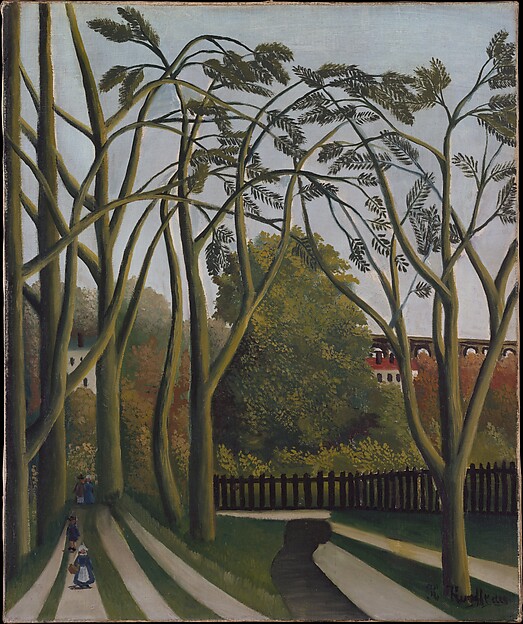
The Banks of the Bièvre near Bicêtre, Henri Rousseau, ca. 1908–09

The Banks of the Bièvre near Bicêtre

ca. 1908–09 · Museu Metropolitano de Arte

View of the Fortifications to the left of the Gate of Vanves, Henri Rousseau, 1909

View of the Fortifications to the left of the Gate of Vanves

1909 · Hermitage

Luxembourg Gardens. Monument to Chopin, Henri Rousseau, 1909

Luxembourg Gardens. Monument to Chopin

1909 · Hermitage

The Banks of the Oise, Henri Rousseau, c. 1907

The Banks of the Oise

c. 1907 · Harvard Art Museums

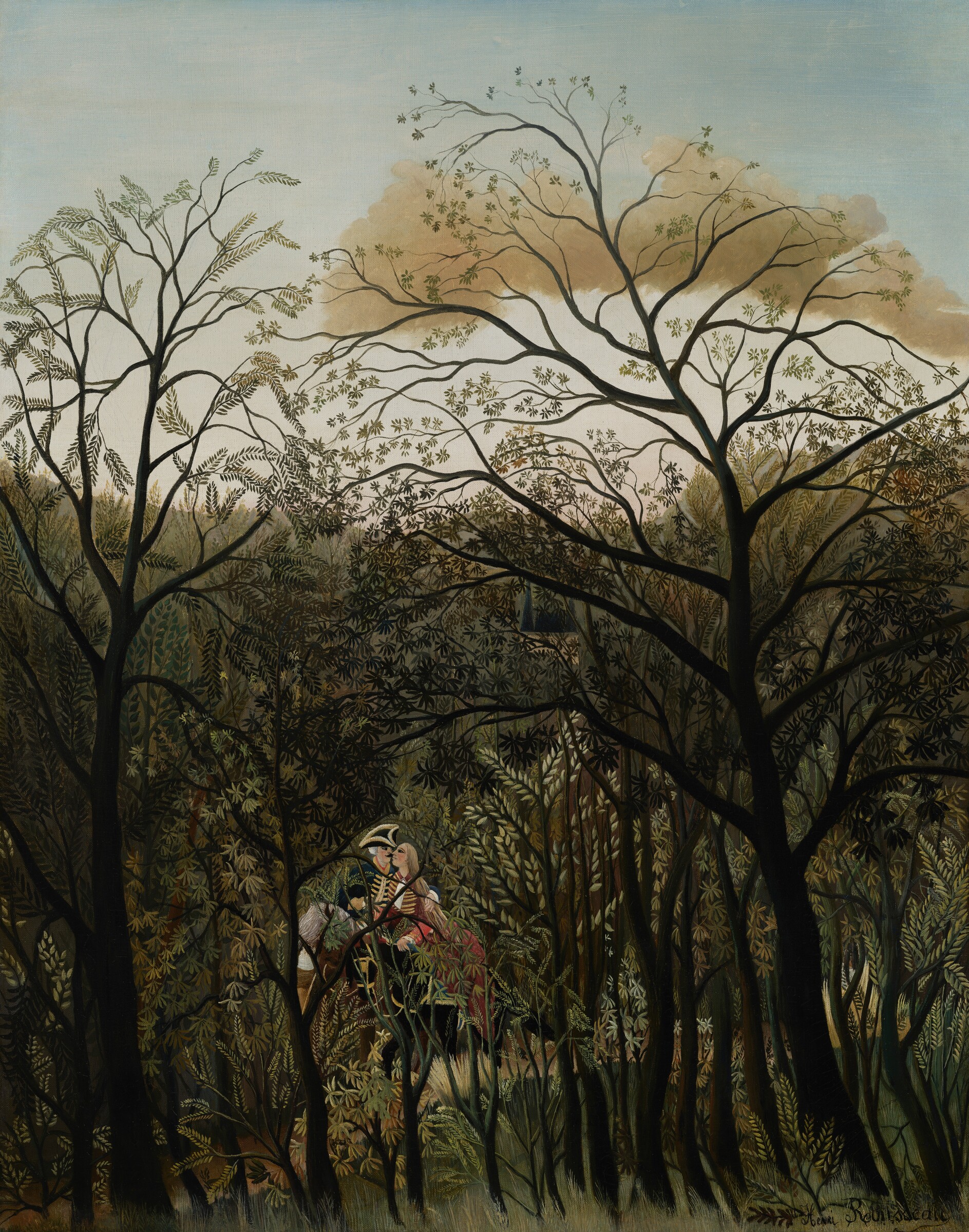
Rendezvous in the Forest, Henri Rousseau, 1889

Rendezvous in the Forest

1889 · Não exposta · Galeria Nacional de Arte

Vizinhas de sala: Art Institute of Chicago

Página do museu
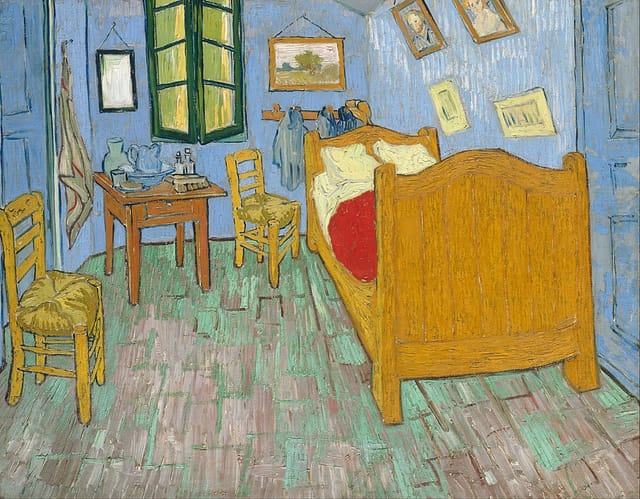
The Bedroom, Vincent van Gogh, 1889

Vincent van Gogh

The Bedroom, 1889

A Sunday on La Grande Jatte — 1884, Georges Seurat, 1884–86, border added 1888–89

Georges Seurat

Tarde de Domingo na Ilha de Grande Jatte, 1884–86, border added 1888–89

Paris Street; Rainy Day, Gustave Caillebotte, 1877

Gustave Caillebotte

Paris Street; Rainy Day, 1877

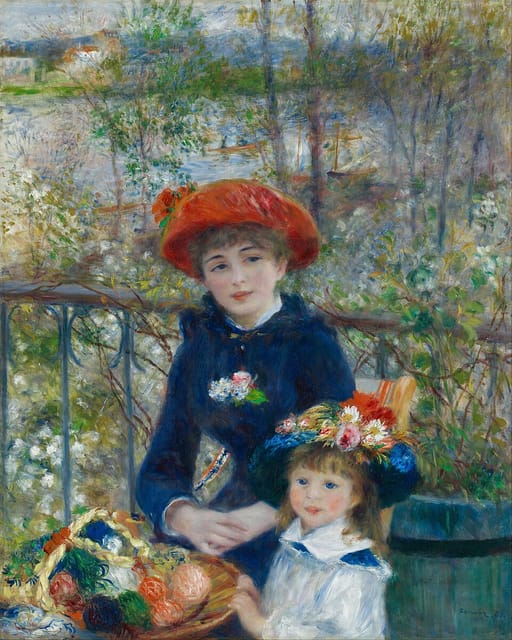
Two Sisters (On the Terrace), Pierre-Auguste Renoir, 1881

Pierre-Auguste Renoir

As Duas Irmãs, 1881

The Basket of Apples, Paul Cézanne, c. 1893

Paul Cézanne

A Cesta de Maçãs, c. 1893

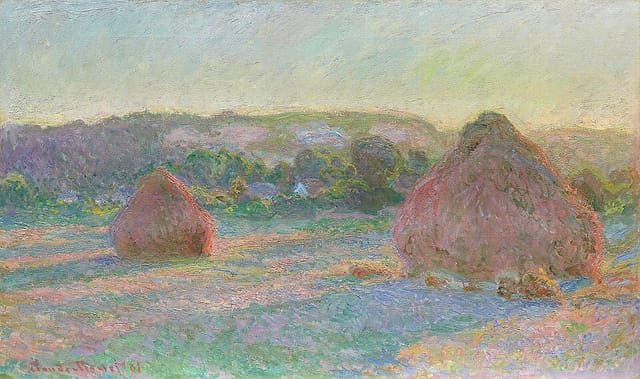
Stacks of Wheat (End of Summer), Claude Monet, 1890–91

Claude Monet

Stacks of Wheat (End of Summer), 1890–91

American Gothic, Grant Wood, 1930

Grant Wood

Gótico Americano, 1930

Nighthawks, Edward Hopper, 1942

Edward Hopper

Nighthawks, 1942