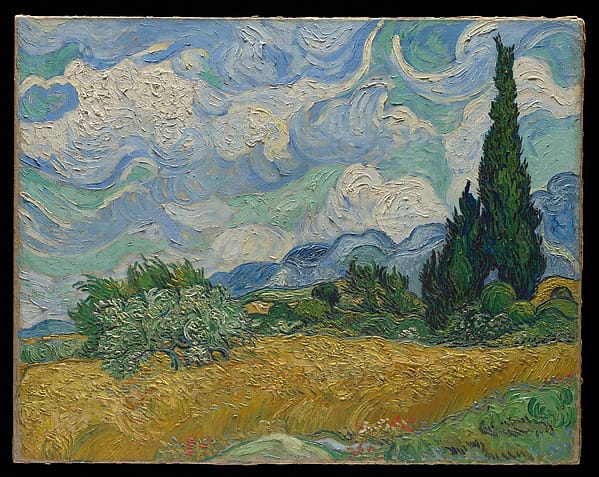
Caspar David FriedrichAlemanha, 1774–1840
Northern Landscape, Spring
Será possível contemplá-la?
De momento, não recebe

Washington, D.C., Estados Unidos
Pertence à coleção, mas de momento não está exposta.
- Verificado
- Neste estado desde
- Fonte
- O museu
Pormenores
- Número de inventário
- 2004.113.1
O que mostra
No catálogo
Fontes
- Galeria Nacional de Arte
- Imagem: Galeria Nacional de Arte — Museum open access
Entretanto, na vida de Caspar David Friedrich
A vida inteira23 de dezembro de 1824
Son born: Adolf Friedrich
1824–1826
Depression and darker motifs
A new bout of depression — earlier ones came in 1799, 1803–1805, around 1813 and in 1816 — brings vultures, owls, graveyards and ruins into his work. From 1826 these motifs become a permanent feature of his output, and his colours grow darker and more muted.
1825–1840
The fading of his fame
Over the last fifteen years of his life Friedrich’s reputation steadily declines: as the ideals of early Romanticism go out of fashion he comes to be seen as an eccentric and melancholy figure out of touch with the times, and his patrons gradually fall away. Towards the end he lives in relative poverty and spends long periods, often beginning before sunrise, walking alone through woods and fields.





![Ginevra de' Benci [obverse], Leonardo da Vinci, c. 1474/1478](https://api.nga.gov/iiif/8f29e3c9-a289-4d53-abf0-31a66e9e98fa/full/!2400,2400/0/default.jpg)
![Wreath of Laurel, Palm, and Juniper with a Scroll inscribed Virtutem Forma Decorat [reverse], Leonardo da Vinci, c. 1474/1478](https://api.nga.gov/iiif/ff62e8d0-45c4-498f-ad36-6358de827e04/full/!2400,2400/0/default.jpg)