ART WIKI32 963 em exposição
MapaColeçãoArtistasMuseusExposiçõesRevista
Entrar

ART WIKI

Onde está a obra-prima, e a que horas se abre a porta.

Coleções: Art Institute of Chicago, Galeria Nacional de Arte, Galeria Tretiakov, Getty Villa, Harvard Art Museums, Hermitage, Hirshhorn Museum and Sculpture Garden, Instituto de Artes de Minneapolis, Museu de Arte de Cleveland, Museu de Arte Moderna, Museu do Louvre, Museu Estatal de Amesterdão, Museu J. Paul Getty, Museu Metropolitano de Arte, Museu Nacional de Arte da Dinamarca, Museu Pushkin, Museu Russo, Museu Smithsoniano de Arte Americana, Museu Vitória e Alberto, Museu Whitney de Arte Americana, National Museum of Asian Art, National Portrait Gallery, Catálogo Estatal do Fundo Museológico da Rússia (274 museus), Europeana (19 museus), Wikidata (6 museus), Paris Musées (12 museus) e Joconde, a base de museus do Ministério da Cultura de França (495 museus). As imagens pertencem aos titulares dos direitos.

Secções

  • Mapa
  • Pesquisa
  • Coleção
  • Obras-primas
  • Em exposição agora
  • Artistas

Mais

  • Museus e galerias
  • Exposições
  • Revista
  • De onde vêm os dados
  • Privacidade e cookies
InícioMapaCatálogo
  1. Coleção/
  2. Museu de Arte de Cleveland/
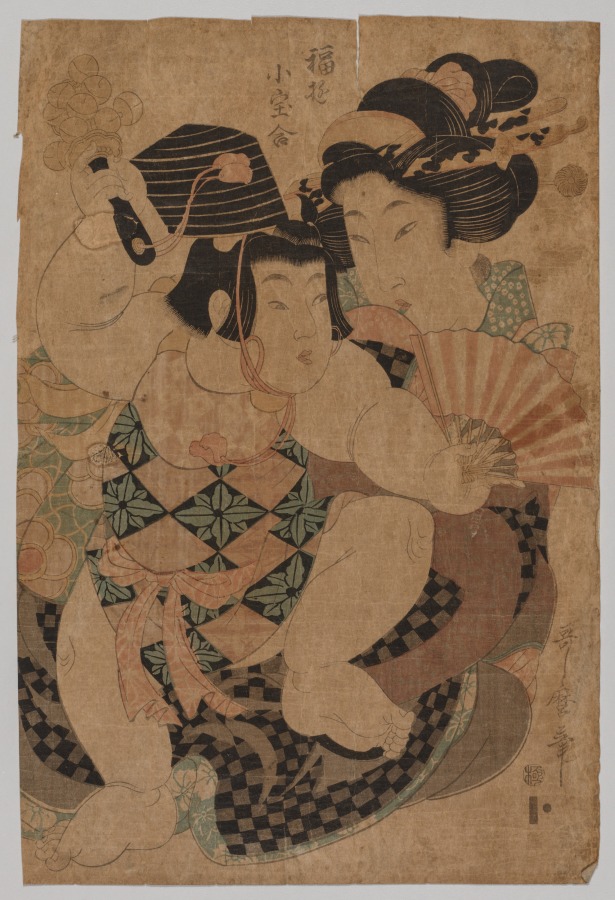
  3. No Title
No Title, Kitagawa Utamaro, 1753–1806
Kitagawa Utamaro, retratoKitagawa UtamaroJapão, 1754–1806

No Title

1753–1806 · Print

Será possível contemplá-la?

De momento, não recebe

Museu de Arte de Cleveland

Cleveland, Estados Unidos

Pertence à coleção, mas de momento não está exposta.

Verificado
há 3 dias
Neste estado desde
19 de ago. de 2026
Fonte
O museu
No mapaPágina do museu

Pormenores

Número de inventário
1949.128

No catálogo

GravurasXilogravuraGravuras japonesasRococóSéculo XVIIIJapan, Edo period (1615–1868)

Fontes

  • Museu de Arte de Cleveland
  • Imagem: Museu de Arte de Cleveland — Museum open access

Entretanto, na vida de Kitagawa Utamaro

A vida inteira
  1. 1753/1754

    Born

  2. 1775

    Meeting the publisher Tsutaya Jūzaburō

    By some accounts, in 1775 Utamaro meets the publisher Tsutaya Jūzaburō, who had an enormous influence on his work: many of his finest albums, illustrated books and series of single-sheet prints came out of their long collaboration. His first known work for Tsutaya, however, dates only from 1783.

  3. c. 1791

    Giving up book prints for half-length portraits of beauties

    Around 1791 Utamaro gives up designing prints for books and concentrates on single portraits of women shown half-length, rather than the group scenes favoured by other ukiyo-e artists. He was the first in Japanese woodblock printing to use half-length compositions for women's portraits; none of his work from 1790–1792 has survived.

  4. 1797

    The death of his friend and patron Tsutaya Jūzaburō

    In 1797 Utamaro's long-time friend and supporter, the publisher Tsutaya Jūzaburō, dies; the artist is apparently very upset by the loss, and some commentators feel that his work never reached its former heights afterwards. He later lives in Kyūemon-chō, then Bakuro-chō, and finally near the Benkei Bridge.

  5. 1804

    Arrest and fifty days in manacles

    In 1804 Utamaro is imprisoned over prints of the sixteenth-century ruler Toyotomi Hideyoshi, depicted, in the authorities' view, “in an improper form”, and then manacled for fifty days, together with Tsukimaro, Toyokuni, Shuntei, Shun'ei and Jippensha Ikku; their publishers are heavily fined. It is probably the most famous case of censorship of the Edo period, and Utamaro appears to have been the most prominent of those punished.

  6. 31 de outubro de 1806

    Died

Mais obras de Kitagawa Utamaro

Todas as obras
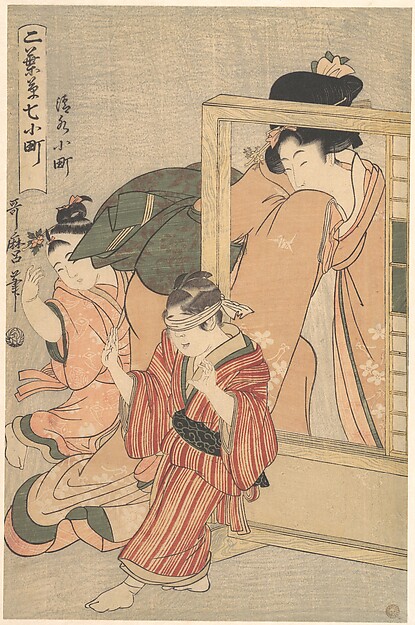
Kiyomizu Komachi, from the series Futabagusa nana Komachi, Kitagawa Utamaro, 1790s

Kiyomizu Komachi, from the series Futabagusa nana Komachi

1790s · Museu Metropolitano de Arte

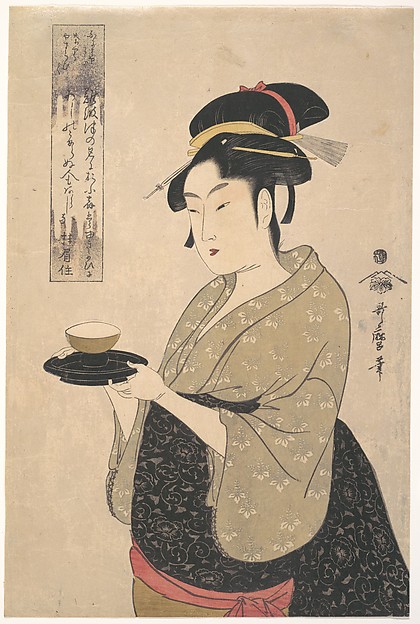
Okita of the Naniwa-ya Teahouse, Kitagawa Utamaro, ca. 1793

Okita of the Naniwa-ya Teahouse

ca. 1793 · Museu Metropolitano de Arte

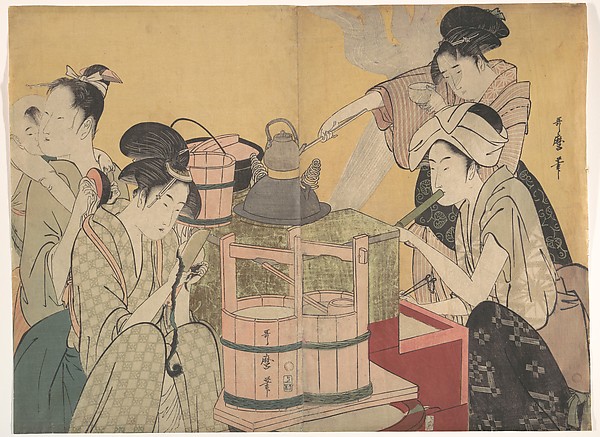
Kitchen Scene, Kitagawa Utamaro, ca. 1794–95

Kitchen Scene

ca. 1794–95 · Museu Metropolitano de Arte

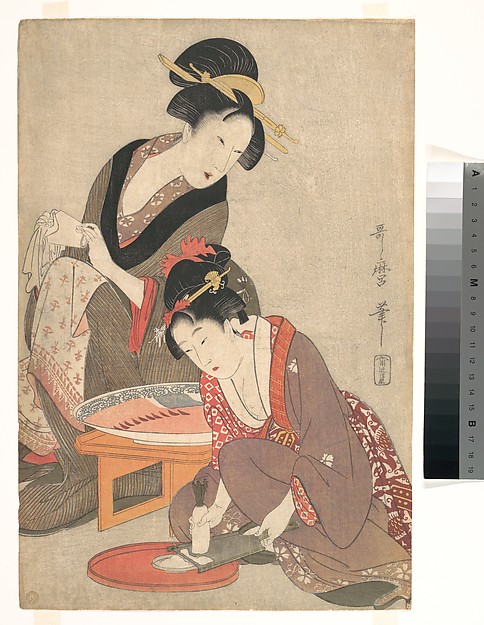
Women Grating Radish for Sashimi, Kitagawa Utamaro, ca. 1798–99

Women Grating Radish for Sashimi

ca. 1798–99 · Museu Metropolitano de Arte

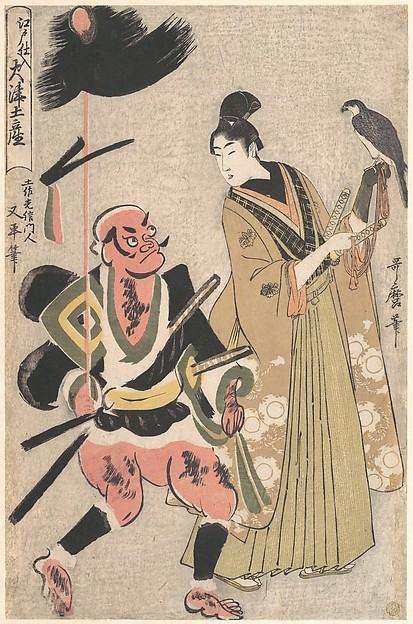
Foot-Soldier with a Spear and Hawk-Handler (Yari-mochi yakko to taka shō), from the series Souvenir Paintings from Ōtsu, Stocked in Edo (Edo Shi-ire Ōtsu Miyage), Kitagawa Utamaro, ca. 1802–3

Foot-Soldier with a Spear and Hawk-Handler (Yari-mochi yakko to taka shō), from the series Souvenir Paintings from Ōtsu, Stocked in Edo (Edo Shi-ire Ōtsu Miyage)

ca. 1802–3 · Museu Metropolitano de Arte

House cleaning in preparation for the New Year, Kitagawa Utamaro, late 1790s

House cleaning in preparation for the New Year

late 1790s · Art Institute of Chicago

Enjoying the Cool in a Garden, Kitagawa Utamaro, c. 1788/90

Enjoying the Cool in a Garden

c. 1788/90 · Art Institute of Chicago

Seiro niwaka onna geisha no bu : Asazumabune Ogiuri Uta....., Kitagawa Utamaro, 1793

Seiro niwaka onna geisha no bu : Asazumabune Ogiuri Uta.....

1793 · Art Institute of Chicago

Vizinhas de sala: Museu de Arte de Cleveland

Página do museu
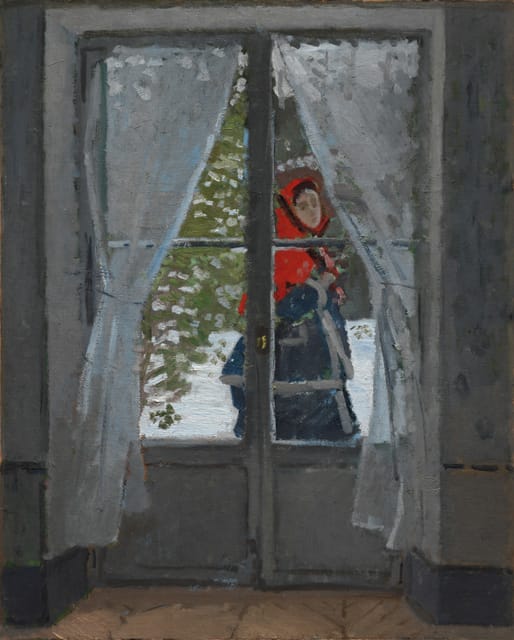
The Red Kerchief, Claude Monet, c. 1868–73

Claude Monet

The Red Kerchief, c. 1868–73

Melencolia I, Albrecht Dürer, 1514

Albrecht Dürer

Melancolia I, 1514

The Virgin and Child with the Pear, Albrecht Dürer, 1511

Albrecht Dürer

The Virgin and Child with the Pear, 1511

The Nativity, Albrecht Dürer, probably c. 1509/1510

Albrecht Dürer

The Nativity, probably c. 1509/1510

The Virgin and Child on a Crescent with a Starry Crown, Albrecht Dürer, 1508

Albrecht Dürer

The Virgin and Child on a Crescent with a Starry Crown, 1508

The Lamentation, Albrecht Dürer, 1507

Albrecht Dürer

The Lamentation, 1507

Large Horse, Albrecht Dürer, 1505

Albrecht Dürer

Large Horse, 1505

Nemesis (The Great Fortune), Albrecht Dürer, c. 1501/1502

Albrecht Dürer

Nemesis (The Great Fortune), c. 1501/1502