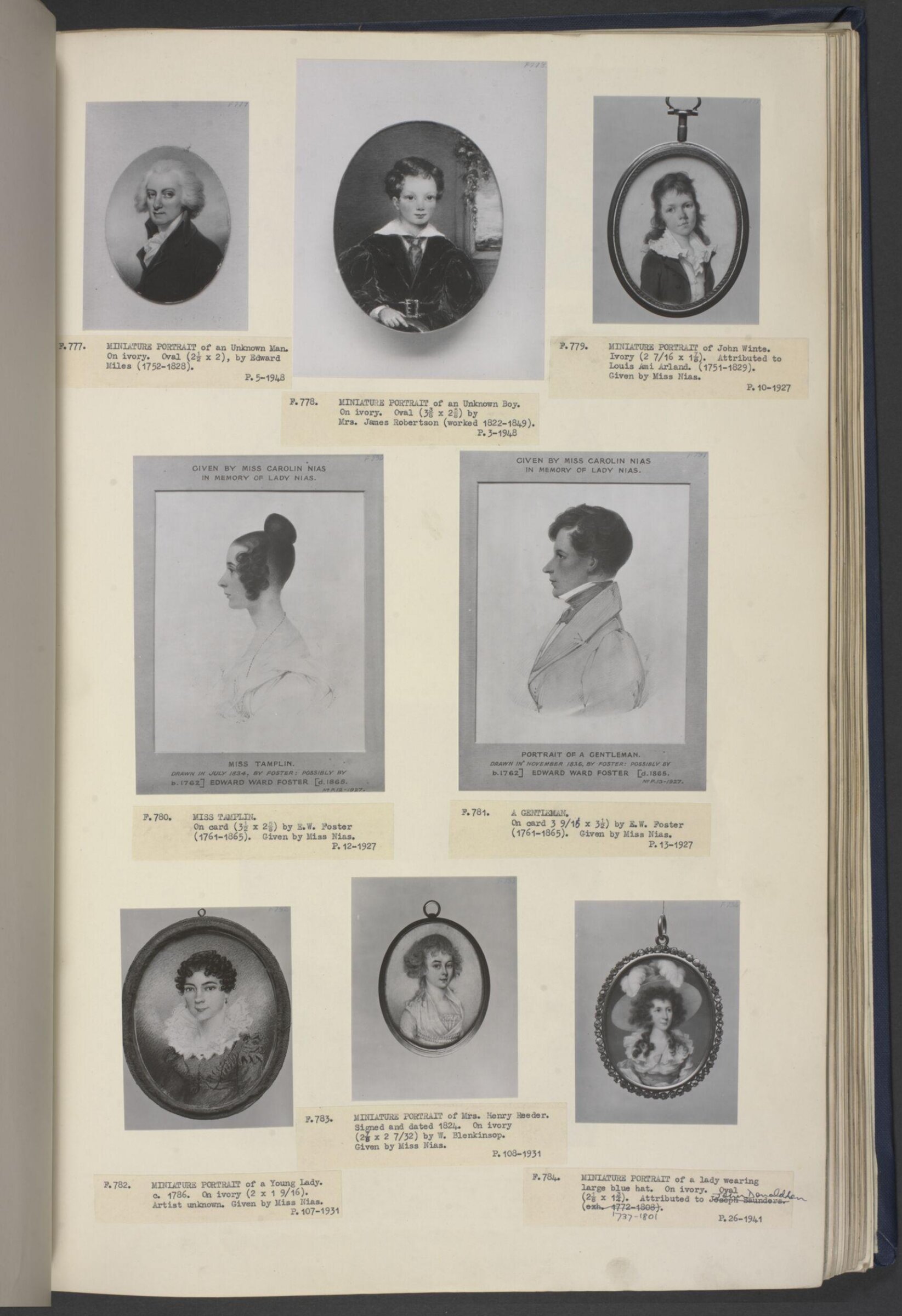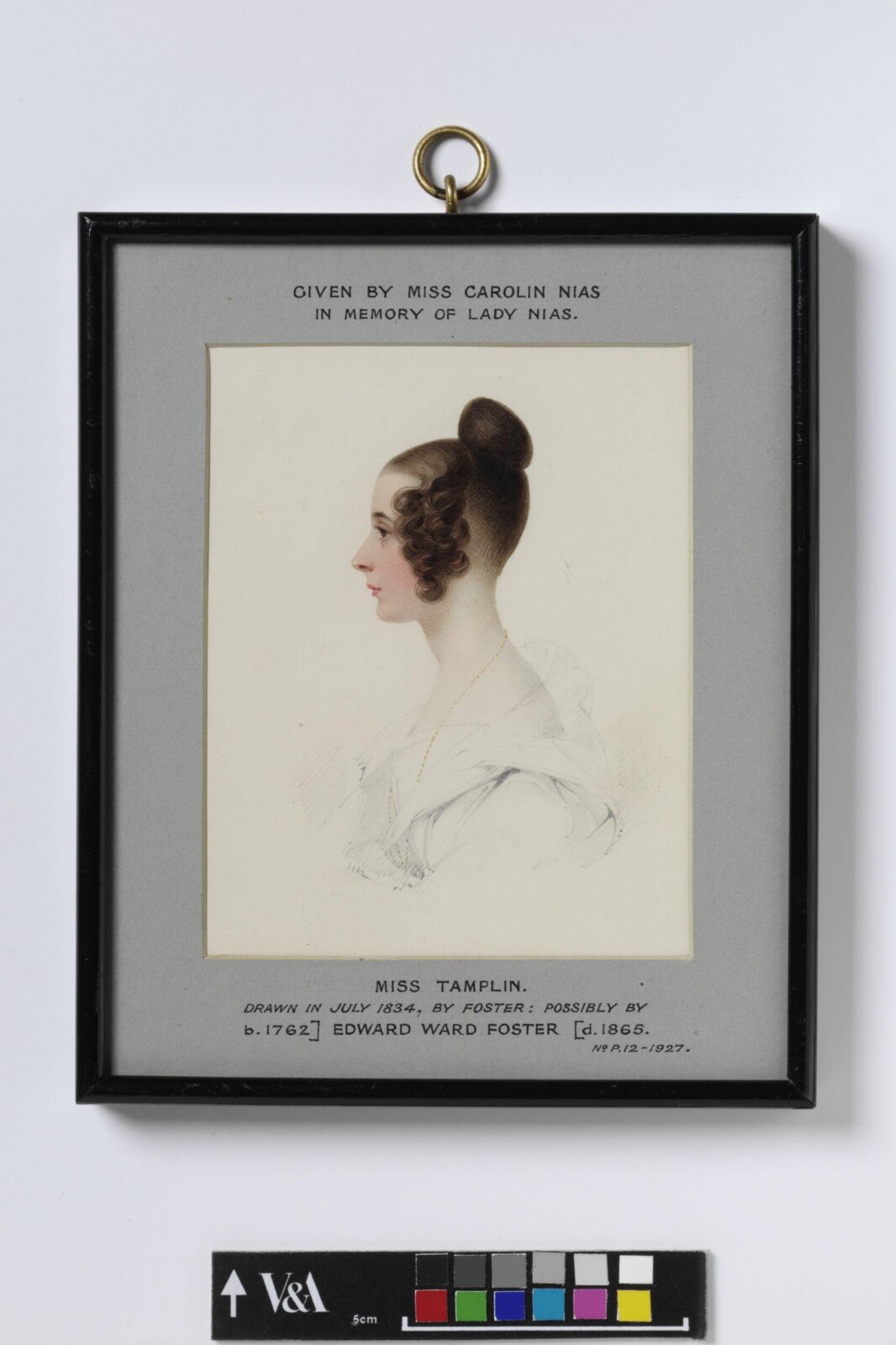
Miss Tamplin
Posso vê-la?
Não exposta de momento
Onde está «Miss Tamplin» hoje? Coleção: Museu Vitória e Alberto, Londres. Não exposta de momento. Verificado 25 de setembro de 2026.

Londres, Reino Unido
Pertence à coleção, mas de momento não está exposta.
- Verificado
- Neste estado desde
- Fonte
- O museu
Sobre a pintura
In the late 18th century a new sister art and rival to miniature portraits appeared. Since about 1700 miniaturists had worked on ivory, and before that on vellum (animal skin). Up to the late 18th century, watercolour was used mainly by topographic artists, who applied it on paper to tint their drawings. But as watercolour painting developed as an art in its own right, miniaturists saw that working on paper was easier, and so quicker and cheaper. They could thus attract new patrons. Many now widened their repertoire and developed types of watercolour portraits on paper or card. They produced elegant graphite drawings, either tinted lightly with a watercolour wash or with the sitter's head painted minutely in watercolour. But unlike the more expensive vellum or ivory, paper can quickly discolour and degrade.
Ler mais
This portrait also borrows from another fashionable rival to miniature painting, the profile. Silhouettes, or ‘profiles’ as they were known then, became popular in the 1770s. At that time the archaeological discoveries of Roman sites at Herculaneum and Pompeii encouraged a taste for Neo-classicism. ‘Profiles’ became even more fashionable after about 1775, when Johann Kaspar Lavater published his hugely popular Essays on Physiognomy. He claimed that one could detect a person’s character by concentrating on his or her main features. These would reveal both virtues and vices. Lavater illustrated the book with numerous simple black profiles.
Museu Vitória e Alberto
Pormenores
- Número de inventário
- P.12-1927
O que mostra
No catálogo
Fontes
- Museu Vitória e Alberto
- Imagem: Museu Vitória e Alberto — © Victoria and Albert Museum, London