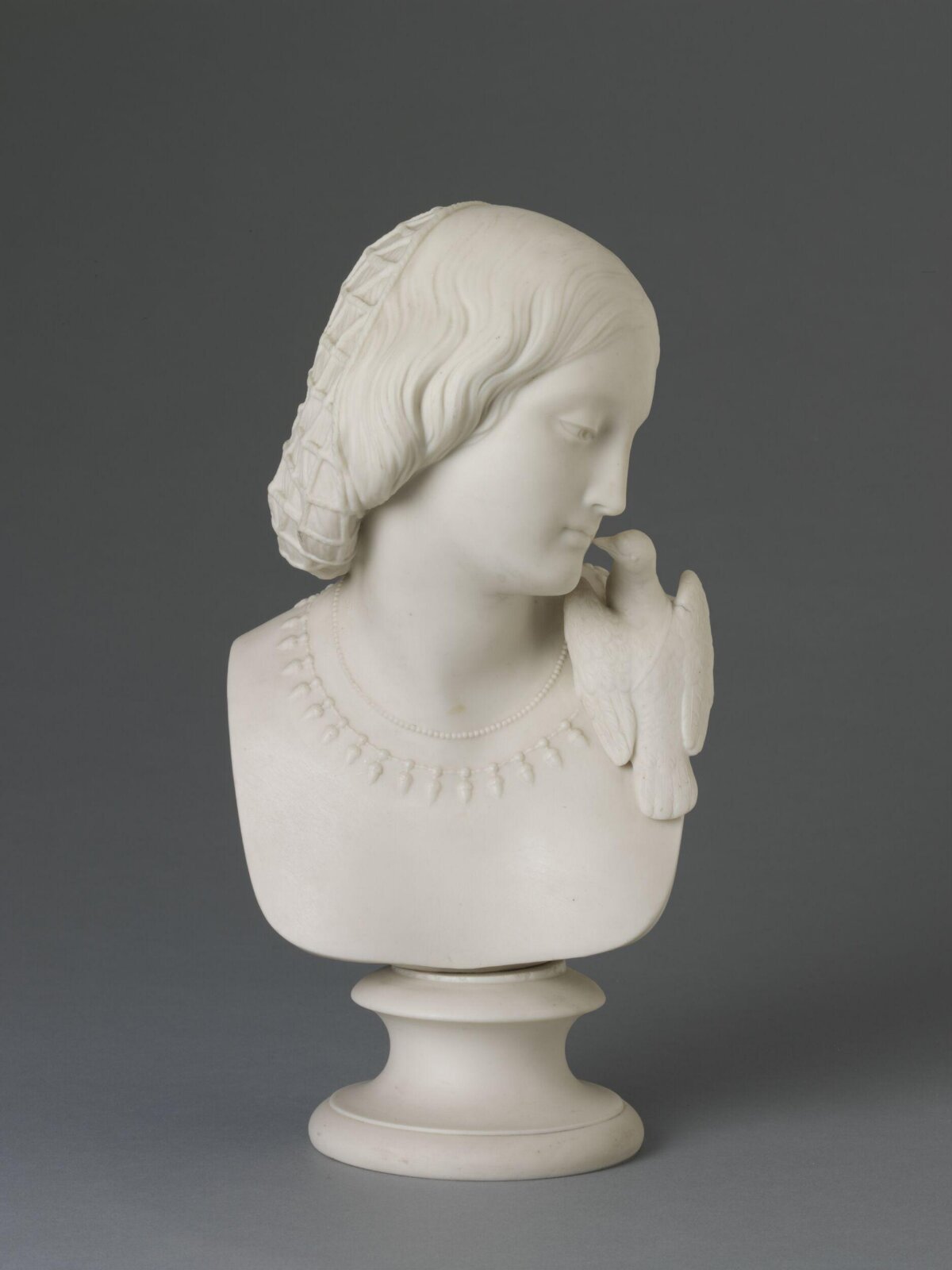
Lesbia
Posso vê-la?
Não exposta de momento
Onde está «Lesbia» hoje? Coleção: Museu Vitória e Alberto, Londres. Não exposta de momento. Verificado 25 de setembro de 2026.

Londres, Reino Unido
Pertence à coleção, mas de momento não está exposta.
- Verificado
- Neste estado desde
- Fonte
- O museu
Sobre a escultura
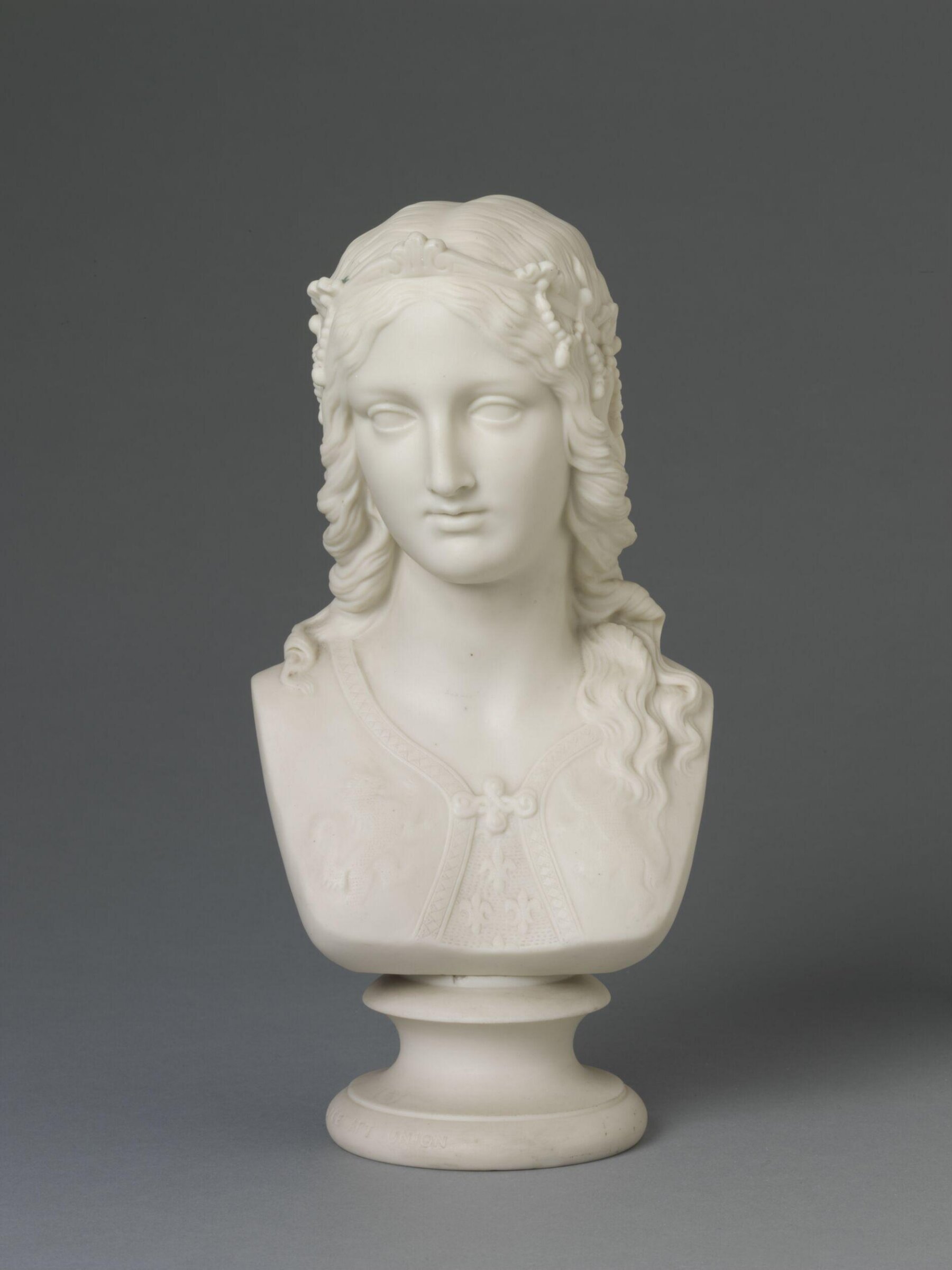
Parian is a type of porcelain developed in the 1840s that was used to produce sculptures on a reduced scale. It was ideally suited to scultpure due to its marble-like appearance, and provided an opportunity for the growing middle classes to express their artistic tastes by acquiring inexpensive sculptures to show in their homes. The question of who first developed the material has long been disputed, however there is now some consensus that it originated at the Spode factory of Copeland and Garrett, where this bust was made.
Ler mais
The success of Parian was largely down to the involvement of the Art Unions, who desired to 'advance civilisation by the improvement of Art', and who regularly commissioned Parian busts and sculptures for their annual distributions of art. This bust of Enid was sculpted by W.C Marshall and produced in 1859 in two sizes, sponsored by the Ceramic and Crystal Palace Art Union.
The bust depicts Lesbia, a character and theme of Catullus' poems. Lesbia is believed to be a pseudonym for Catullus' lover Clodia, and his emotions for her are highly charged and wide-ranging. In her story she is depicted with a pet sparrow, hence the sparrow on the bust's shoulder. This is a common feature in depictions of Lesbia, such as the 1907 Poynter painting 'Lesbia and her sparrow'.
Museu Vitória e Alberto
Pormenores
- Número de inventário
- C.25:1,2-2018
No catálogo
Fontes
- Museu Vitória e Alberto
- Imagem: Museu Vitória e Alberto — © Victoria and Albert Museum, London